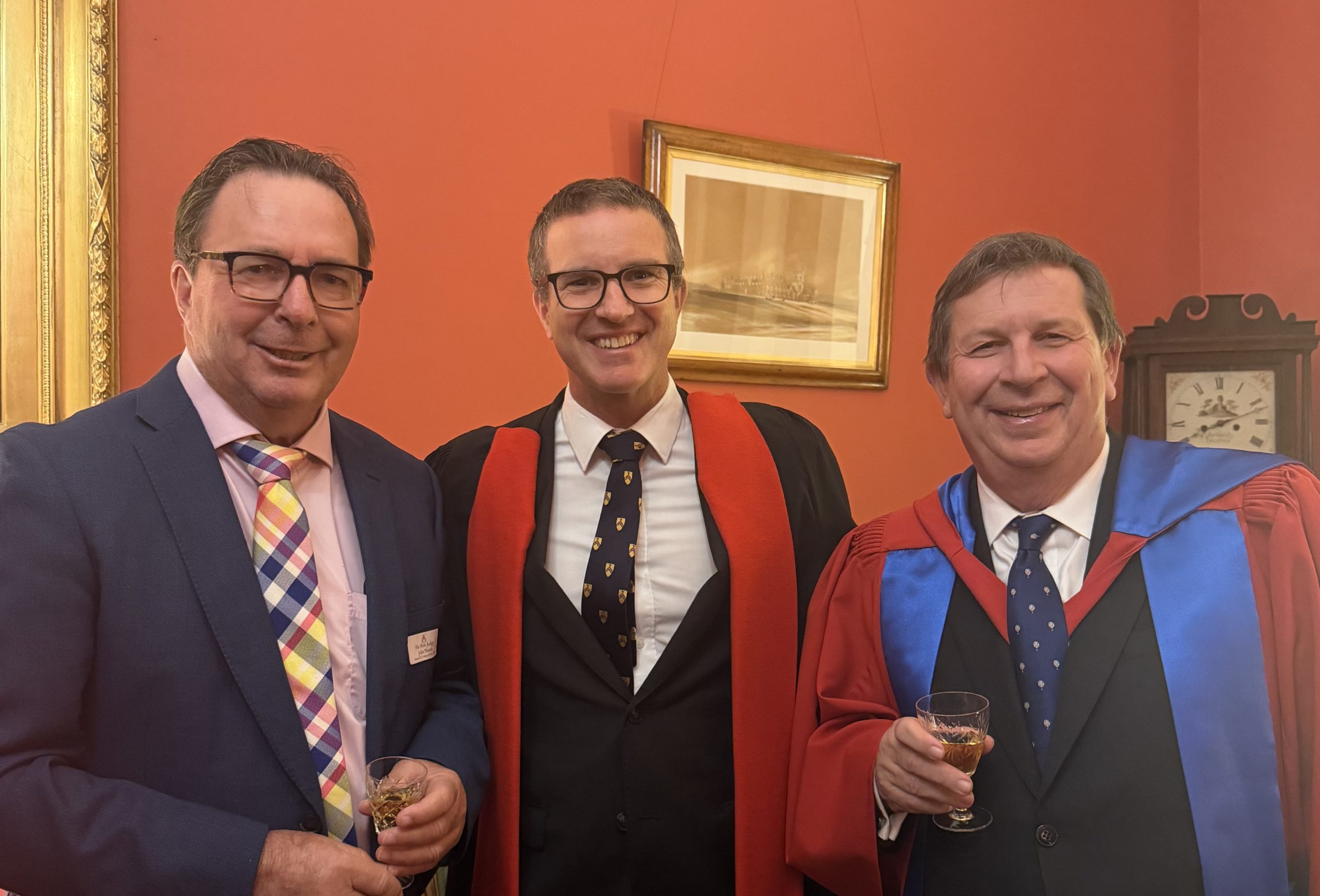
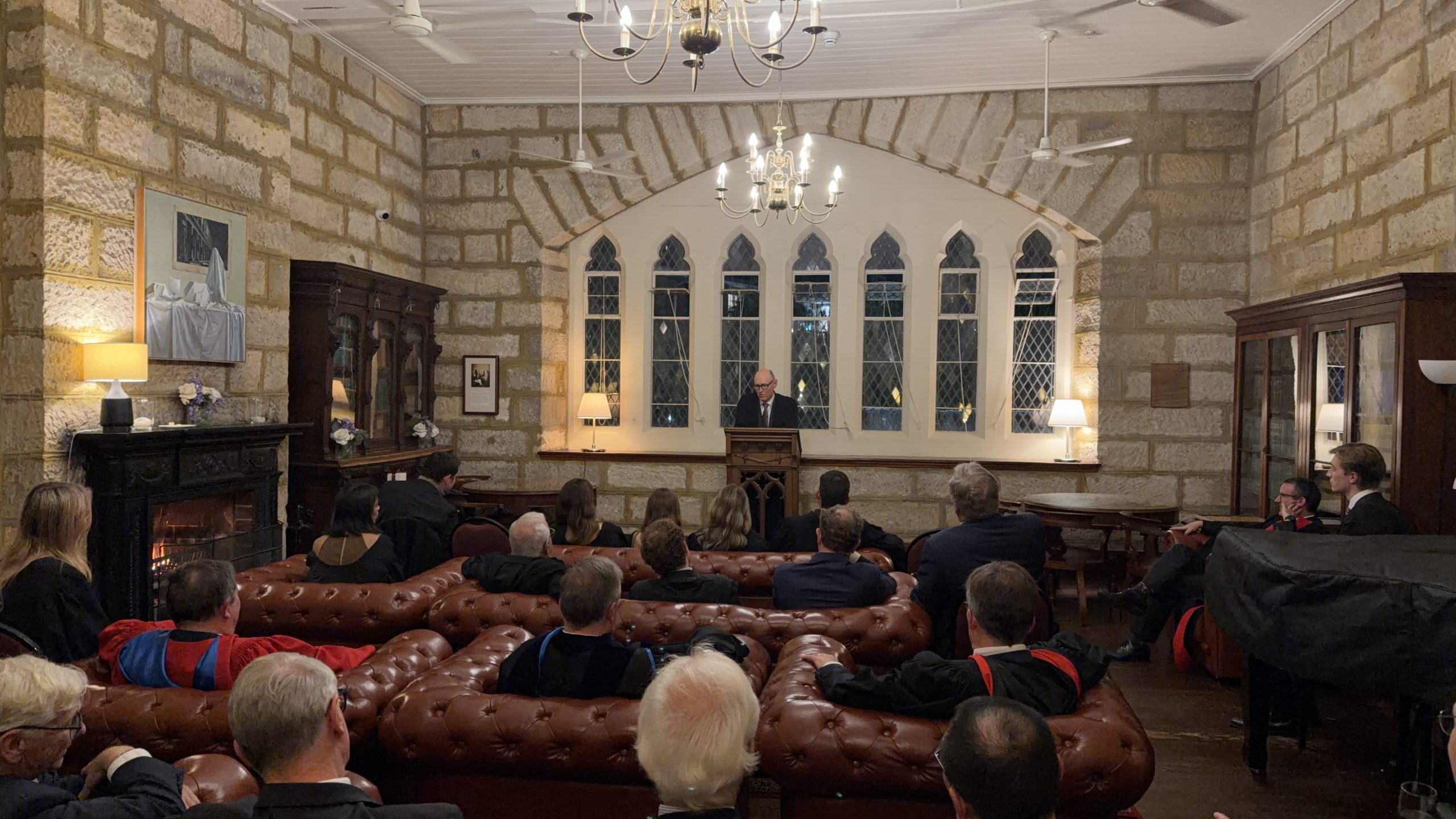
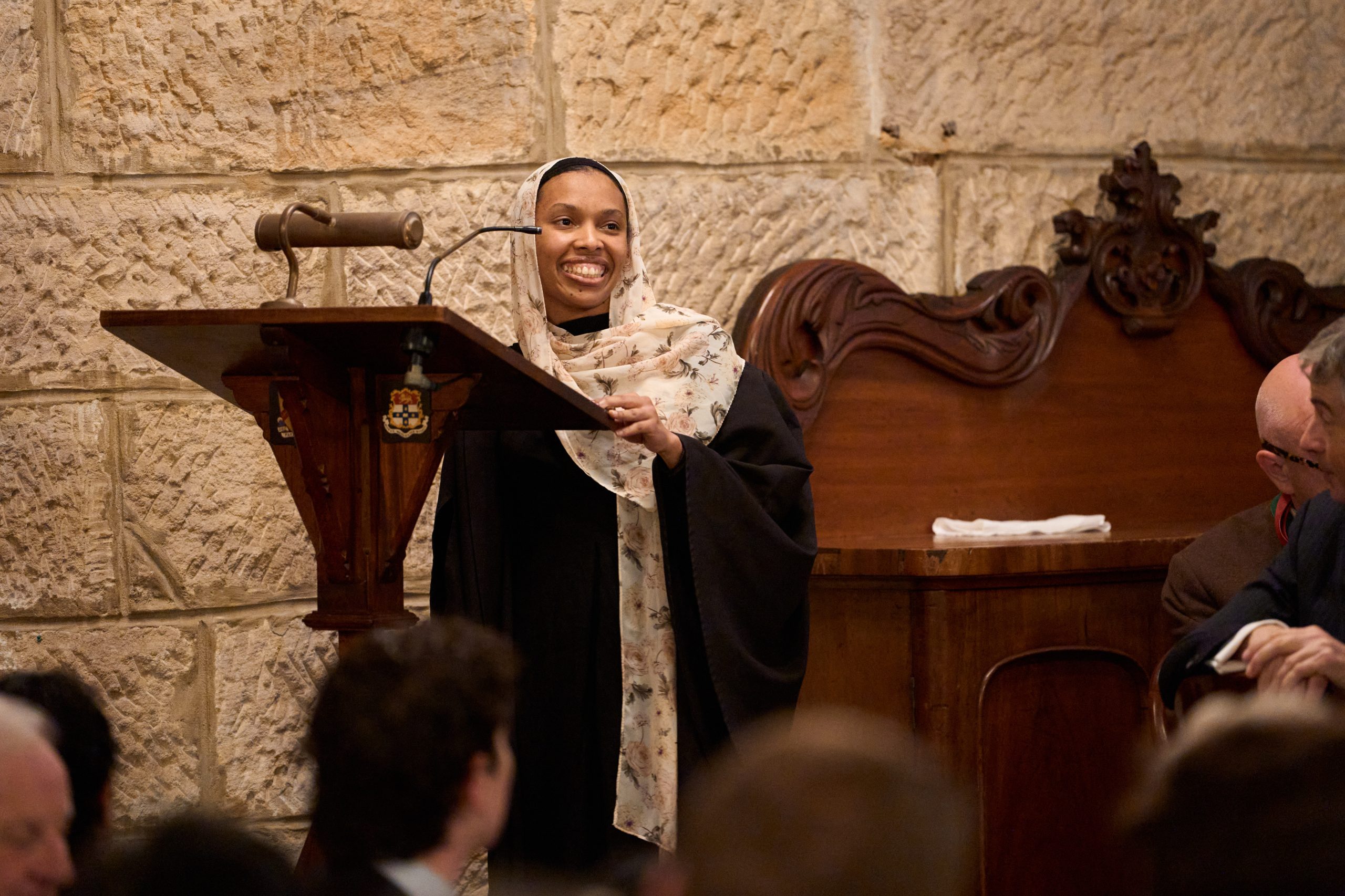
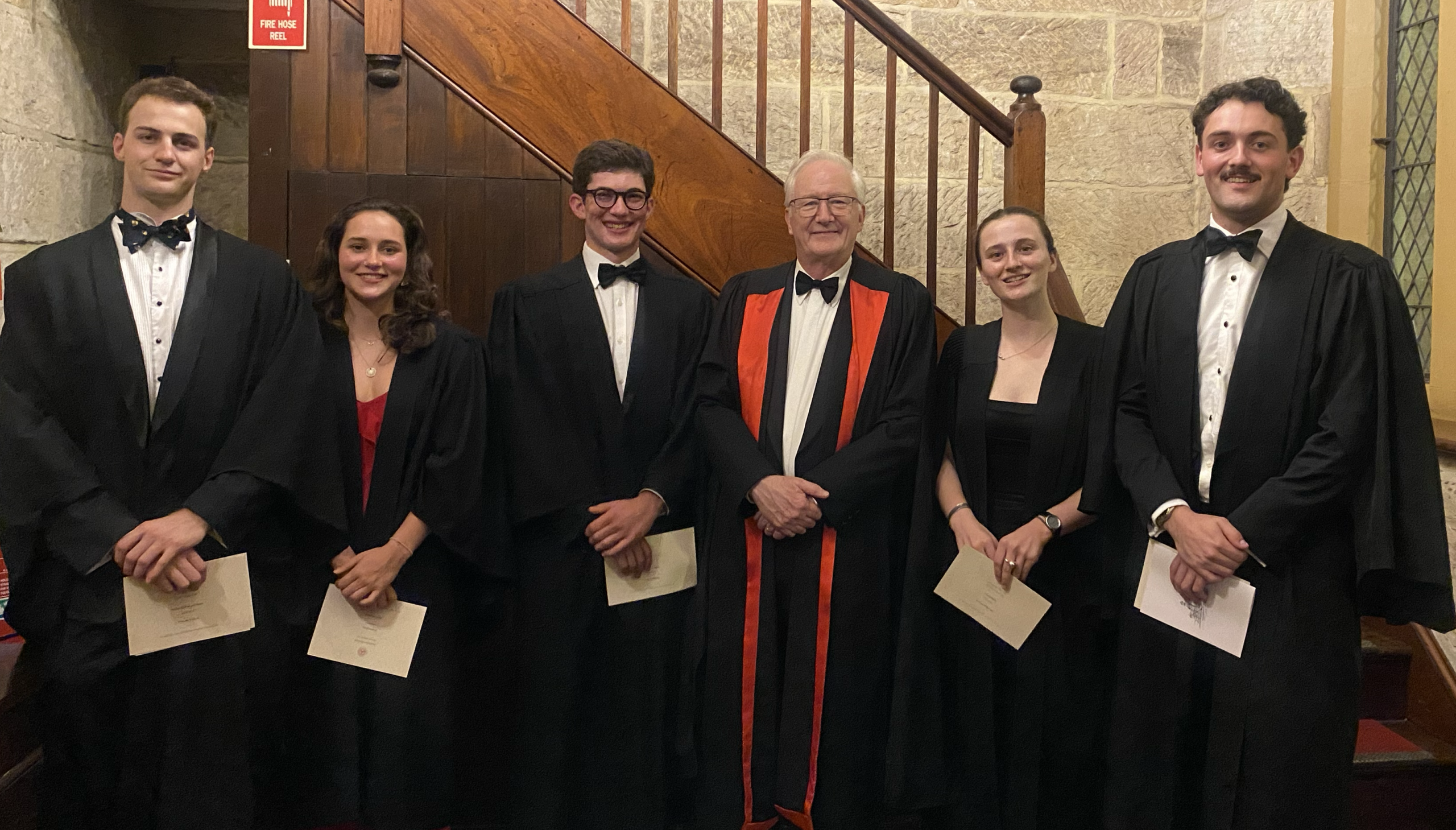
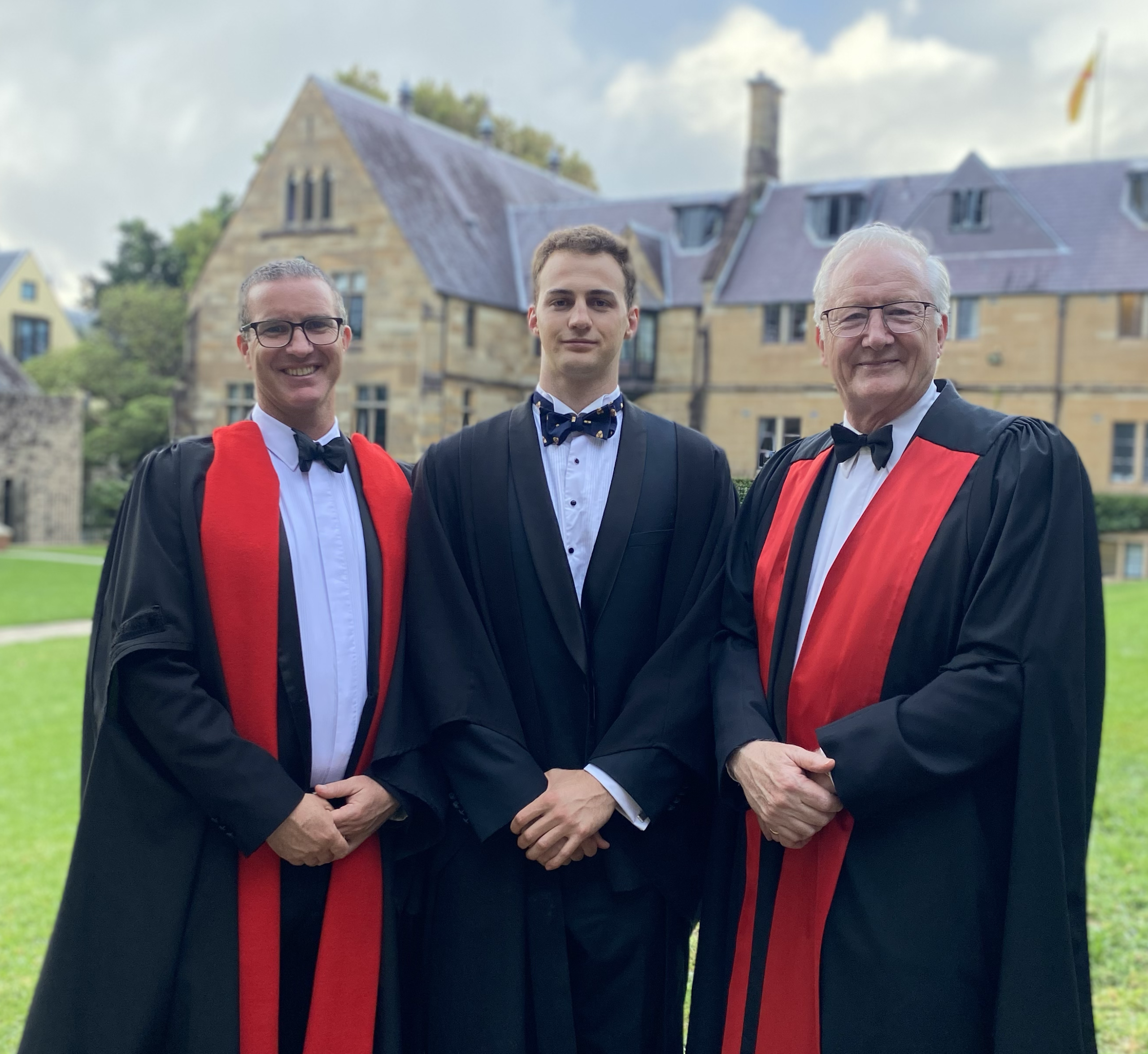
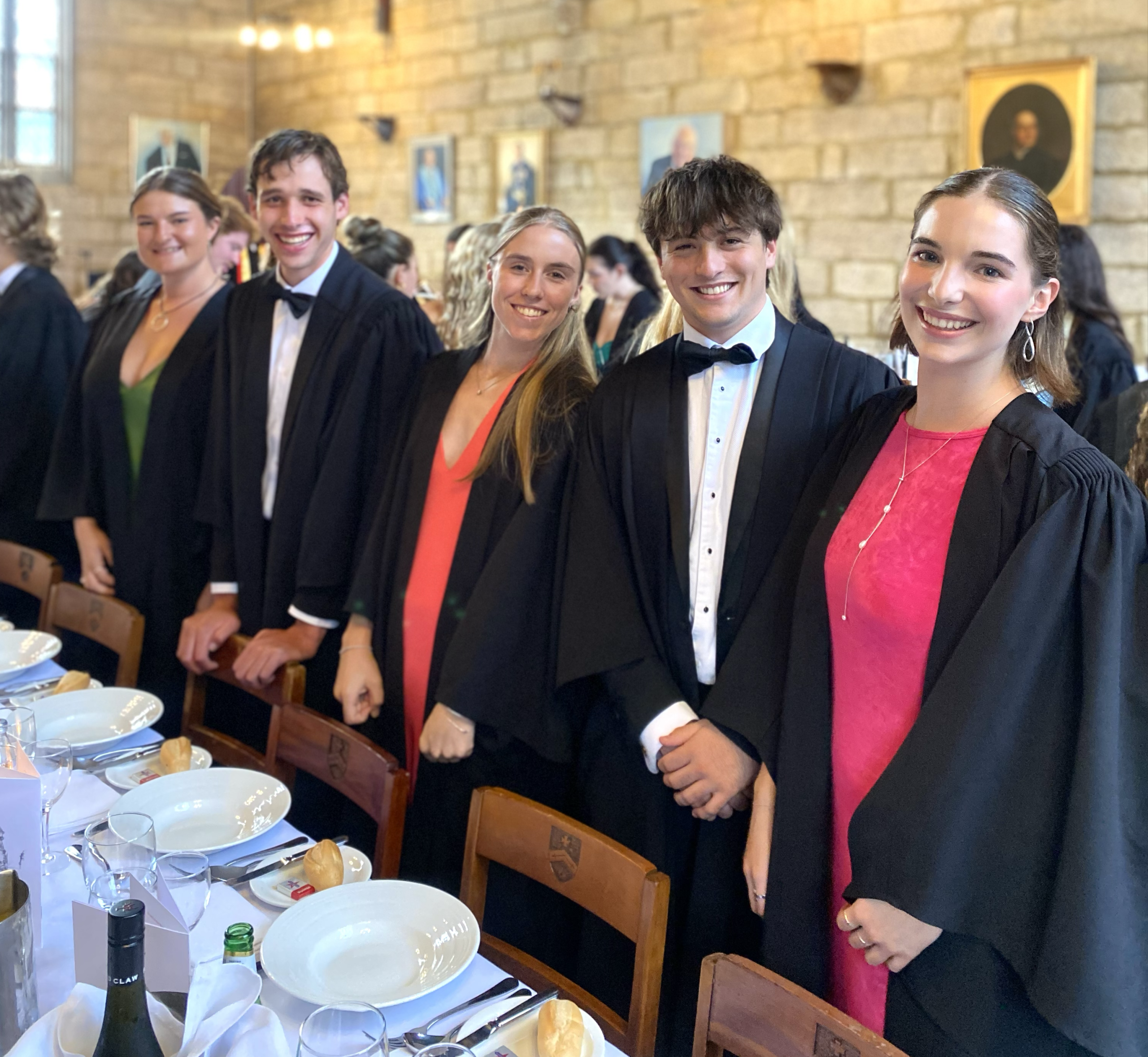
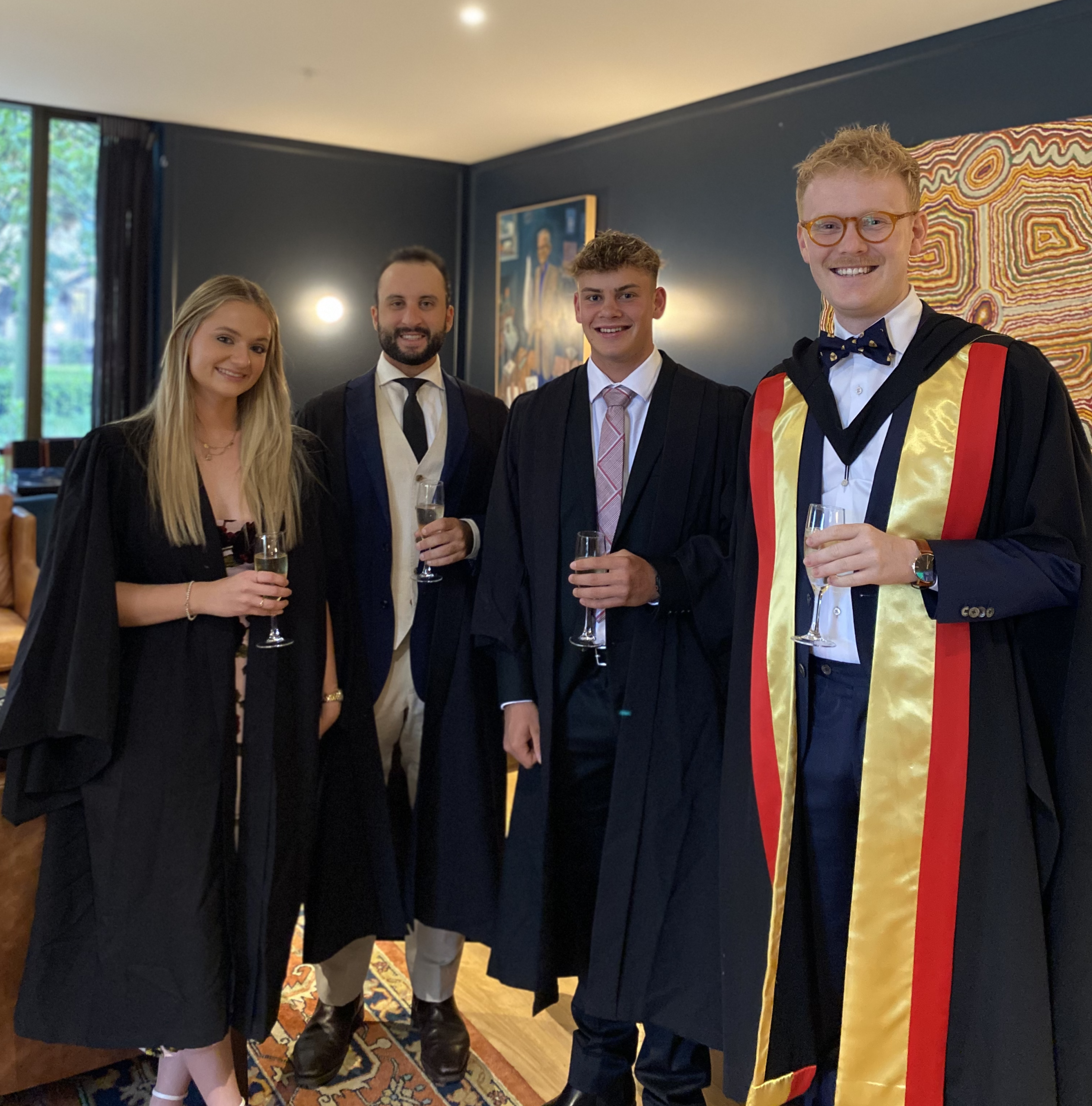
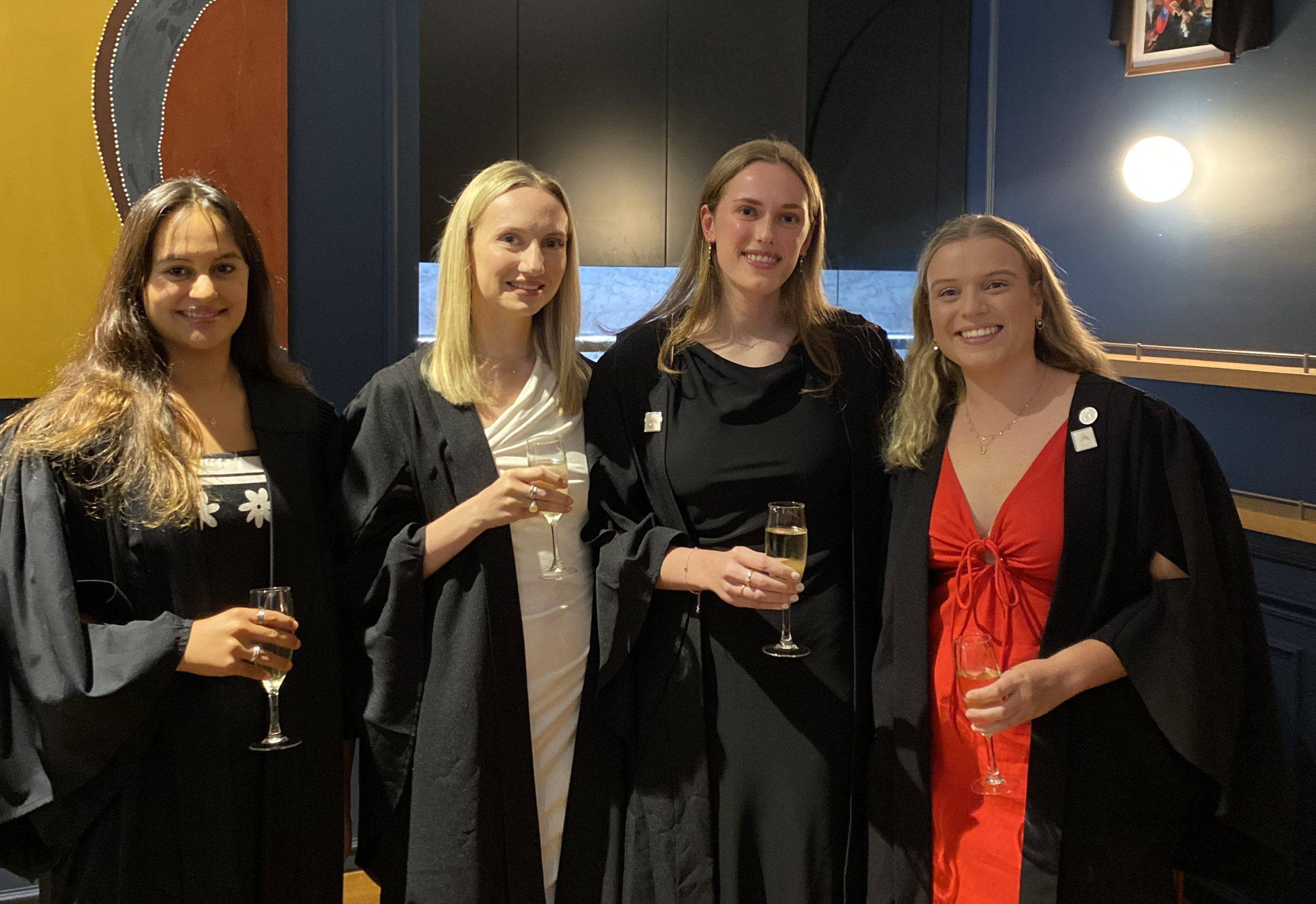
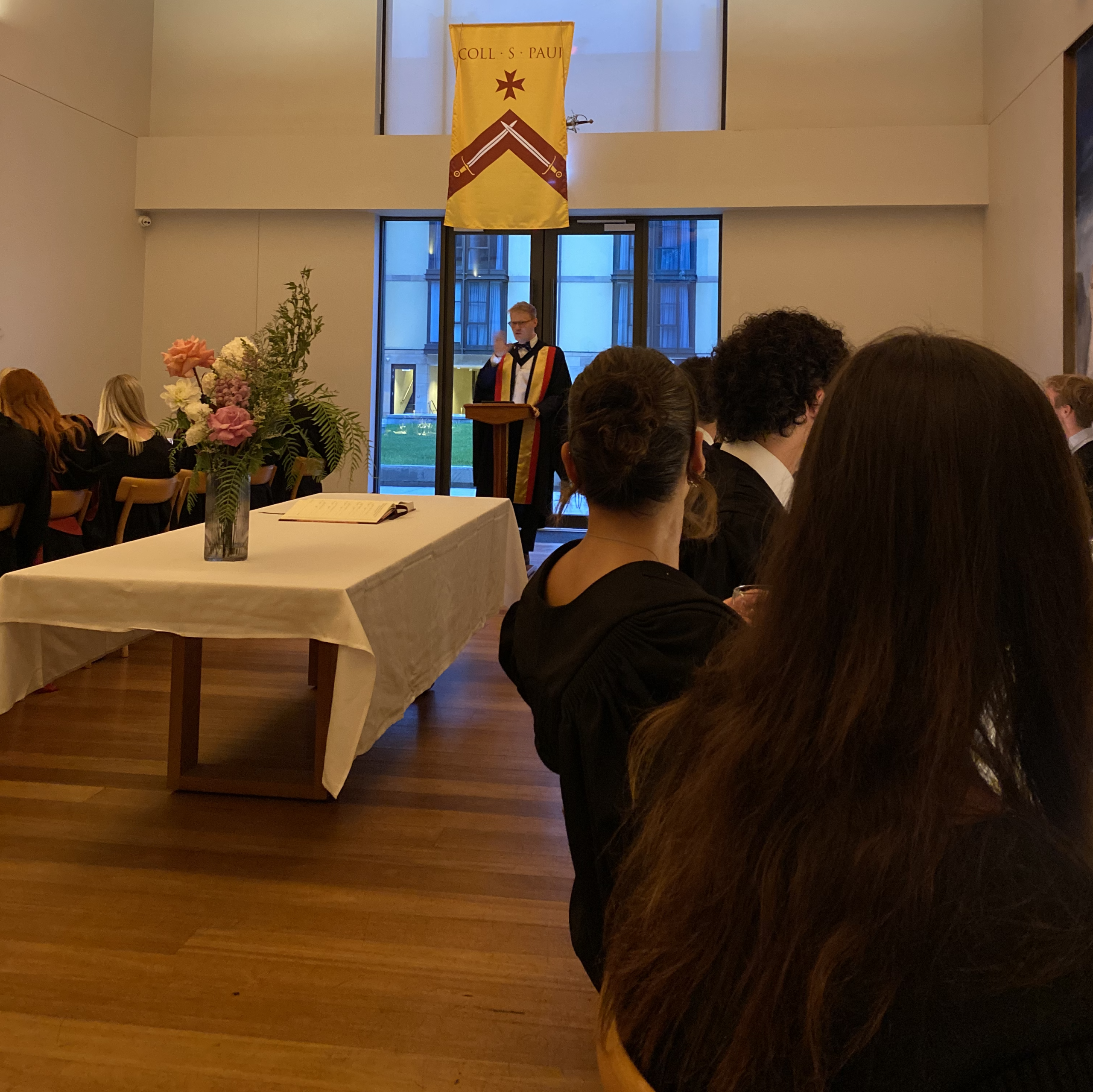
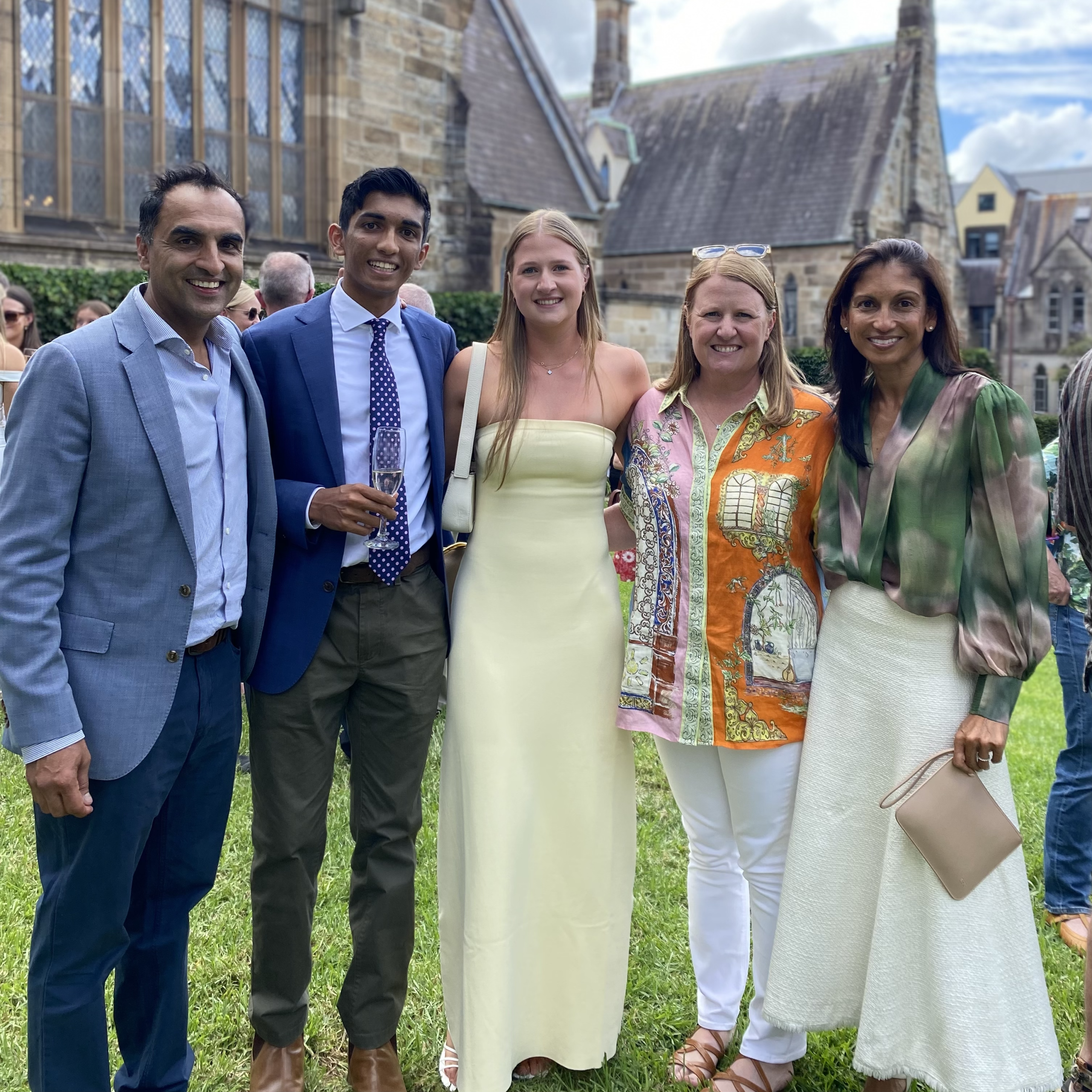
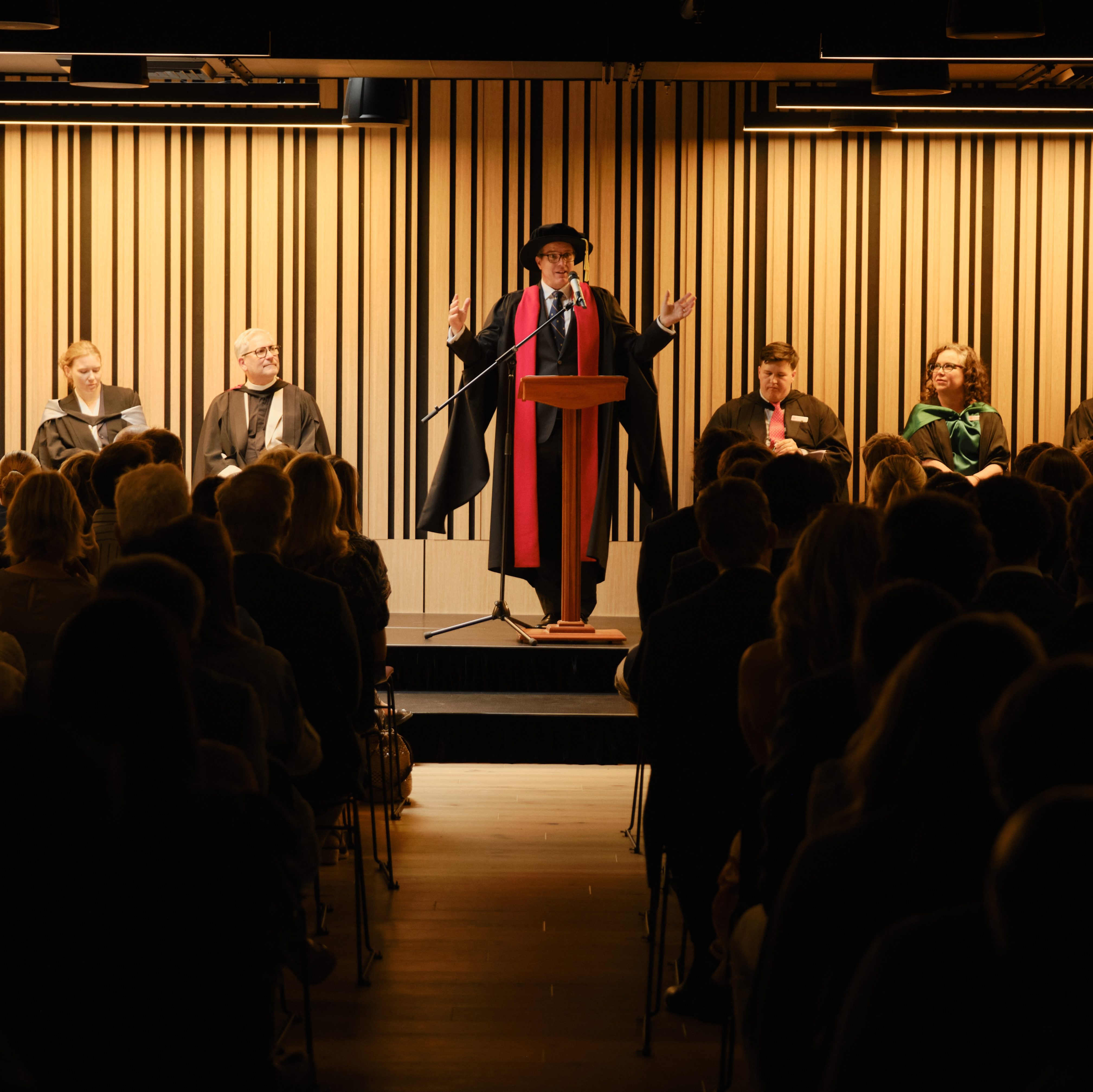
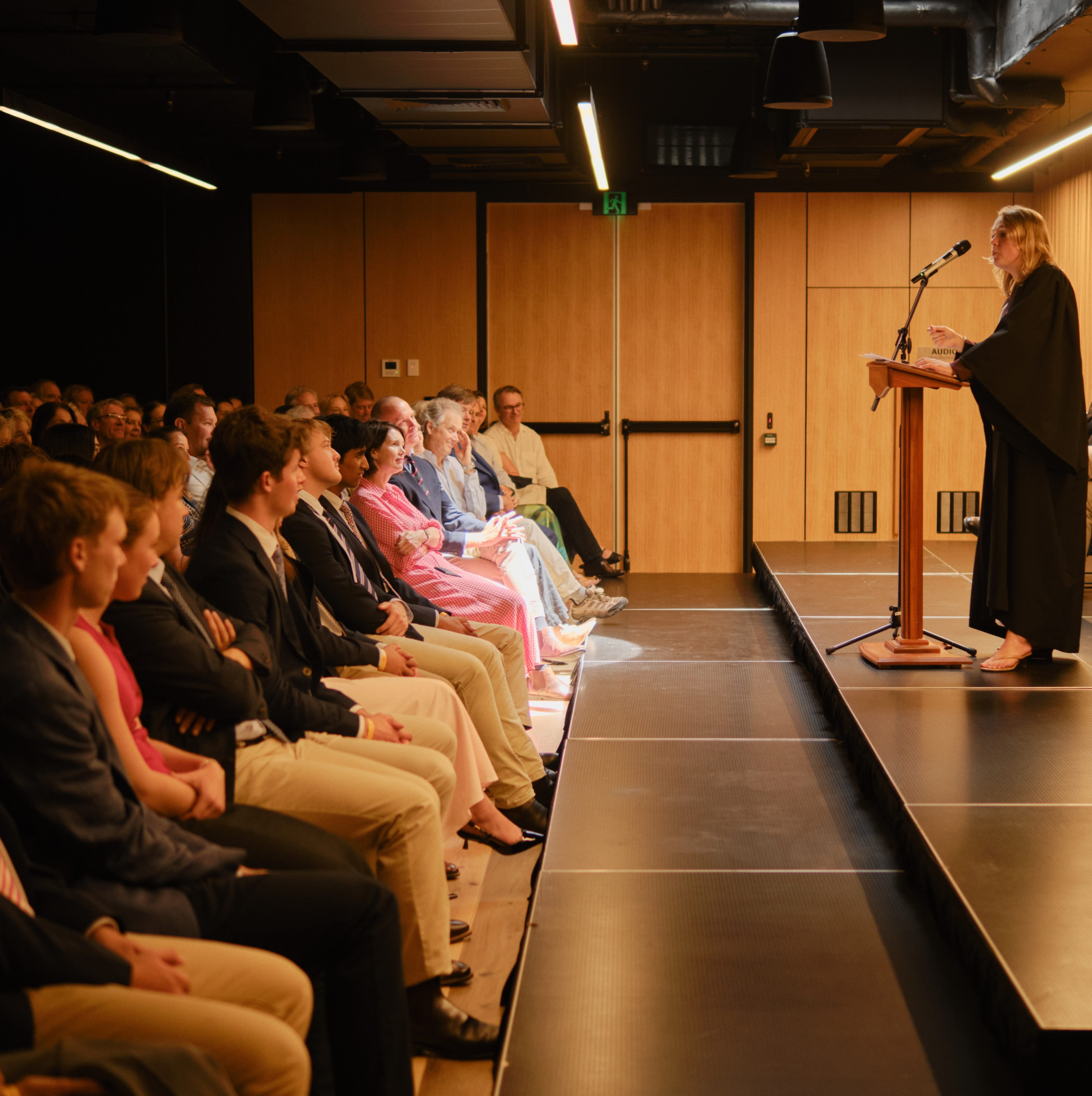
St Paul’s College aspires to be a place for scholarship and debate. The College’s 2026 Law Dinner made good that aspiration. The Guest of Honour, The Hon Justice Ed Muston (in College 1994-97) spoke to a Junior Common Room packed with judges (including the Chief Justice), barristers, solicitors, and law students. Justice Muston’s theme centred on the power of opportunity to create positive change within the legal profession. Looking around the room there were more female than male law students, which has become the norm across universities around Australia. In 2025 over 61% of law students were female. The profession does not yet reflect this level of diversity through its ranks, for example less than a third of women lead law firms in Australia.
Justice Muston’s captivating lecture stirred the room into a lively discussion, which included The Hon Chief Justice Andrew Bell AC, many ‘silks’, and of course the college’s current LLB, LLM and JD students. Discussion about diversity within the legal profession concluded that a representative profession was essential for the rule of law and that Australia was moving in the right direction.
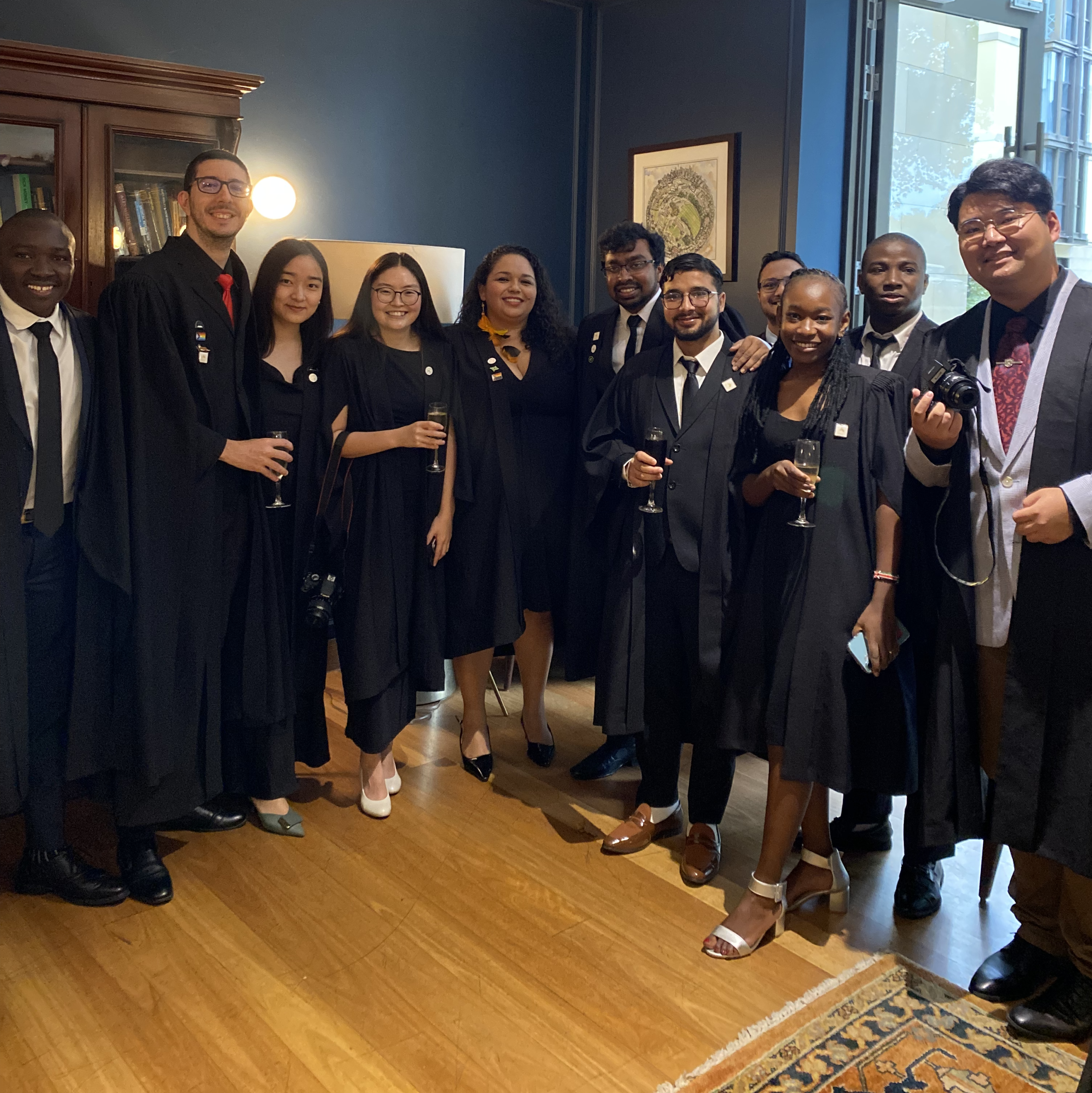
Diversity of the student body at St Paul’s has been a consistent pillar, especially since the opening of Graduate House in 2019, where about half are international students who come from many different countries and undertaking a broad range of courses. The students attending the Law Dinner reflected the diverse nature of today’s College’s student body. The Convener was Lilly Alexiou (BA/LLB II) who discussed her Indigenous heritage while introducing the Guest of Honour at Dinner and how excited she was, as a Pauline, for the opportunity to meet with and hear from so may high-profile members of the legal profession in NSW.
In the early years of the College the second Warden Revd William Savigny (1862-65) had high hopes for the College turning out lawyers and this started a trend maintained throughout the College’s history of producing hundreds of graduates from Sydney Law School, with many heading to the most important judicial appointments or to become leaders of this nation. The Law Dinner has become a popular gathering for current and former Paulines to celebrate the remarkable achievements of Pauline lawyers and is convened annually by the student body.
A generous gift from Judge James Renwick AM CSC (in College 1983–84, Sub Warden 1992–93) has transformed the Chapel’s lighting, enhancing worship, showcasing its heritage features, and improving illumination through modern technology.
The refurbishment was carefully planned with Petra Kleegraefe, director of Architectural Lighting Design Pty Ltd in Hunters Hill. Central to the work was retaining and cleaning the original ‘saucer’ lights, created in 1960 to the design of Fowler Mansfield and Maclurcan. Old Pauline John Mansfield (in College 1924–28), working with Peter Reed (1928–32), was responsible for several significant Australian buildings, including places of worship. The College Chapel shares features with the inter-denominational Chapel of St George the Martyr at HMAS Watson, South Head—completed in March 1961—notably its low-pitched roof and narrow central spire and Loire stained glass.
Petra commented: “The lighting concept for the chapel was to improve the atmosphere and functionality of the space while respecting its heritage. I’m delighted with the outcome, and I particularly love how the internal lighting of the Dalle de verre stained glass walls glows so beautifully at night. It invites people into the chapel and acts as a strong reminder of it to anyone walking through the courtyard.”
Current technology has enabled the replacement of incandescent globes, replacement of sub-optimal flood lights with fittings that better direct illumination to where it is needed, and a system for dimming and ‘scene setting’ the lighting array. “We carefully refurbished the existing luminaires with modern LED technology and implemented a control system that creates the right moods and functional light levels to suit the chapel’s various uses. I thoroughly enjoyed working with the College, and while lighting calculations give confidence that a scheme will work well, there is nothing quite like experiencing it come together in the space itself” said Petra.
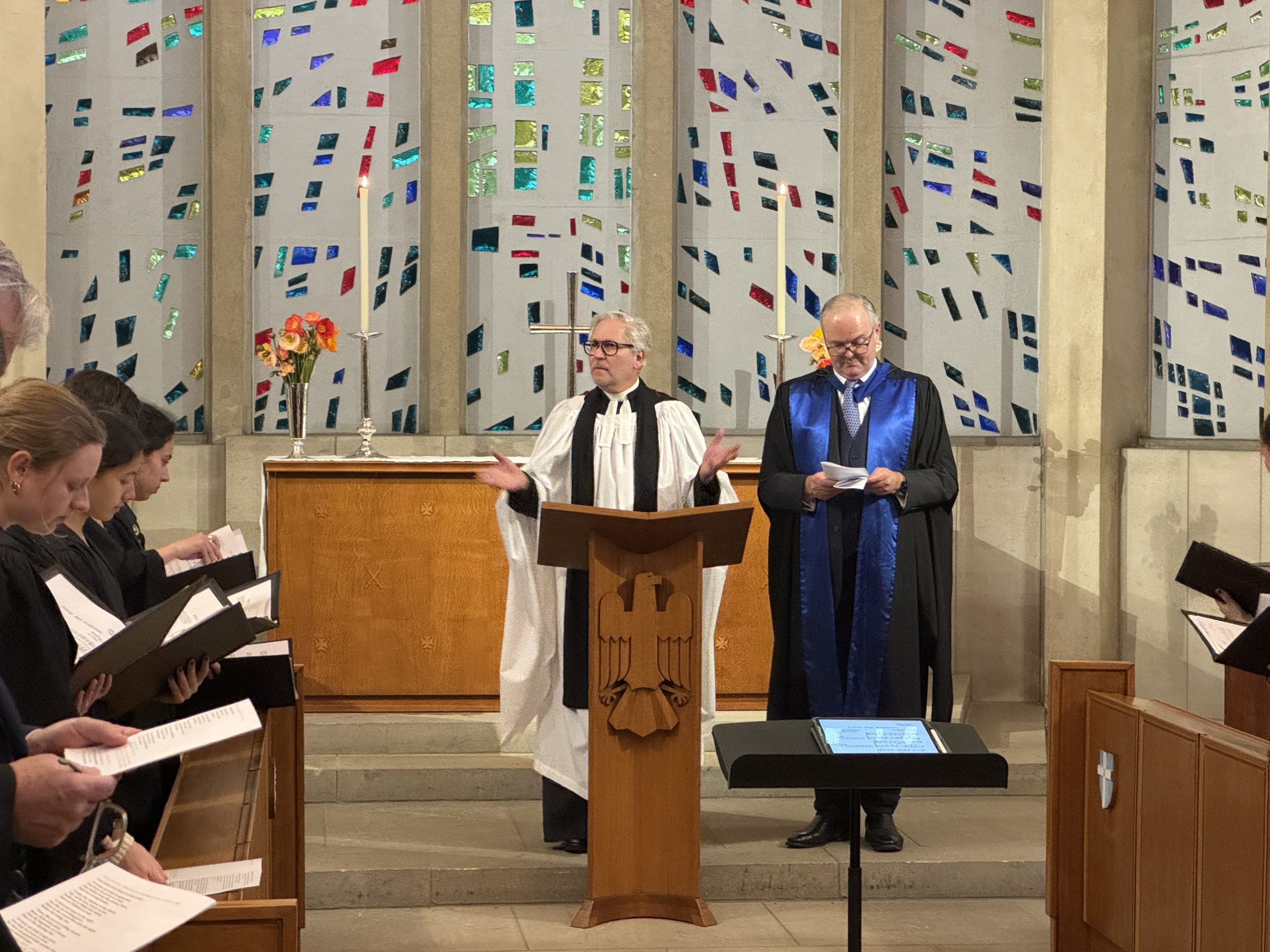
One of the most pleasant outcomes is the lighting settings for the Chapel’s east window created in glass slab by Gabriel Loire of Chartres, France to the design of Australian Artist and Blake Prize winner Eric Smith. The window is now illuminated for several hours each night.
James attended the Dedication of the Lights at Evensong on Tuesday 18 August and during the service he gave an address titled Lux Vestra Luceat (let your light shine). In it he said “this Chapel has always held a special place in my heart, because here I was introduced to Thomas Cranmer’s great Book of Common Prayer, and had the pleasure of being a chorister … So that is why it gave me such pleasure to help ensure the Chapel is better lit, to make even better the setting for the music, the liturgy and our worship in this sacred place. As St. John’s Gospel memorably says, “the light shines in the darkness, and the darkness has not overcome it”.
James also has a strong navy connection having recently retired as a Commodore RAN. James’s gift has been made in honour of Bishop Max Thomas (in College 1943-47, Warden 1985-94), James’s Warden.
The generosity of so many Paulines comes in many ways—from returning to College for events, to gifts in the mid-year Foundation Appeal, to bequests—all enormously important to current and future students of St Paul’s. Chapel architect John Mansfield’s bequest in 1965 resulted in the building of the Mansfield Library which opened in 1968 and is enjoyed today as a centre of self-directed study for both undergraduate and postgraduate communities.
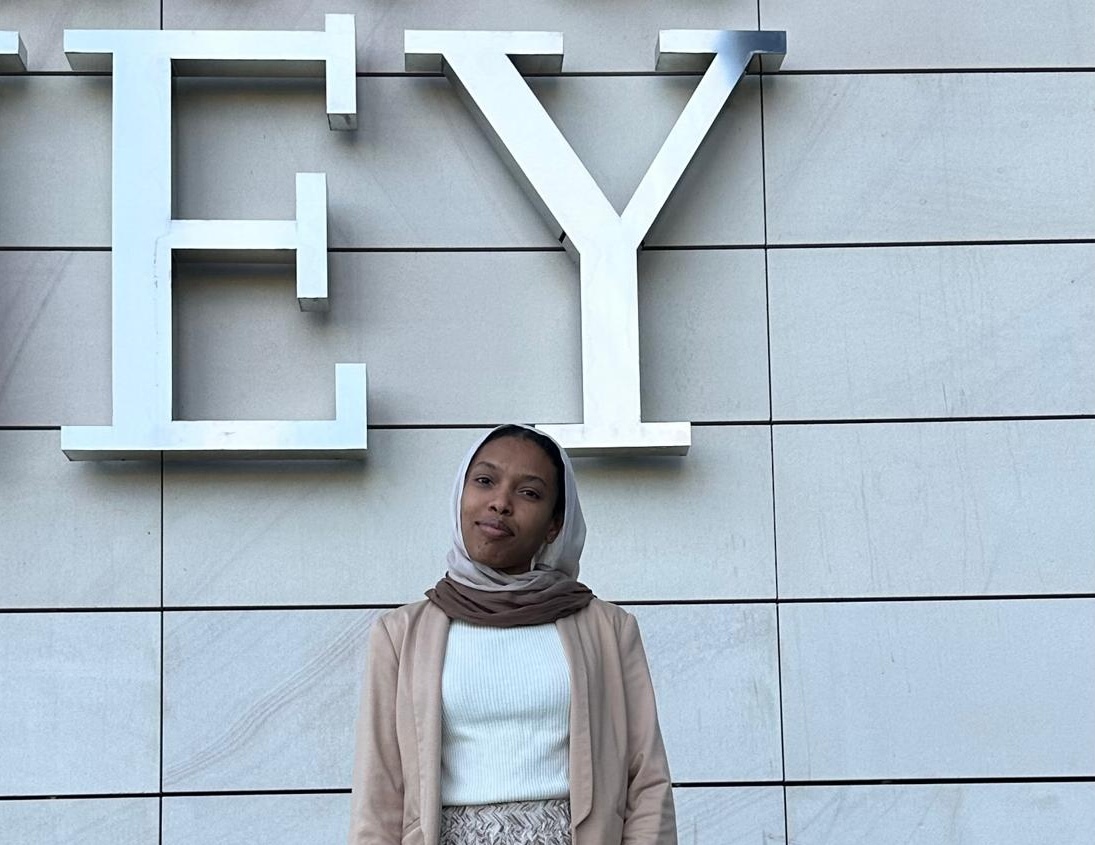
Postgraduate resident Bethelehem “Betty” Mamo brings a global perspective, a gift for languages and a commitment to refugee support to St Paul’s College: her story is about a childhood across borders, a path to Sydney and today, life at St Paul’s.
When Betty arrived in Sydney in July 2025 to begin a Master of Social Justice at the University of Sydney, she brought with her a story shaped by movement, resilience and a deep concern for people displaced by conflict. Betty is a member of St Paul’s College and lives in the postgraduate community. She is the recipient of a Sydney International Equity Scholarship at the University of Sydney, a postgraduate coursework scholarship supporting students from a range of backgrounds who face barriers to accessing higher education.
Betty was born in Khartoum, Sudan, and is an Ethiopian citizen through her parents. Her family’s history reflects the turbulent politics of the region. Her mother left Ethiopia as a teenager during the Derg regime and the period known as the Red Terror, while her father also moved to Sudan. Her parents met there in 1999, and Betty grew up in Khartoum, attending a Catholic school near the Nile River.
At the age of 11, Betty converted to Islam, a faith that has remained an integral part of her life. Her mother died while Betty was in Year 9, a loss that became part of the wider story of perseverance that carried her through school and into university. In 2015, her family moved to Ethiopia, where she continued her education at Nativity Girls School in Addis Ababa.
Betty first studied politics and international relations at Addis Ababa University before winning an international scholarship to study in Japan. She spent four years at the University of Tsukuba, which is 60km north of Tokyo, where she completed a Bachelor of International and Social Studies.
Her time in Japan broadened her outlook and deepened her appreciation of cultural difference. Betty is fluent in Arabic, Amharic, Japanese and English, and says she quickly noticed the contrasts between home, Japan and Australia. In Japan she encountered a culture she describes as highly dedicated and passionate; in Australia, she has come to value the calm, relaxed and multicultural character of daily life.
After returning to Ethiopia in 2024, Betty sought opportunities to work in the refugee sector, During this time, she undertook an internship with the Ministry of Foreign Affairs. Friends from her alumni network in Japan encouraged her to consider the University of Sydney. She applied successfully for the Sydney International Equity Scholarship and began her master’s degree in 2025.
At Sydney University, Betty’s Master of Social Justice allows her to focus on international issues and the human impact of conflict, displacement and inequality. She has found university life in Australia very different from her previous experiences, and has been struck by the passion and commitment of both her teachers and fellow students.
Betty says she has felt warmly welcomed at St Paul’s. As a Muslim student in the Graduate House community, she has found the College thoughtful and kind.
She has also enjoyed Sydney’s multicultural character, saying it gives her a sense of ease and belonging. Her favourite place in the city is the beach, where the openness of the landscape offers a welcome contrast to the intensity of study and city life.
Betty hopes to build a career in child protection and refugee support, with a particular aspiration to work in Ethiopia and, one day, with UNHCR. Her academic pathway and personal experience have given her a strong sense of purpose: to contribute to work that protects vulnerable people and expands access to dignity, safety and opportunity.
At St Paul’s, Betty’s presence adds to the richness of the Graduate House community. Her story connects Sudan, Ethiopia, Japan and Australia, and reflects the kind of global learning, service and hope that the College seeks to encourage.
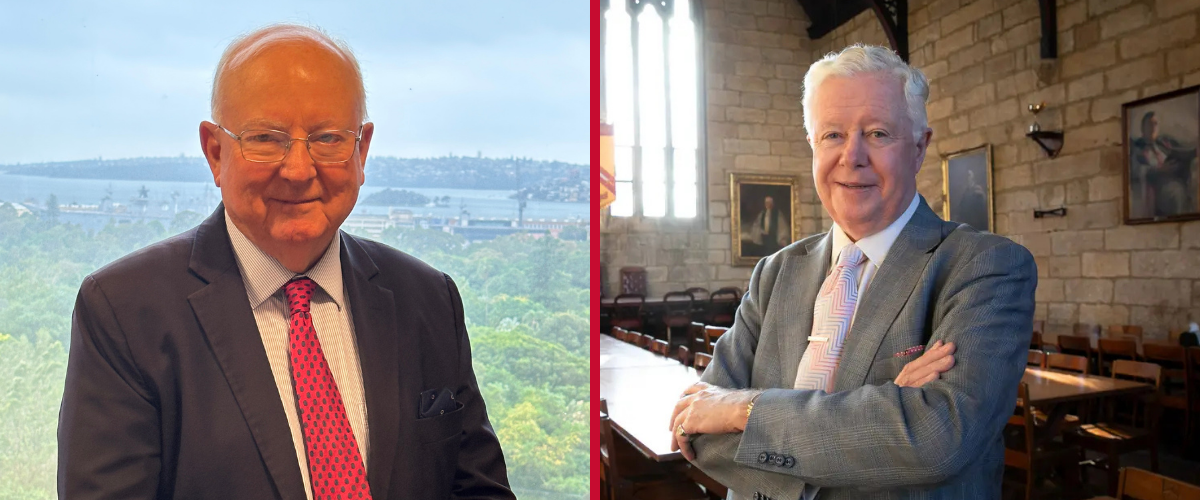
The College community warmly congratulates two current serving Paulines – College Fellow James Bell (in College 1969-75) and Director of Community Richard Morgan (in College 1978-82) – on receiving Order of Australia Medals (OAM) in this year’s King’s Birthday Honours List.
James is recognised for his outstanding contribution to the arts, particularly through music and theatre. Richard is recognised for a lifetime of service supporting Australian youth and strengthening communities. For both, this dedication can be traced back to their formative years at the University of Sydney as residents of St Paul’s College.
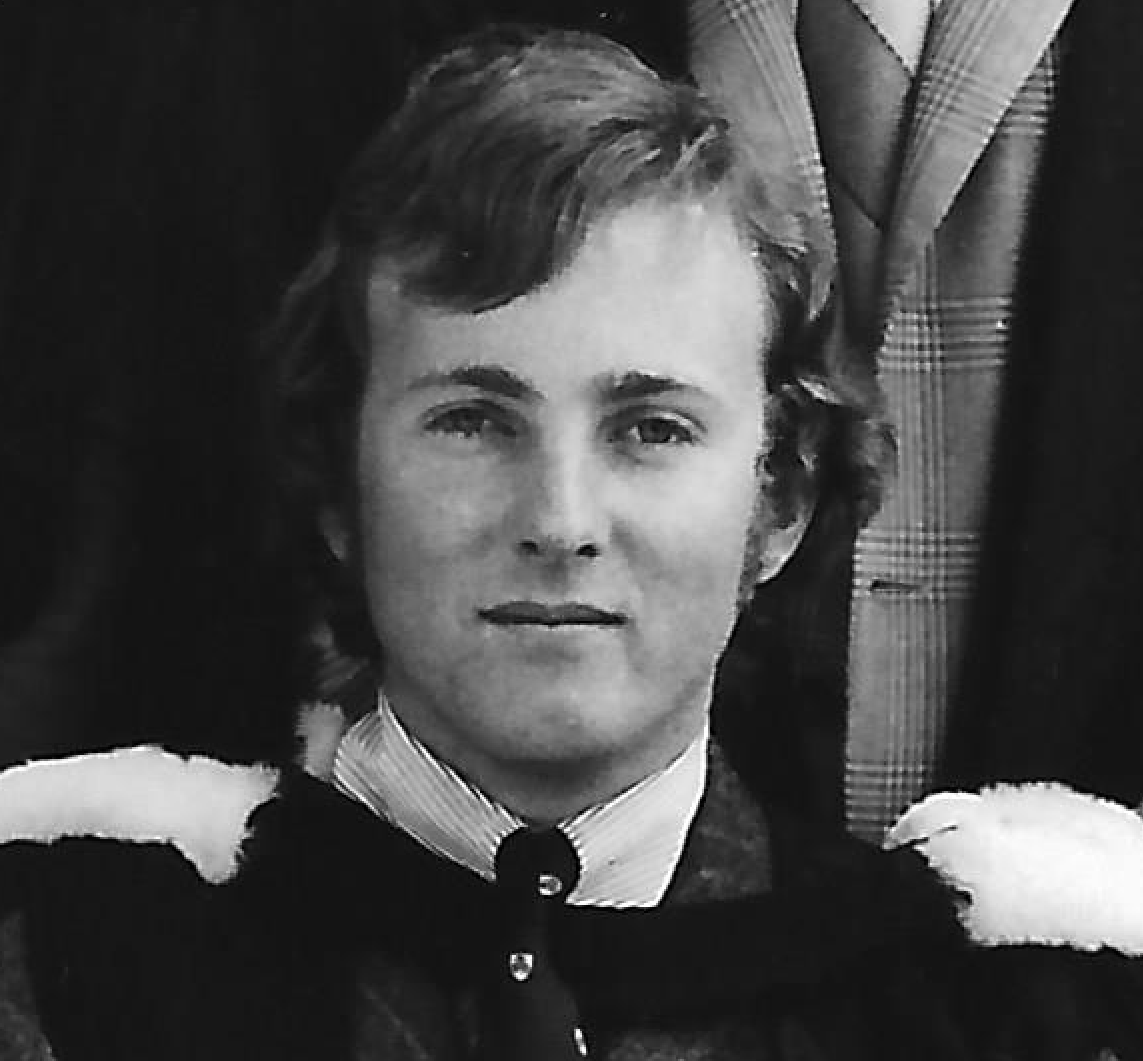
James Russell Godfrey Bell OAM (in College 1969-75)
As a University student, James studied Arts and Law, majoring in politics and music for his Arts degree. Alongside his studies, James was actively involved in a wide range of activities at the College and the University. He was a member of the Sydney University Regiment, where he served as a Lieutenant, was a soloist in the Music Department Pro Musica Choir, played the piano and sang at College events, took leading roles in the Intercollegiate G&S Society’s Princess Ida and Ruddigore, and was a regular performer in Mummers. He also served as Cellarmaster, Treasurer of the Students’ Club and Editor of The Pauline in 1975.
James was the Producer of Australia’s longest-running drama production, St Paul’s College Victoriana! for many years and retains the title of Producer Emeritus today. His appearances in countless seasons of Victoriana! have been book-ended by his debut in 1974 and his most recent guest appearance in 2024. It was his early involvement with Victoriana! that sparked a lifelong passion for live entertainment and the performing arts, although he insists that it was his acclaimed solo rendition of “A Frog Went Walking on a Summer’s Day” on radio 2GN Goulburn at the age of 5 that first introduced him to the joy of public performance!
Following a successful 20-year career in law, including as a Partner for 10 years at Blake Dawson Waldron (now Ashursts), James launched his own legal practice in 1995 specialising in commercial, entertainment, and media law. Through this, he has provided legal representation and support to a wide variety of creatives, including established singers, actors, writers, and producers, as well as major television networks. He produced two highly successful recordings by Peter Cousens AM (at College 1975) and released them through Polydor and Polygram.
In 1977, at the invitation of Robert Albert (in College 1953-56) and Lloyd Waddy (in College 1958-61), James was appointed as a founding member of the board of the St Paul’s College Foundation and served as a director for 45 years. He has also been a member of the Committee of the St Paul’s College Union for over 50 years. In 1996 James was elected to the College Council as a Fellow, a position he continues to hold today, three decades on. In this role, James has championed the arts from within, both sustaining existing traditions and advocating for new opportunities. He has also remained closely involved in Victoriana!, taking on a variety of roles in its yearly production. From 2011 to 2015, he fulfilled an important role as Development Director assisting in the planning for what are now The Ivan Head Building and St Paul’s College Graduate House, including complex negotiations with the University in relation to the establishment of the Australian Institute of Nano-Science on former College lands.
James is currently a board member of the Australian Elizabethan Theatre Trust, which principally supports singers, instrumentalists, and conductors to study and perform overseas and bring their experience back to Australia; the William Fletcher Foundation supporting the visual arts; Braeside Music and Drama Limited supporting the performing arts; and the Seaborn Broughton and Walford Foundation, principally supporting Australian theatre. He has served as a Director of the NSW Polo Association, President of the Goulburn Polo Club, and as a member of the Bell Shakespeare Company Support Committee.
James acknowledges that he was especially inspired to contribute to life of the College by the service of Robert Albert and Lloyd Waddy and that it was Lloyd in particular who encouraged his contributions in the wider world of the arts.
Richard Morgan OAM (in College 1978-82)
Richard studied a Bachelor of Arts and a Graduate Diploma in Museum Studies, and his commitment to community—first recognised while boarding at Cranbrook, where he served as Chapel Warden and Prefect and winner of the Holmes a’ Court Prize for service to the school—was further cultivated during his years of residence at St Paul’s College.
While at Paul’s, Richard was struck by the strong sense of service among those around him —whether through the Students’ Club, as students served the College through convenorships, or through peers volunteering in the Sydney University Regiment outside College. Richard served his College in a number of capacities, including convenorships of BBQ, Providoring, Cellarmaster, fire warden, on the Mummers Committee, and the Union.
He also co-founded the St Paul’s Luncheon Club, a collegiate gathering that regularly brought together up to 100 students from across the colleges for formal Sunday lunch in the Dining Hall. Many from his time at College still meet for an annual lunch on or near Australia Day. It is thought that this event has evolved at College into the “Wine Cellar Lunch” of today.
At the University, he served in several capacities, including as a member of the USU Child Care Centre Committee and several USU clubs and societies. While College Archivist he curated the intercollegiate archives exhibition at the University in 1982 with the help of colleagues from all the other colleges.
He was particularly inspired by old Paulines Lloyd Waddy (1958-61) and Robert Albert (1953-56), who had founded the St Paul’s College Foundation the year before Richard arrived. “I learnt from [Waddy and Albert] what it meant to be a community leader.” Richard reflects. “I have a lot to thank the College for in shaping my commitment to serving youth and the community”
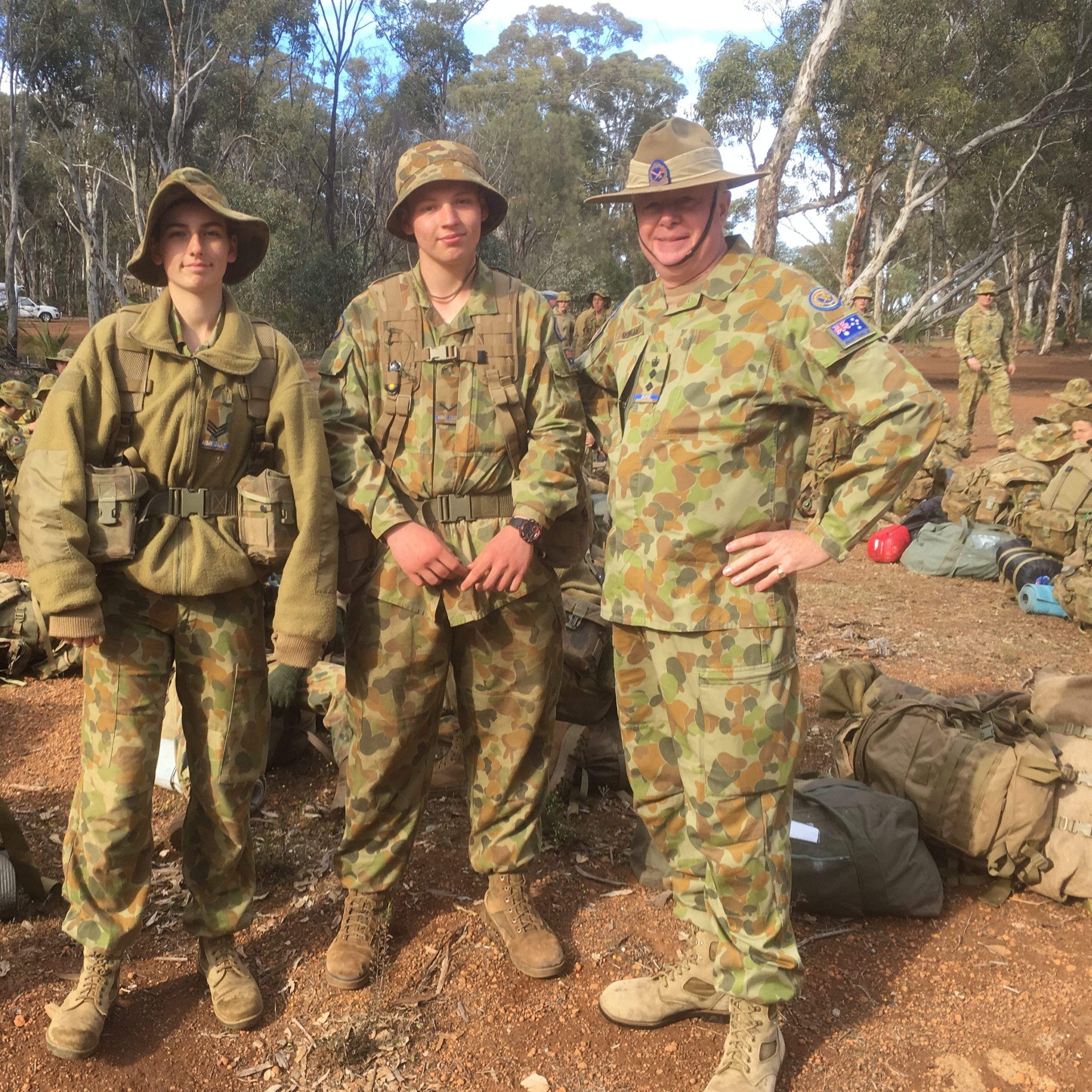
It was this that inspired the 19-year-old Richard to begin his lifelong involvement with cadets, serving as a Lieutenant and working with young people across Australia.
For Richard, his first experience with the cadets whilst at College has led to more than four decades of continuous service as a volunteer—43 years with the Australian Army Cadets and 4 with the Australian Navy Cadets. He is the only person to have served as the senior cadet officer in two of the three cadet services, having held leadership roles including Head of Corps and National Assistant Commander of the Army Cadets with the rank of Colonel, and currently serving in the equivalent Navy Cadets role, National Commander, with the rank of Captain.
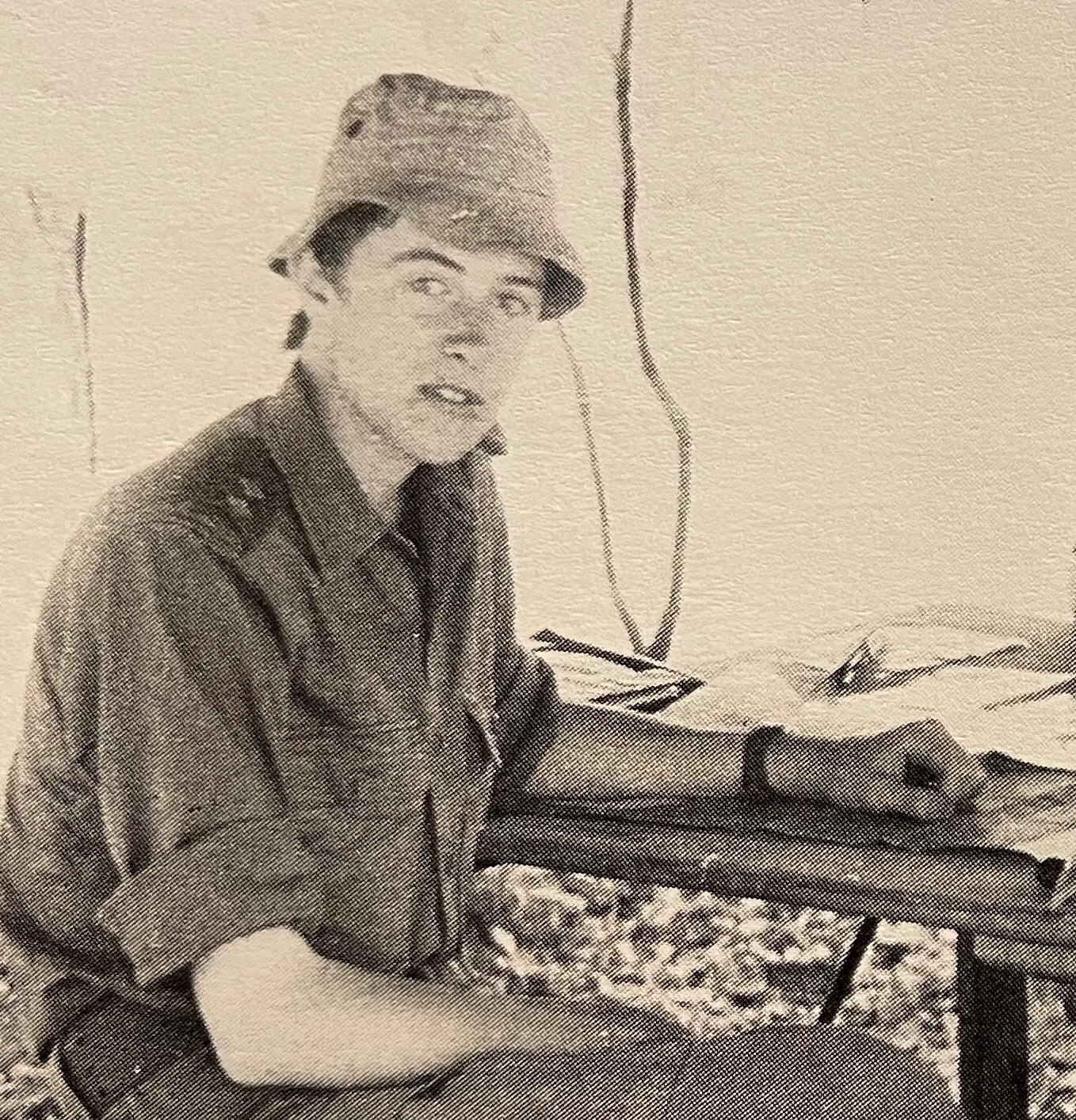
Richard’s studies included archaeology and, capturing his enthusiasm for this, in 1981 a Fellow of the College, Rev’d Dr Bill Jobling (1964), engaged him as his fieldwork research assistant on the Aqaba-Ma’an Epigraphic Survey of Southern Jordan. Bill and Richard worked together for many years on this project, and Bill supervised his Master of Arts.
Outside of his service with the Cadets, Richard has held leadership roles in education and government, including as principal of The Pittwater House Schools on Sydney’s Northern Beaches, Founding Director of the Newcastle Regional Museum and Director of Tourism and Community at Forbes Shire Council prior to returning to College as a staff member in 2017. Richard has served on numerous boards and committees in the not for profit sector and continues as Chair of the Episcopal Ministry Fund which financially supports the Anglican Diocese of Bathurst. Richard is also a musician and plays the pipe organ for ceremonies and services. Being a long-standing Justice of the Peace he says he is kept busy by numerous calls on his services by students and staff of the University. His current role as Director of Community at the College, held since 2017, has seen him play a vital role in connecting and strengthening the wider College community.
Ongoing service to the College
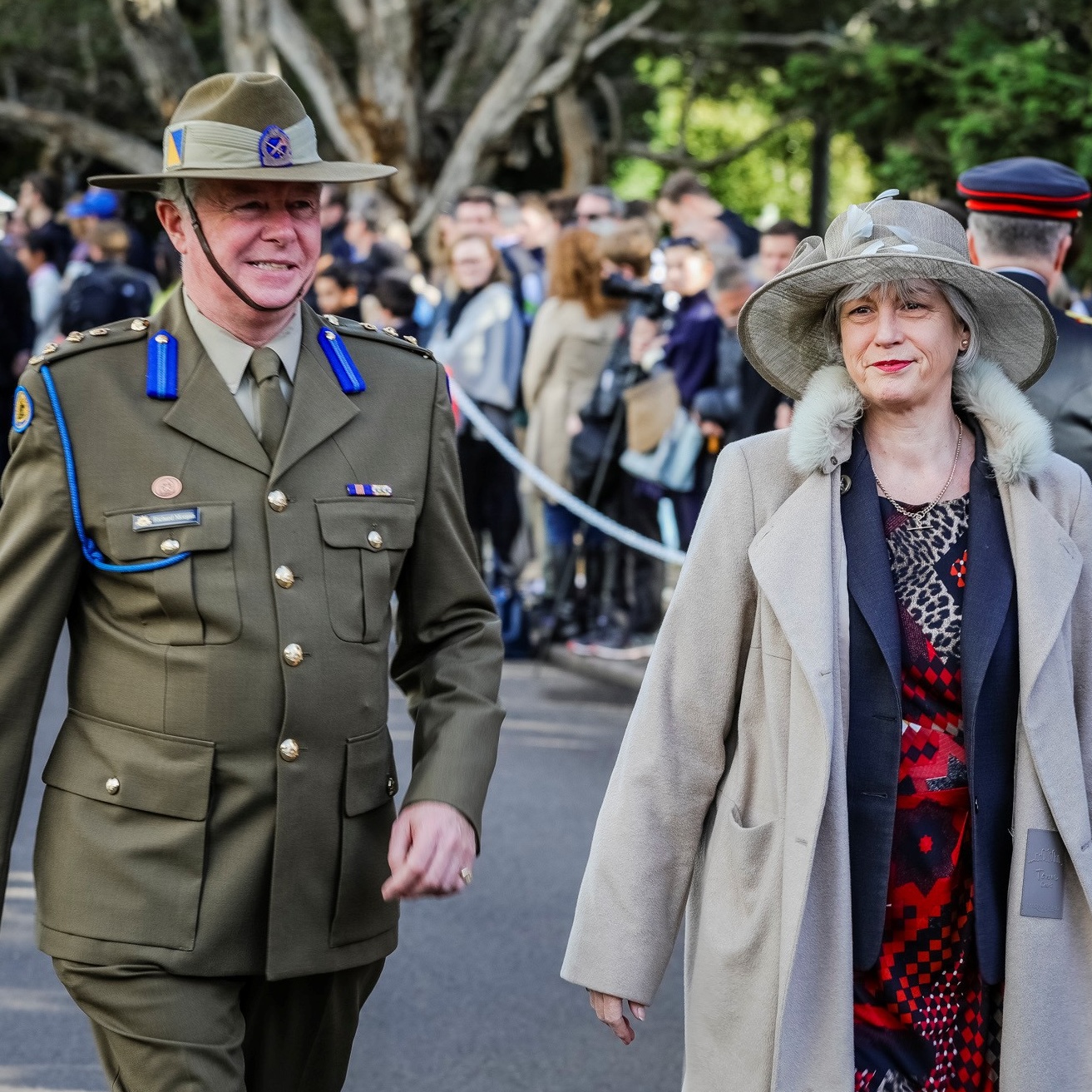
Today, James and Richard continue to actively serve the College community in their respective roles, and both have many years of service as elected members of the St Paul’s College Union Committee; Richard is Honorary Secretary. On their recognition, College Warden Ed Loane said: “The College is forever grateful for the service James and Richard have shown over the decades. Their lives reflect what the College has, and continues to, aspire to foster in its community: a lifelong commitment to service. We are incredibly proud – and dare I say not surprised – to see their contributions recognised in this year’s King’s Birthday Honours List”
Each year, St Paul’s College Graduate House is home to visiting professors and scholars affiliated with the University of Sydney, who reside at College while undertaking guest teaching, research fellowships, or sabbatical work.
These visiting scholars join St Paul’s from a variety of countries and disciplines and enrich the intellectual life of the community as they participate in College life. Whether informally over a meal, or through structured seminars and workshops, they generously contribute their time and expertise to the College community during their stay.
For students, the opportunity to engage directly with researchers at the forefront of their field offers a unique chance to explore ideas beyond their own area of study.
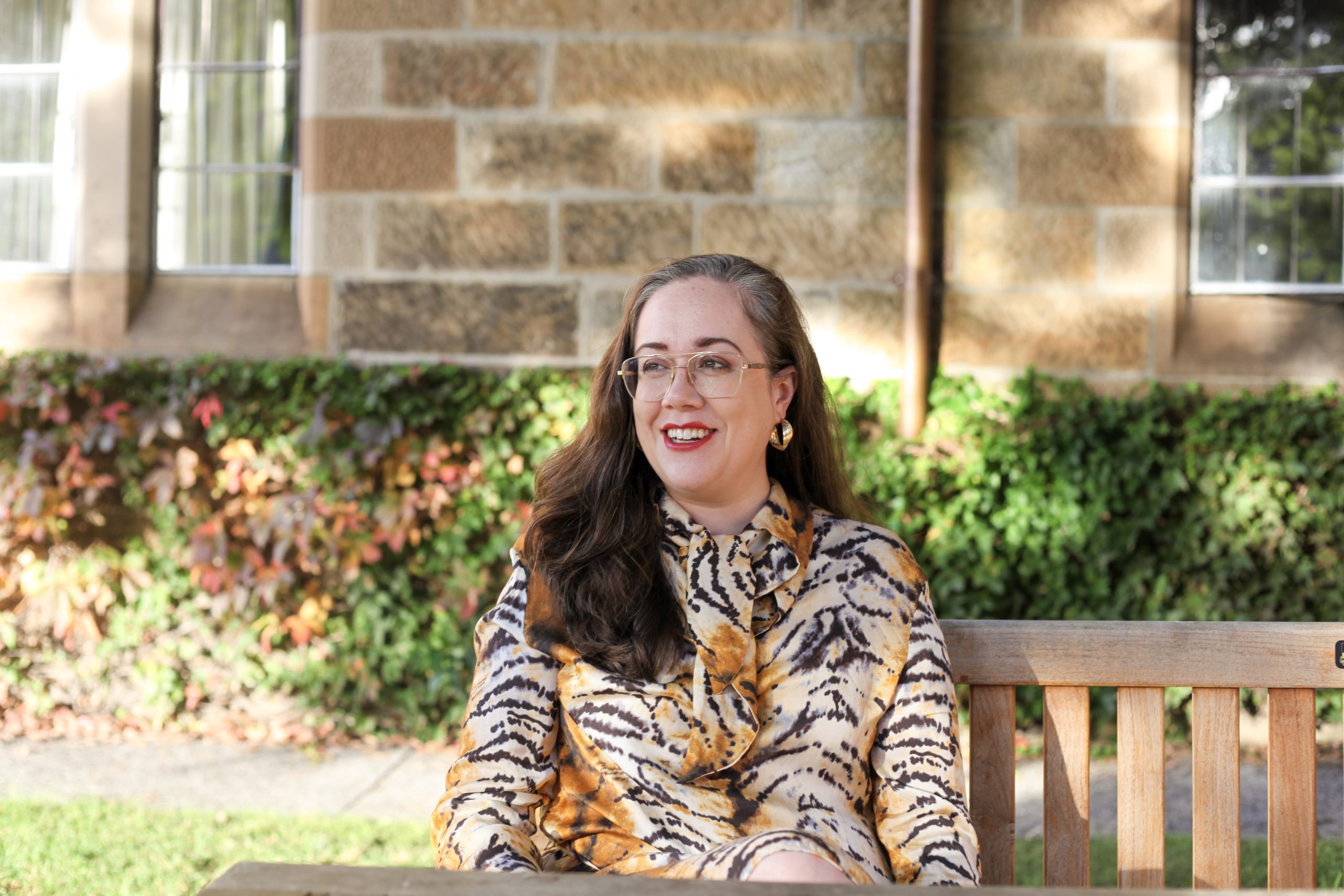
Before returning to the United Kingdom, we had the chance to sit down with Fiona to reflect on her time in Sydney.
What brought you to Sydney, and the University of Sydney in particular?
The University of Sydney is world-renowned for its research excellence. The Law School has some fantastic scholars, and it has been a pleasure to be hosted by Professor David Rolph, who is known across the globe for his research in defamation law, and media law generally. It has been a brilliant opportunity to meet other fantastic researchers as well as media law practitioners in New South Wales.
I also promised myself I would see the Sydney Opera House one day, with my own eyes – which I’m happy to say is something I’ve done on several occasions since being here!
What is your area of academic focus?
I write on personality rights in the internet age. More specifically, I’m interested in how we can protect our privacy and reputation at a time when more personal information is being uploaded to the web than ever before.
In my research I consider multiple legal avenues such as privacy law, data protection law and most recently I’ve been focussing on defamation law. Last year I published a book considering whether English defamation law can protect our reputation if we’re defamed on the internet – or whether data protection law and the ‘right to be forgotten’ can now do a better job.
Since being in Sydney, I’ve returned to some previous work I did on the ‘public interest defence’ to actions in defamation – there is now a similar defence operating in Australia and I’m interested in how both the English/Welsh positions and the Australian positions compare.
What is something that has surprised you about Sydney?
I’m glad to say that Sydney has lived up to my very high expectations of being one of the ‘coolest’ cities in the world. Which was quite a high bar! It is bustling and full of skyscrapers, but at the same time has a relaxed and friendly atmosphere. It is also a city of beaches – even more so than I realised before I arrived. Sydney is shaped by its ecology and the landscape. The Blue Mountains were incredible to visit.
The one thing that will stay with me the most is the ‘golden hour’ – when the sky turns baby pink just before the sun sets. You must catch it quickly – but it is incredibly beautiful for about half an hour. I often sat on the roof terrace at St Paul’s to watch it, as a backdrop to all the shining high-rises on Darling Harbour.
You’re based at St Paul’s College while you’re here, what’s it like having a collegiate home away from home?
It has been one of the best parts about my stay. The sense of community is so strong – after a long day, College is somewhere you look forward to going. The formal dinners, academic events, musical recitals and everything else going on in the College make it such an intellectually vibrant place to be. I can’t imagine having been anywhere else now, it was such a fundamental part of my visit. I’ve made connections for life, and the student community have really put their best foot forward – everyone has been so kind and welcoming. It is not just the beautiful surroundings, but the people that make the College. I’ll remember it forever.
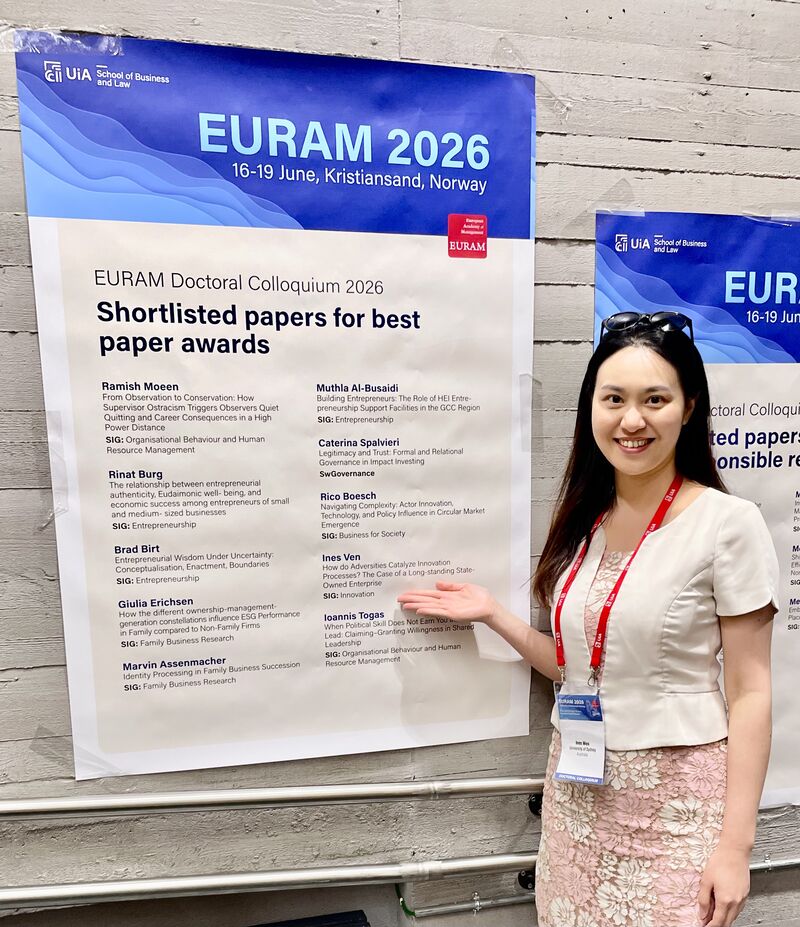
Ines Wen joined Graduate House in 2023 with an MBA from the National Taiwan University and is now undertaking her PhD at the University of Sydney. She has been honoured by being shortlisted for the Best Paper Award at the European Academy of Management (EURAM) 2026 Annual Conference at the University of Agder in Kristiansand Norway this June. The conference theme, “Navigating High Waters: Managing in an Age of Disruption”, closely reflects Ines’s research, which uses Hokusai’s The Great Wave off Kanagawa (1831) as a metaphor for how disruption can trigger innovation in management and organisational structures.
EURAM is a learned society founded in 2001 to advance the academic discipline of management in Europe. With members from 60 countries across Europe and beyond, EURAM brings together a highly diverse scholarly community and provides opportunities to enrich debate across a wide range of management research themes and traditions.
This latest recognition follows a series of significant achievements for Ines, including being named one of only five scholars worldwide to receive the 2024 Kwok Leung Memorial Dissertation Fund award from the International Association for Chinese Management Research. Her doctoral research, which examines how disruption can catalyse innovation in Chinese state-owned enterprises operating globally, has also led to several conference paper acceptances, including presentations on international business, sustainability and Chinese management research.
Ines credits her recent success to the generous support and guidance of her PhD supervisors at the University of Sydney, Associate Professor Stefan Meisiek, Dr Bart De Keyser and Professor Stewart Clegg.
She has also received academic support in Norway from Professor Patrick Spieth, Professor of Technology, Innovation Management and Entrepreneurship at Universität Kassel, who has provided Ines with tremendous guidance and mentorship over the past two years.
Congratulations to Ines on another outstanding academic achievement, bringing great credit to the University of Sydney and St Paul’s College post-graduate community.
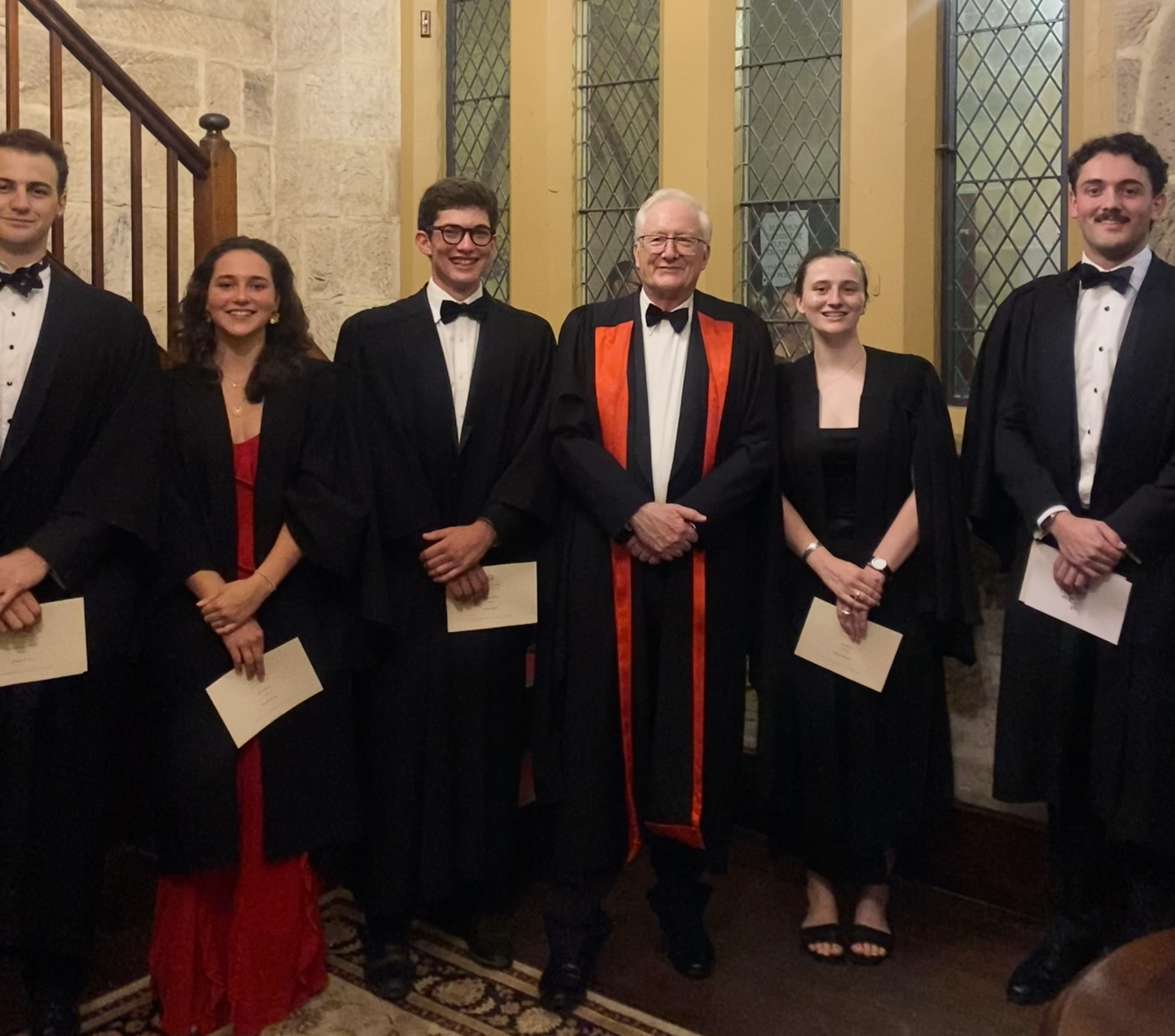
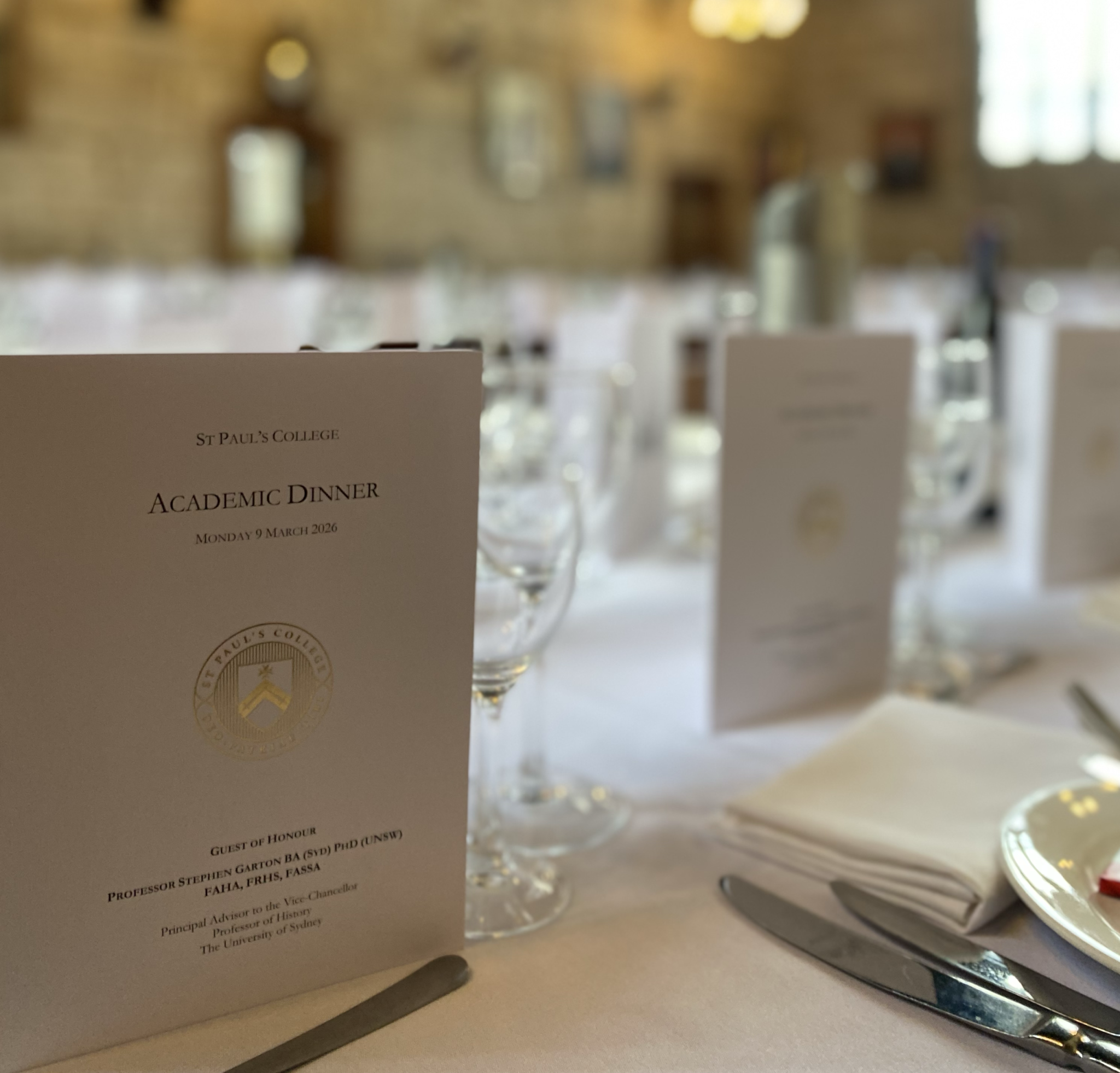
St Paul’s College has recorded its strongest academic results on record, with more than 59 per cent of students achieving Distinction or High Distinction averages in 2025. These outstanding outcomes were celebrated at the Academic Dinner held on 9 March, where prizes were awarded and Professor Stephen Garton AM, Principal Advisor to the Vice-Chancellor at the University of Sydney and Guest of Honour, reflected on the enduring value of education and the importance of investing in knowledge.
The year was marked by exceptional undergraduate and postgraduate performances, with engineering and science students particularly prominent, supported by the College’s strongest tutorial programme to date. The College community warmly congratulates all 2025 and 2026 students on their academic success and the remarkable achievements being celebrated this year.
Strongest Academic Achievement Sets New High
“Education is not a preparation for future living but a process of living.” — John Dewey, My Pedagogic Creed (1897).
St Paul’s College continues to exemplify a culture of academic excellence, with our resident community truly living the life of scholarship. In 2025, more than 59 per cent of students were recognised for achieving Distinction or High Distinction averages—an outstanding result celebrated at the Academic Dinner held on 9 March.
The evening’s Guest of Honour, Professor Stephen Garton AM, presented the College prizes and spoke eloquently on the enduring value of education and the importance of sustained investment in knowledge. As Professor of History and Principal Advisor to the Vice-Chancellor, Professor Garton also reflected thoughtfully on the need for the humanities to be afforded their proper weight within the tertiary sector.
Academic achievement at St Paul’s was further celebrated through the awarding of College prizes, alongside recognition of incoming students who have received awards on entry to the University of Sydney in 2026.
The 2025 undergraduate results were the strongest on record. The highest achiever was Ed Taylor (in College 2022–25), who is studying a combined BE(Mechanical)(Hons) and BA(Economics), closely followed by Ben Varela, who is enrolled in BE(Biomedical)(Hons) and BSc(Medicine). Engineering students were particularly prominent, comprising six of the College’s top ten performers, followed by four students in the sciences. Among postgraduates, there were 15 MD and PhD candidates and a further 11 research postgraduates, with science disciplines again dominating the top ten coursework results.
These exceptional outcomes reflect not only individual dedication but also the strength of the College’s academic culture, supported by the most robust tutorial programme to date—largely delivered by senior students. The College community warmly congratulates all 2025 and 2026 students on their academic success and the remarkable scholarly achievements celebrated this year.
In 1856, a proclamation by the Governor of New South Wales officially brought the College into existence. This was quickly followed by approval of the building plans by the University Senate and the laying of the foundation stone in the presence of many of the Colony’s most prominent citizens.
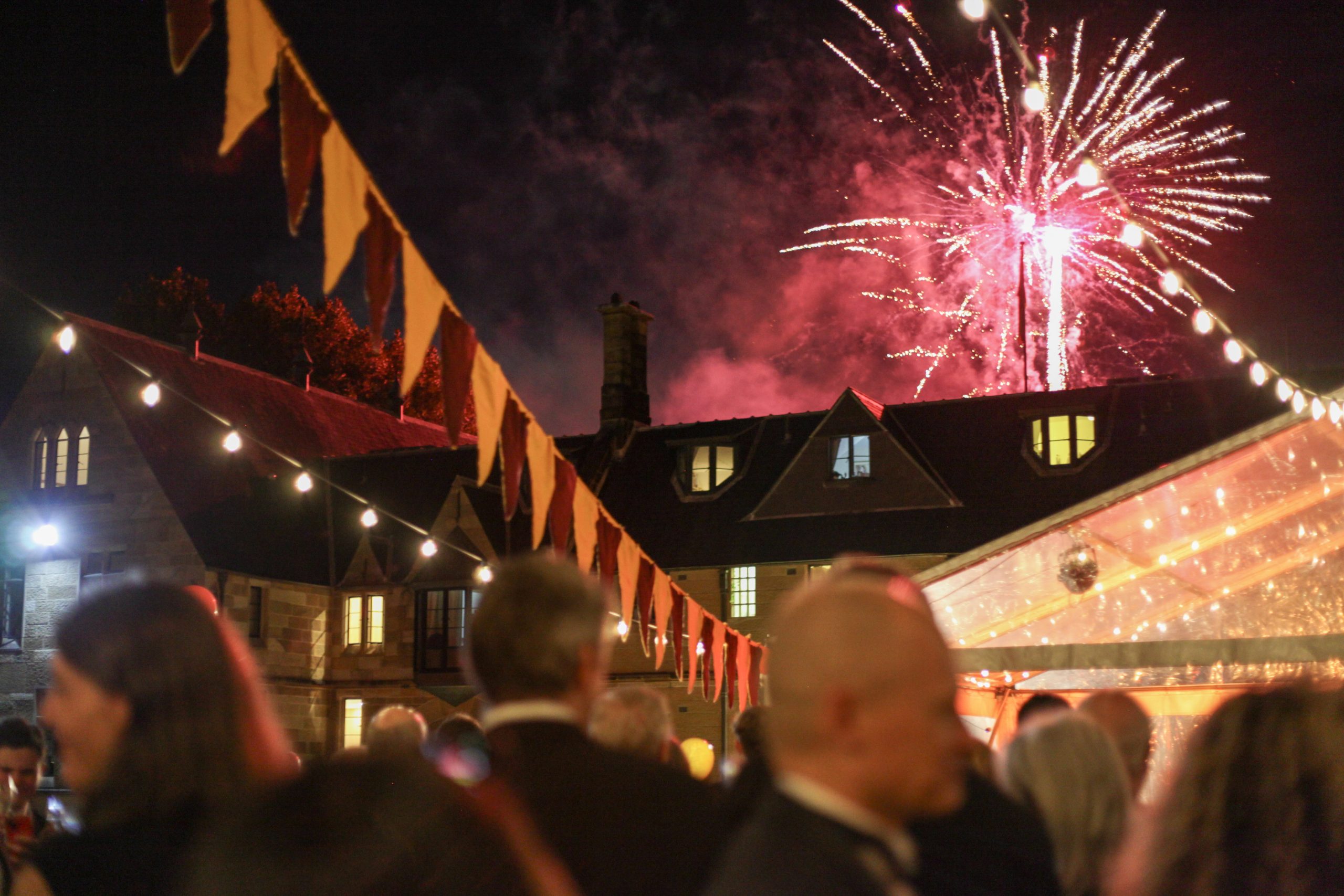
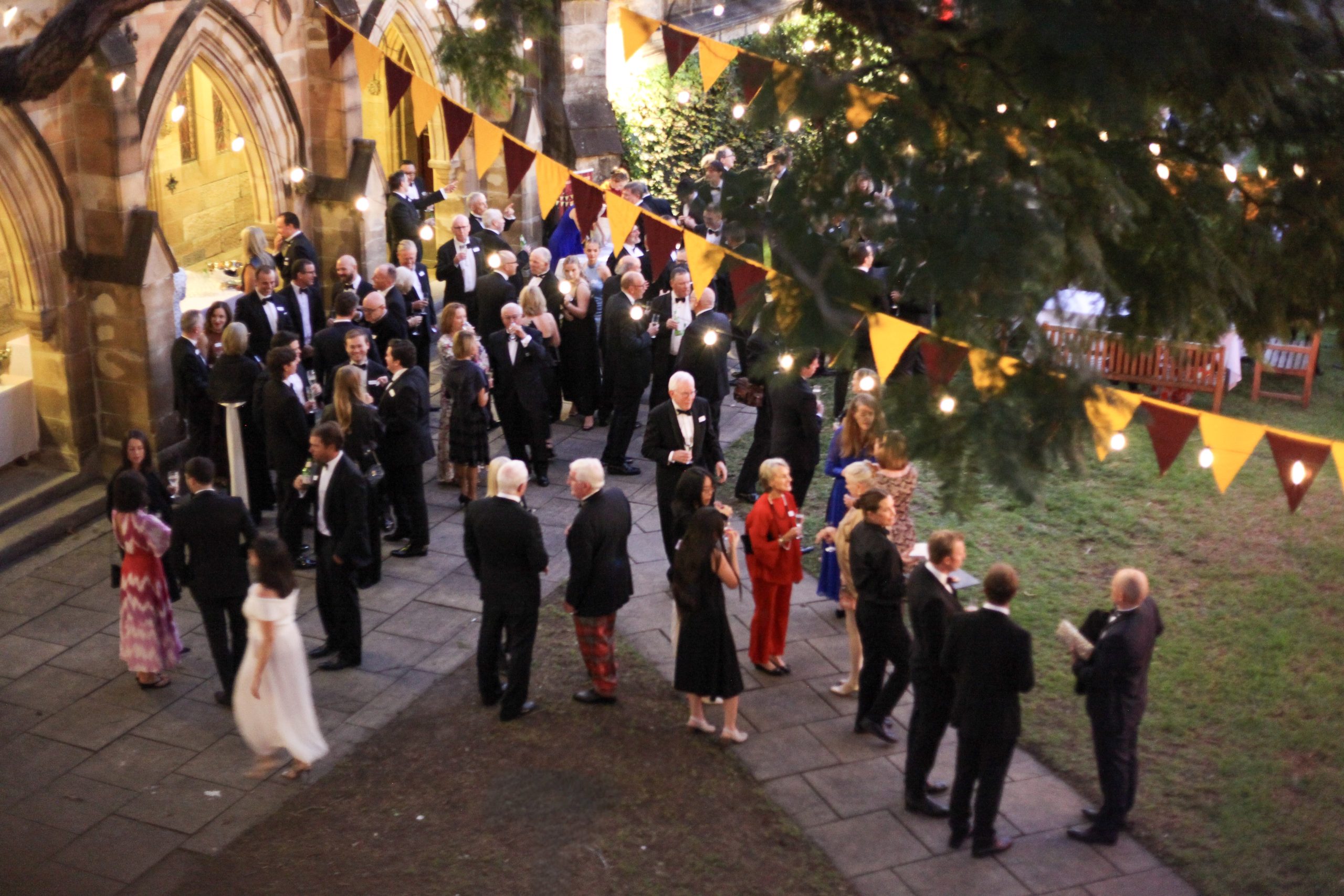
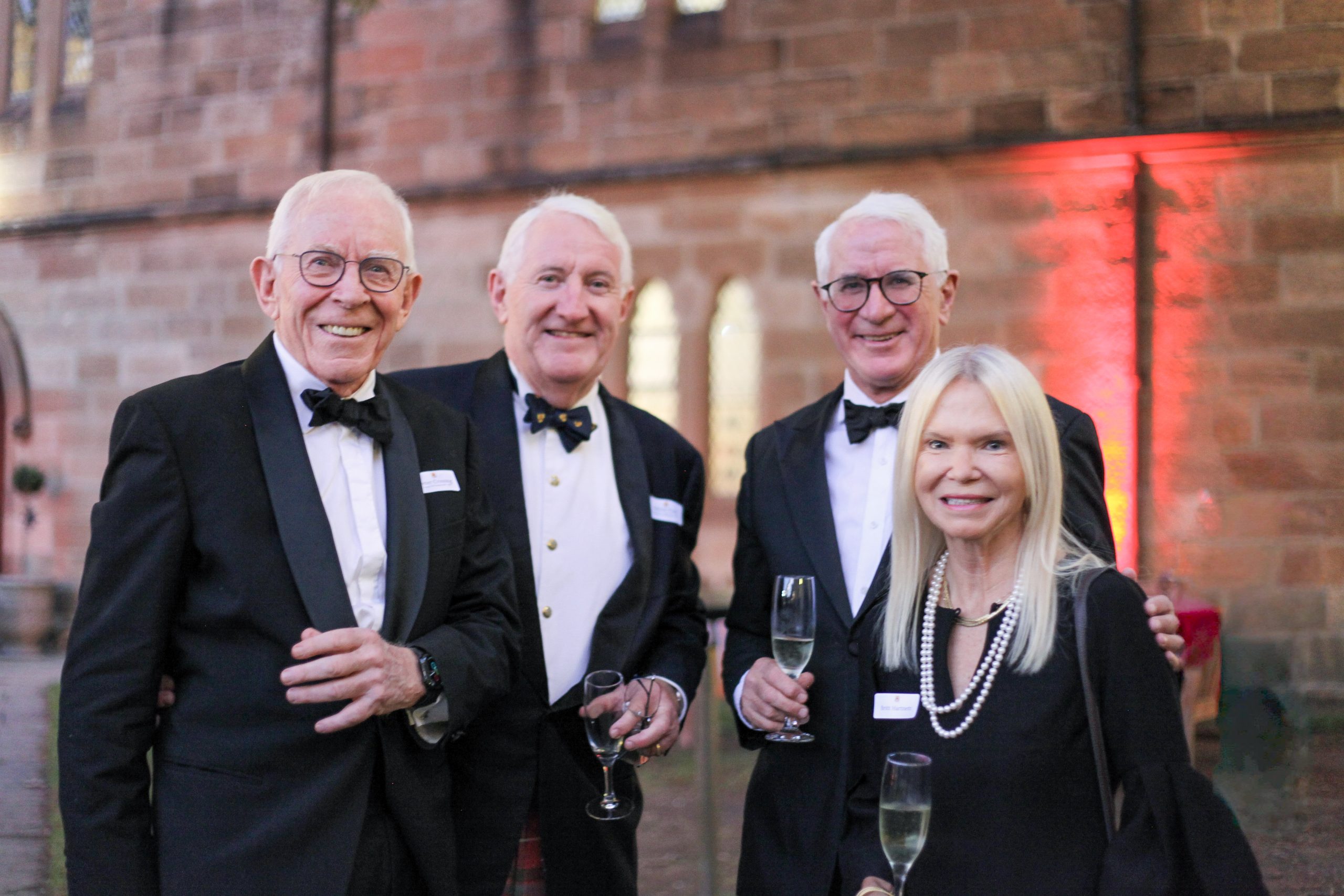
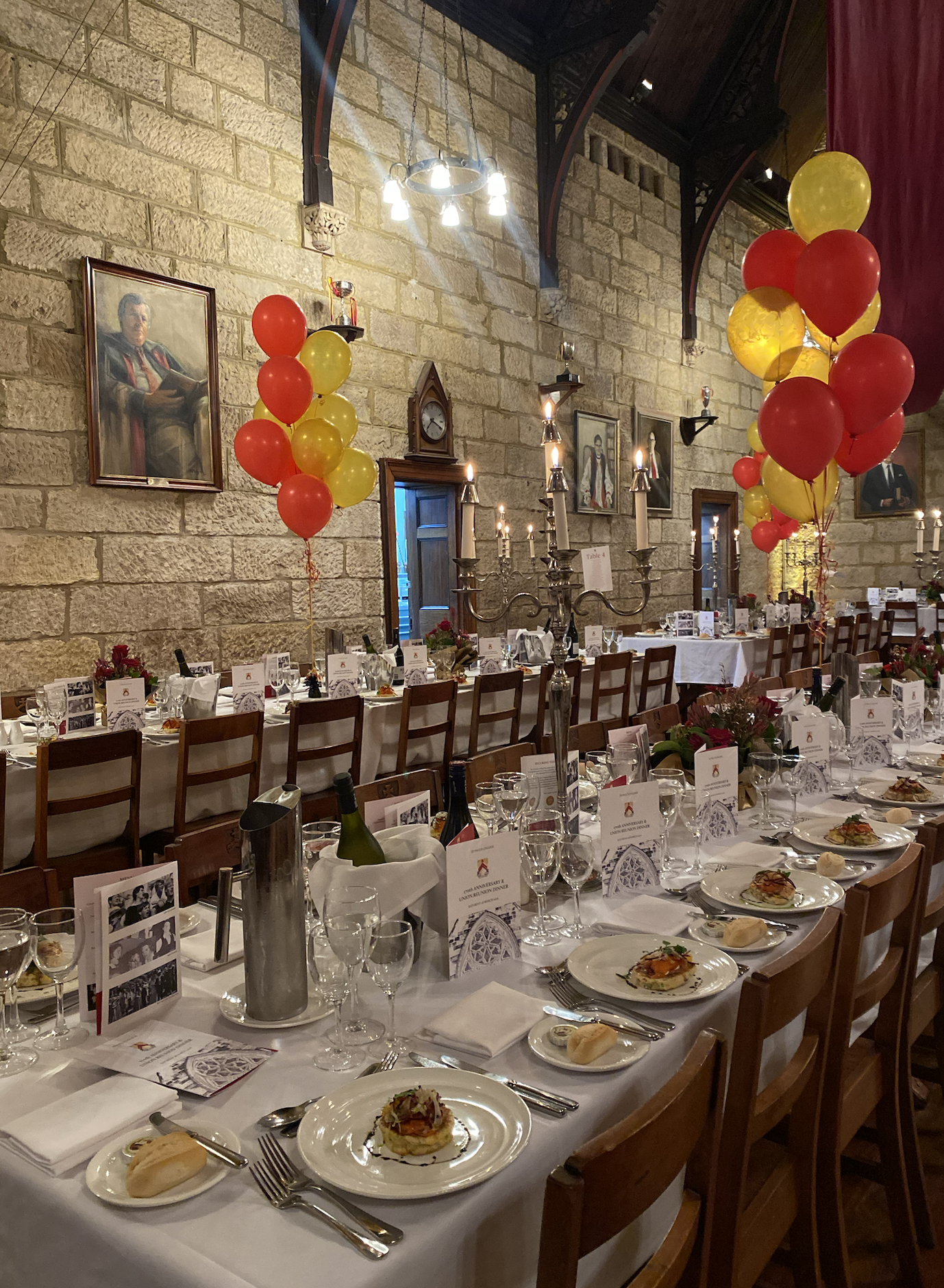
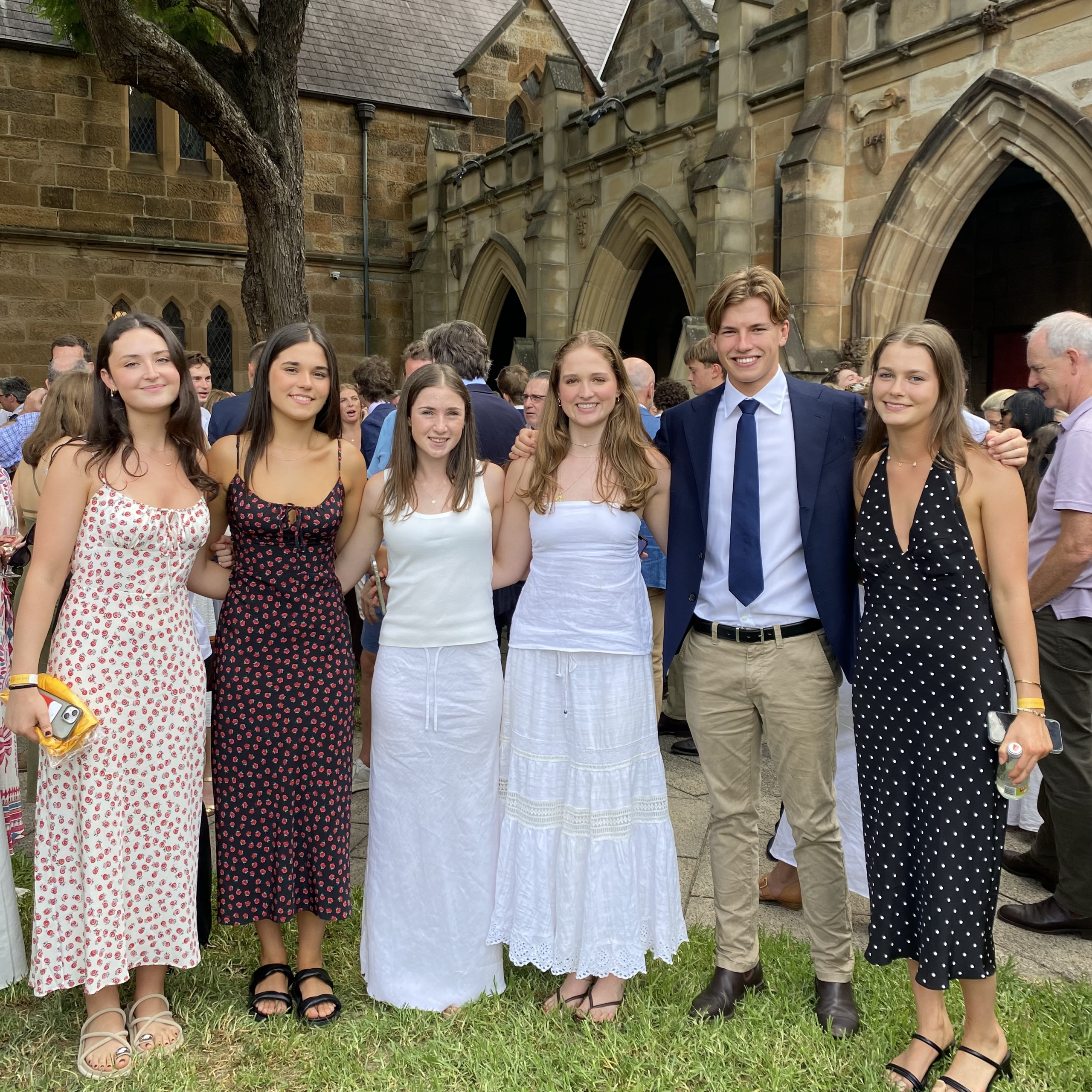
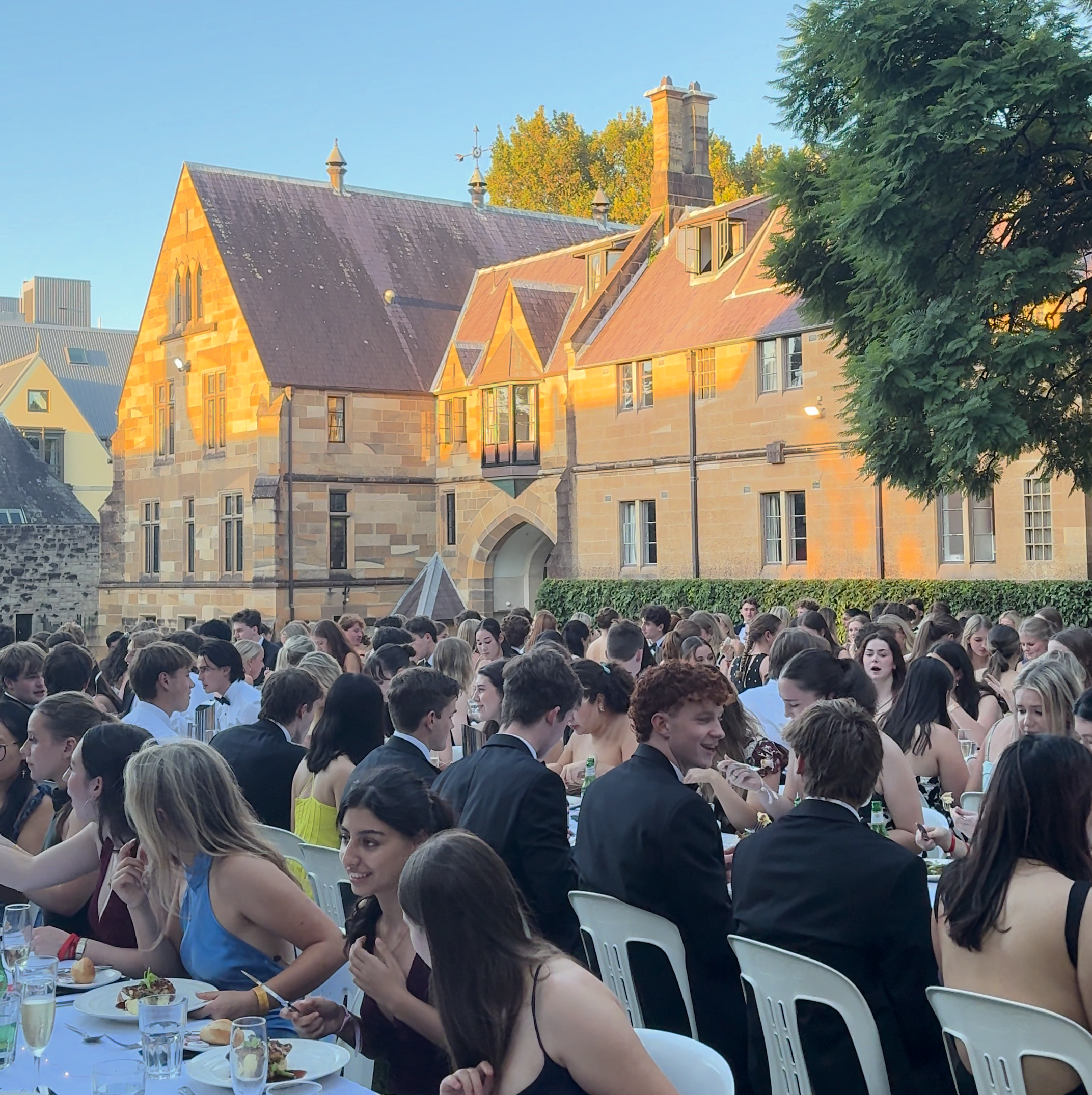
On 28 March 2026, many of the College’s present-day Paulines gathered once more—this time for a special dinner at the College—to celebrate 170 years of scholarship, leadership and service. The evening honoured the vibrant, multigenerational community of men and women from Australia and around the world who continue to bring energy, curiosity and purpose to their academic lives at the University of Sydney and their residential lives at St Paul’s College.
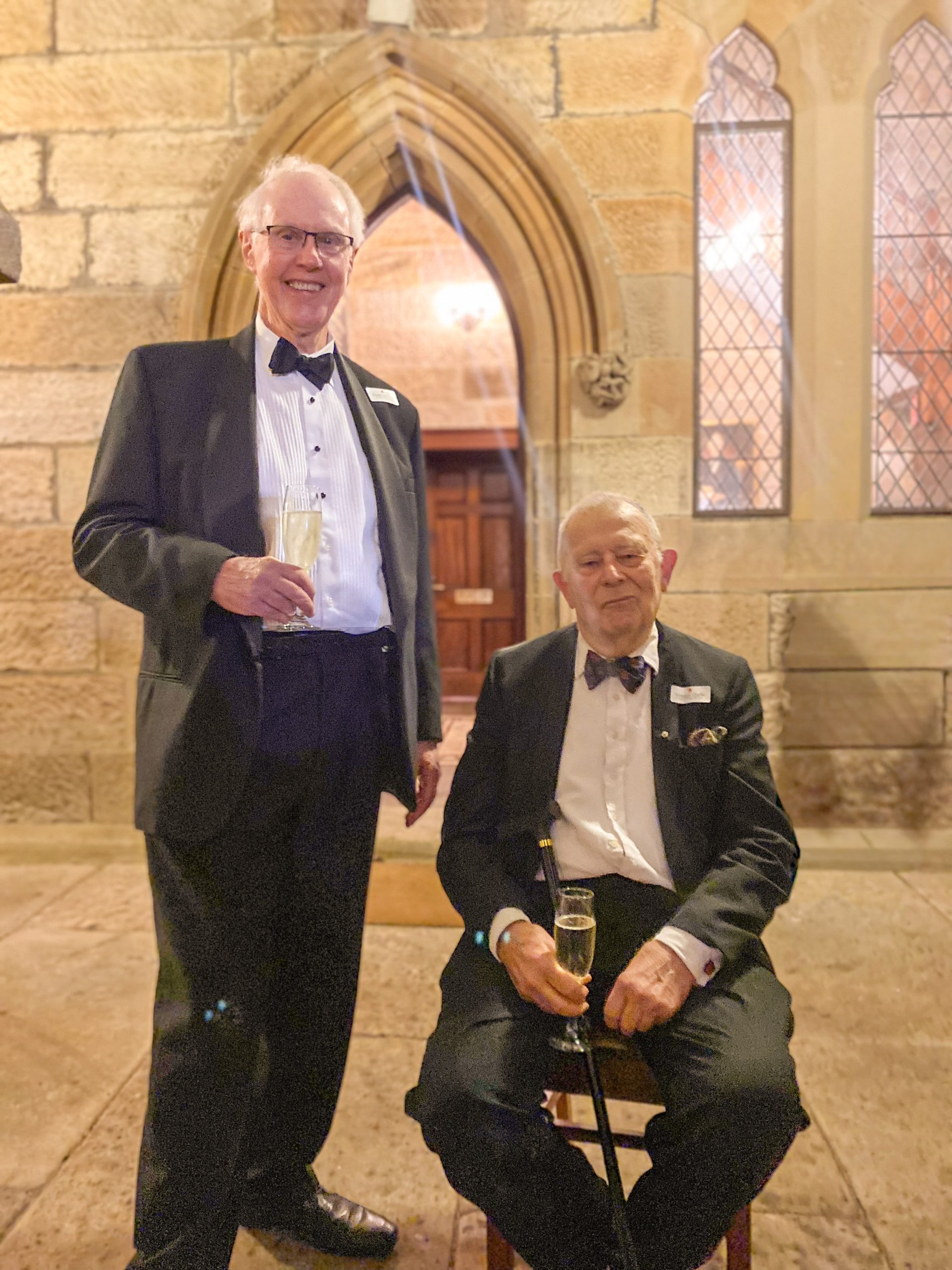
The 200 guests and residents in attendance represented every living generation of Paulines, from those who joined the College in the 1950s through to current undergraduate and postgraduate students. Terry Clark AM (in College 1952–55), now aged 91, represented the oldest generation and is pictured below with Professor Frank Nicholas AM (1967–71). The Warden (1999) welcomed guests and introduced James Cowper (2003–06) to speak on behalf of the Union, and Scott Wharton (1997–2000) to speak on behalf of the Foundation.
The dinner was generously hosted by the St Paul’s College Union, the incorporated body representing alumni and current residents. Many guests attended with partners, and the celebrations continued late into the night with dancing in a marquee set in the centre of the Quadrangle. One of the evening’s highlights was a magnificent fireworks display at which, together with a post-prandial sorbet, made the occasion truly memorable.
To mark this milestone, a special range of 170th anniversary jewellery has been released and is now available for purchase here.
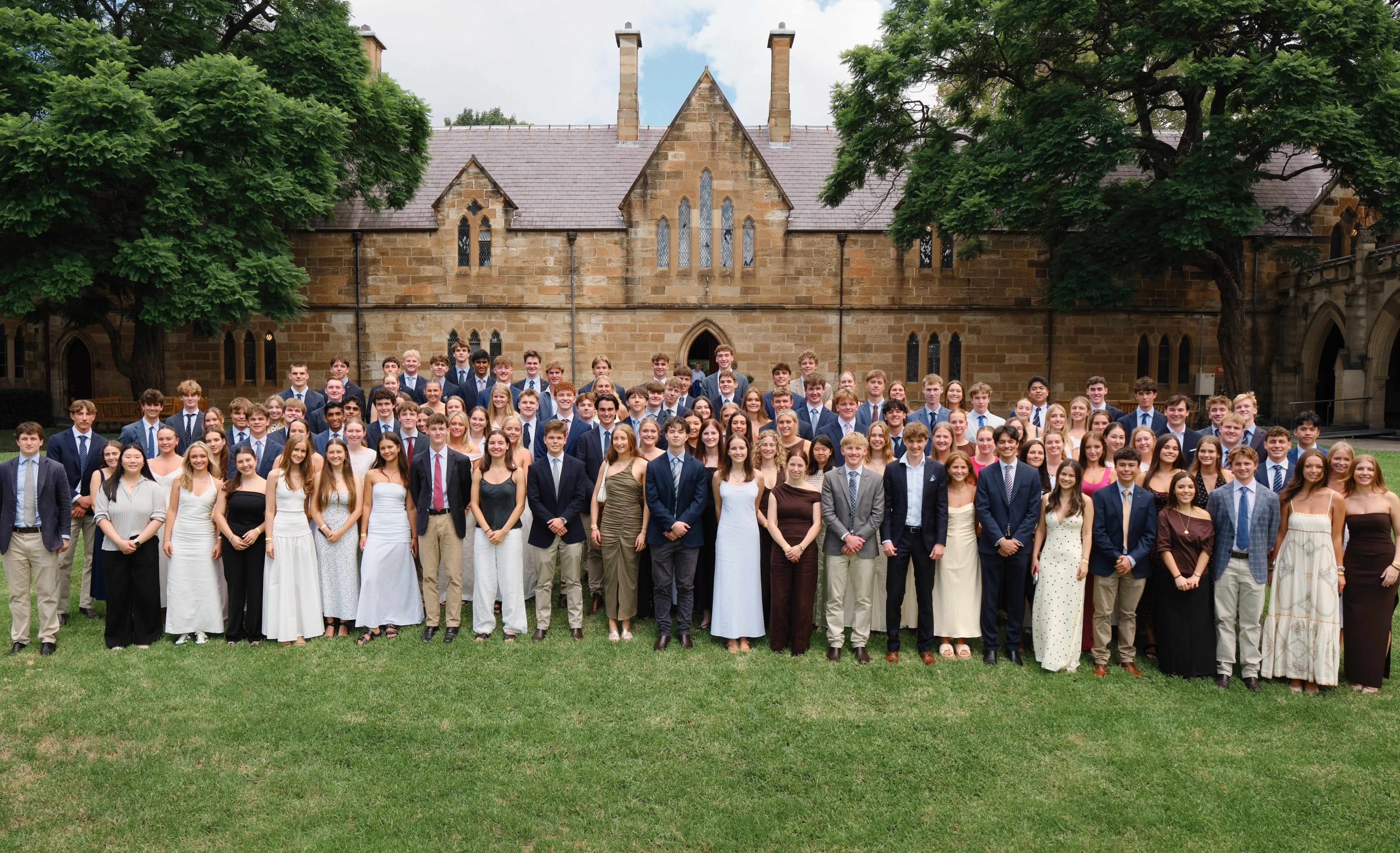
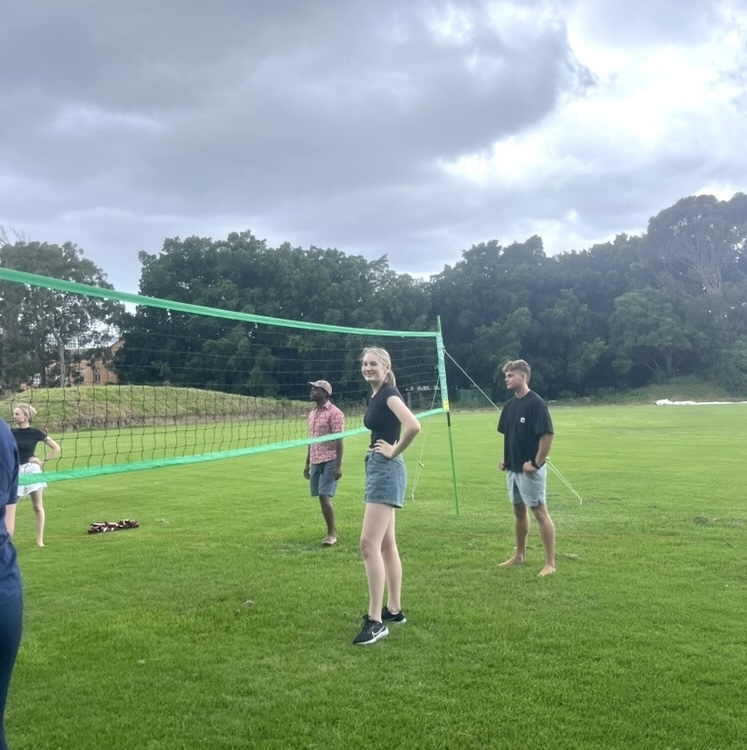
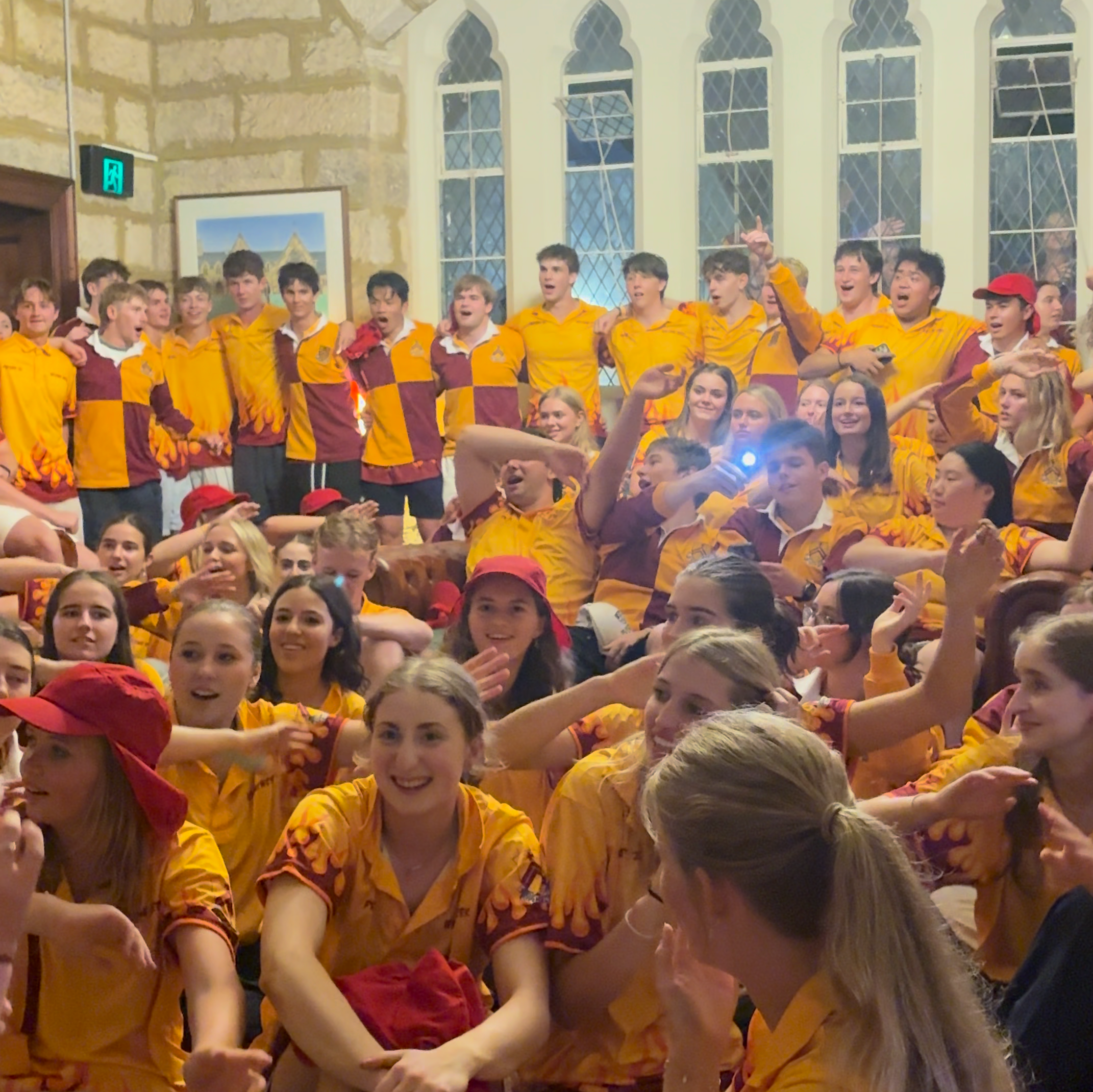
Marking its 170th year, St Paul’s College welcomed over 140 new undergraduate and postgraduate students from over 70 schools and more than 20 countries this year, converging at College for one of the most memorable Welcome Weeks yet.
Welcoming our new postgraduate community
Graduate House opened its Welcome Week first on Friday 13 February with a special Commencement Feast, marking the beginning of the College year for its newest postgraduate members.
From medicine to music, commerce to computer science, this year’s postgraduate cohort brings together an extraordinary breadth of fields, backgrounds, and experience.
The Welcome Feast featured addresses from Warden Ed Loane, Dean of Graduates and Director of Music Jack Stephens, and Middle Prefect Isla Joyce. Students also had the opportunity to sign the College Register.
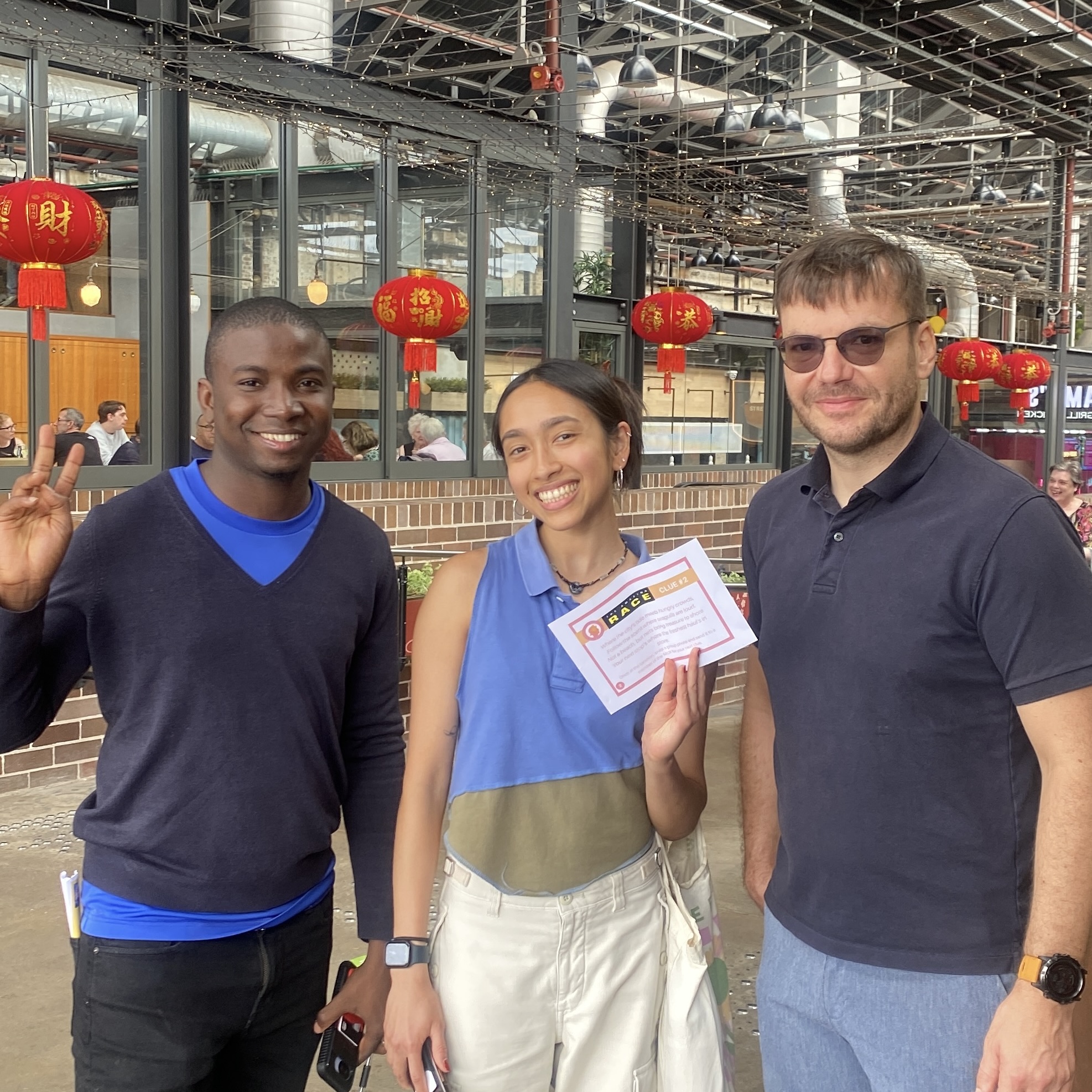
The week that followed was packed with a vibrant and diverse program of activities. Trivia nights, golf, champagne and croquet brunch, and an Amazing Race were among the many activities that gave the cohort opportunities to connect as a cohort and, for many, become acquainted with a new city.
The postgraduate Saints Cup against Sancta Sophia brought the week to a close, with St Paul’s claiming the first win of the competition!
Welcoming 121 new undergraduate students to College
The following Monday, 121 undergraduate first-year students, along with their parents, families, and caregivers, arrived at College to begin their own Welcome Week.
Day one began with arrivals and a welcome from the College’s student leaders, who guided new students and helped them settle in. Students toured the College, familiarising themselves with the spaces that would quickly become part of daily life, before gathering with parents to hear an address from Warden Ed Loane, Dean of Undergraduates Matthew Newcombe, and Senior Student Heidi Best.
During the ceremony, students signed the College Register, formally marking the start of their journey as members of the College community.
The day concluded with the College’s first Chapel service of the year, dinner in the Dining Hall, and an evening at the Salisbury Bar, where students spent time getting to know their peer support groups.
The week that followed was filled with activities designed to help students find their footing both at College and across the wider University of Sydney campus. Orientation sessions, degree group meetings, and wellbeing discussions sat alongside social events, sport, and time exploring the university grounds.
Creating a Welcome Week
The success of this year’s Welcome Week would not have been possible without the diligent planning, energy and care of the student leaders — the Middle Common Room, Students’ Club Committee, Junior Deans, Peer Support and Welcome Week Leaders — who guided new students through the traditions of the College and helped create a welcoming start to the year. Just as importantly, the openness and enthusiasm of the first years themselves quickly set the tone for the community they are now part of.
Building on 170 years of College tradition and history, we can’t wait to see this year’s cohort flourish, form lasting friendships, and achieve great things together.
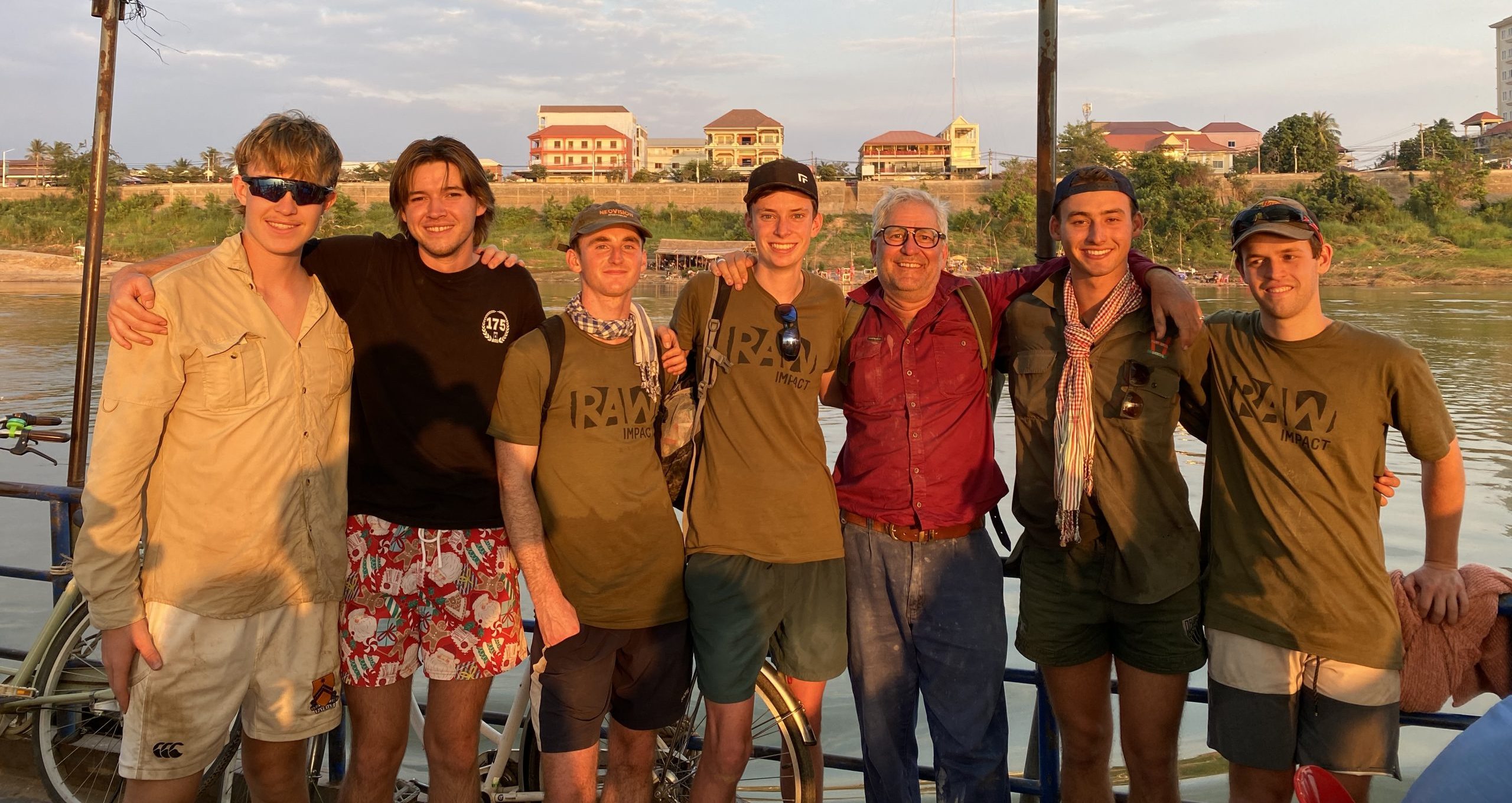
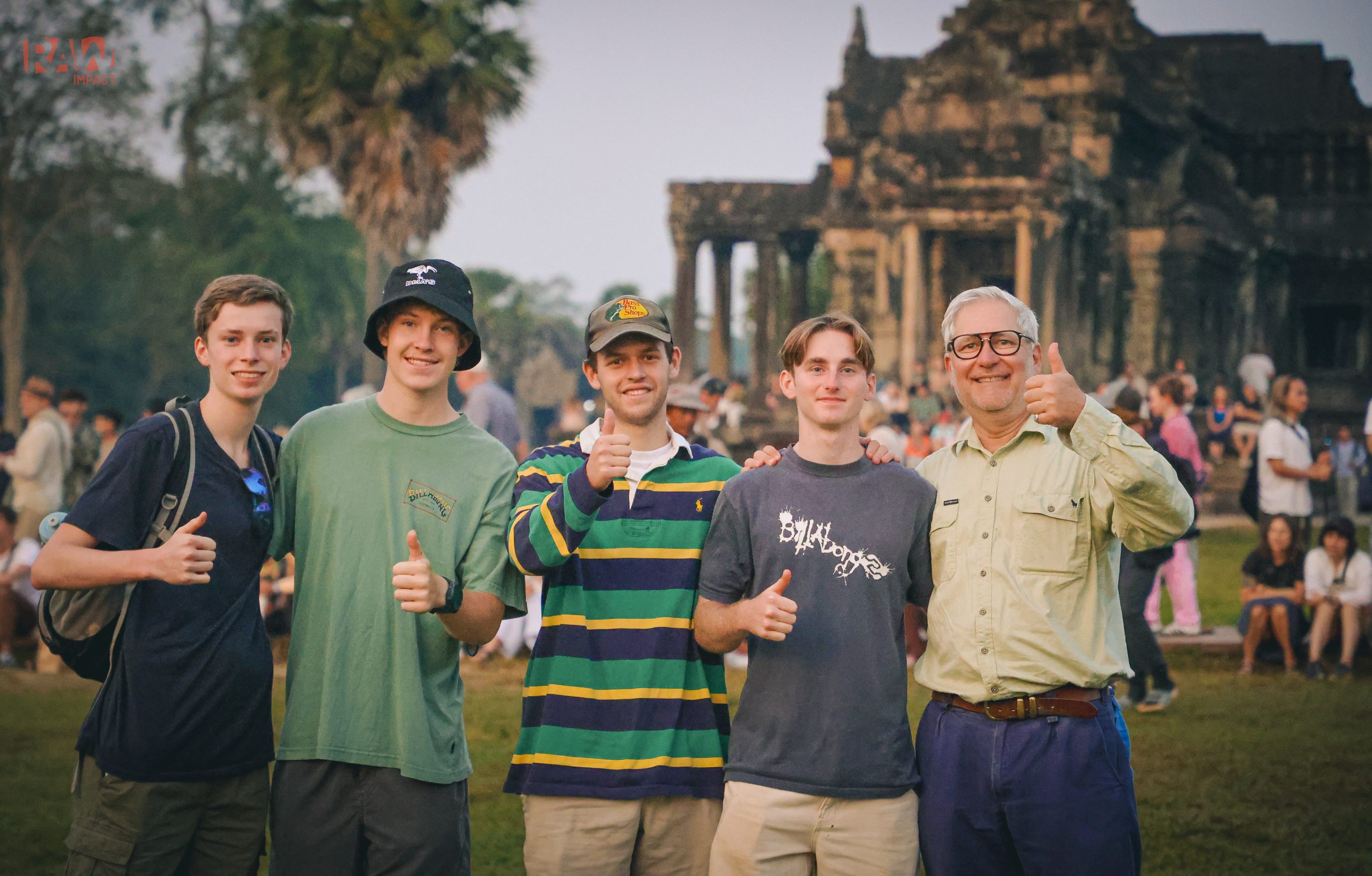
Over the summer break, on the outskirts of Phnom Penh in Cambodia, a group of St Paul’s students and an alumnus partnered with RAW Impact to help build bamboo houses for families living in poverty.
Across 10 days, College Chaplain Antony Weiss, along with five current students (Auryn Griffiths, Hector Richards, James Ford, Lachlan Larsson and Stirling van As) and one recent alumnus, Mitch Arcus, joined 60 young Australians aged 18 to 30 on RAW Impact’s Converge Cambodia Program, a hands-on humanitarian initiative that exists to help families move out of the slums and into safe, permanent housing.
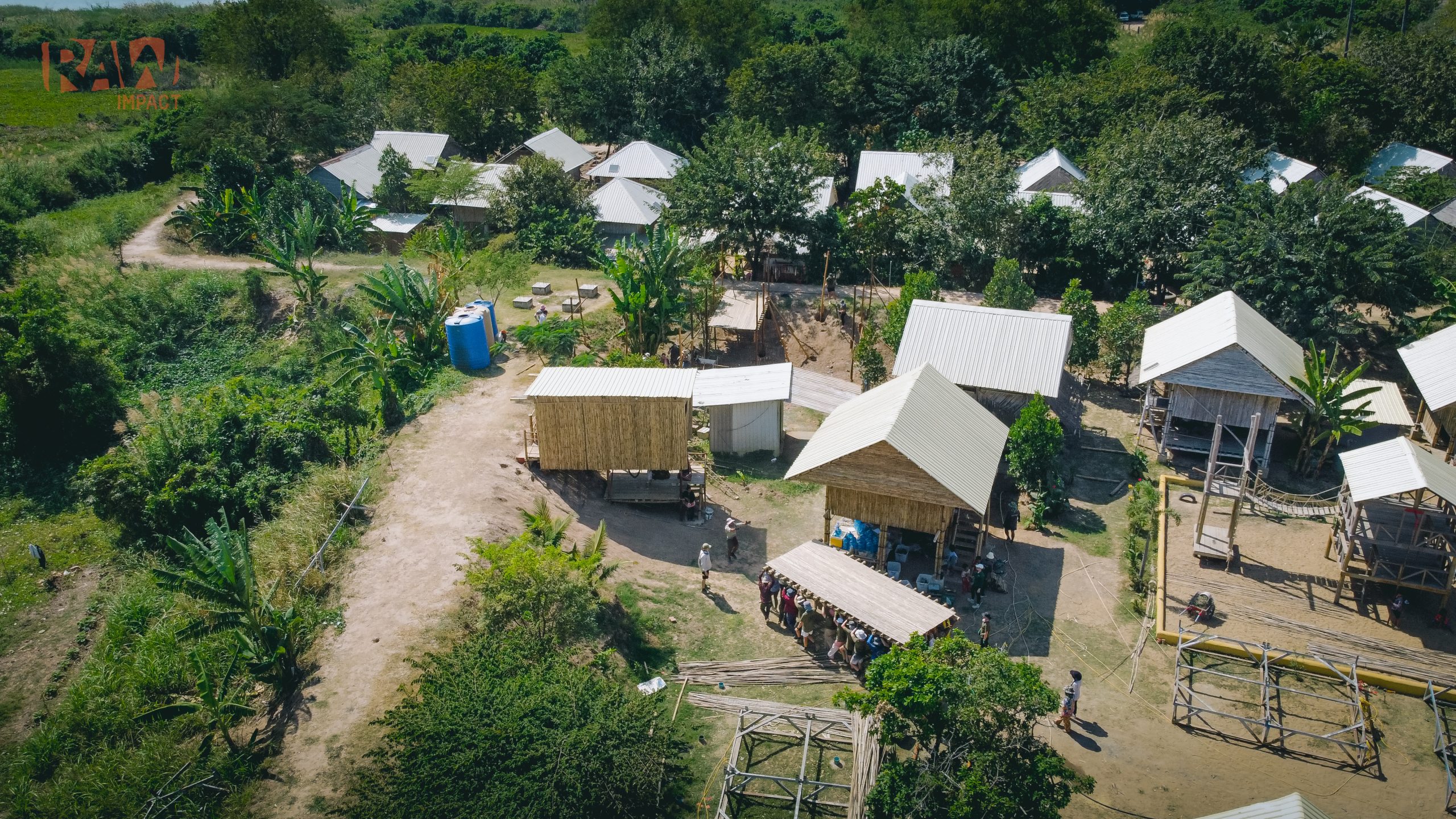
Every Piece Matters (EPM) Village, Cambodia.
Every Piece Matters (EPM) Village
RAW Impact is a grassroots not-for-profit organisation that has been running immersive volunteer experiences in Cambodia for over a decade. The Every Piece Matters (EPM) Village, where our Paulines were based, is one of RAW’s most ambitious projects yet: an entirely new village that is being built from the ground up by volunteers. The initiative provides vulnerable families with their own home – often for the first time – along with access to clean water, community and conditions that make stability and a future possible. Throughout the year, different volunteer teams arrive to pick up where they last left off.
Arriving in January, the group was tasked with building four bamboo houses. The impact of building these homes was amplified as they met and spent time with the families that would be moving into them when the work was complete.
Chaplain Antony Weiss, who accompanied the group of students, reflected on the experience: “The houses matter for obvious reasons. They are part of a bigger effort to help young families move out of the slums and into safe, stable environments – shelter, clean water, and the foundations for education. It’s particularly significant in contexts where women and children are vulnerable.”
Second year student Hector Richards was initially sceptical about whether the group’s efforts would make a lasting difference in the village. However, this scepticism was quickly dispelled upon arrival: “Walking through the village and seeing houses still standing from previous RAW trips, with families living inside of them, reassured me that this work was genuine and lasting.”
Alongside the building work, the program also offered participants the opportunity to teach English at the local school – one that a previous RAW Impact cohort, including Paulines, helped build – as well as dedicated time for cultural orientation and immersion.
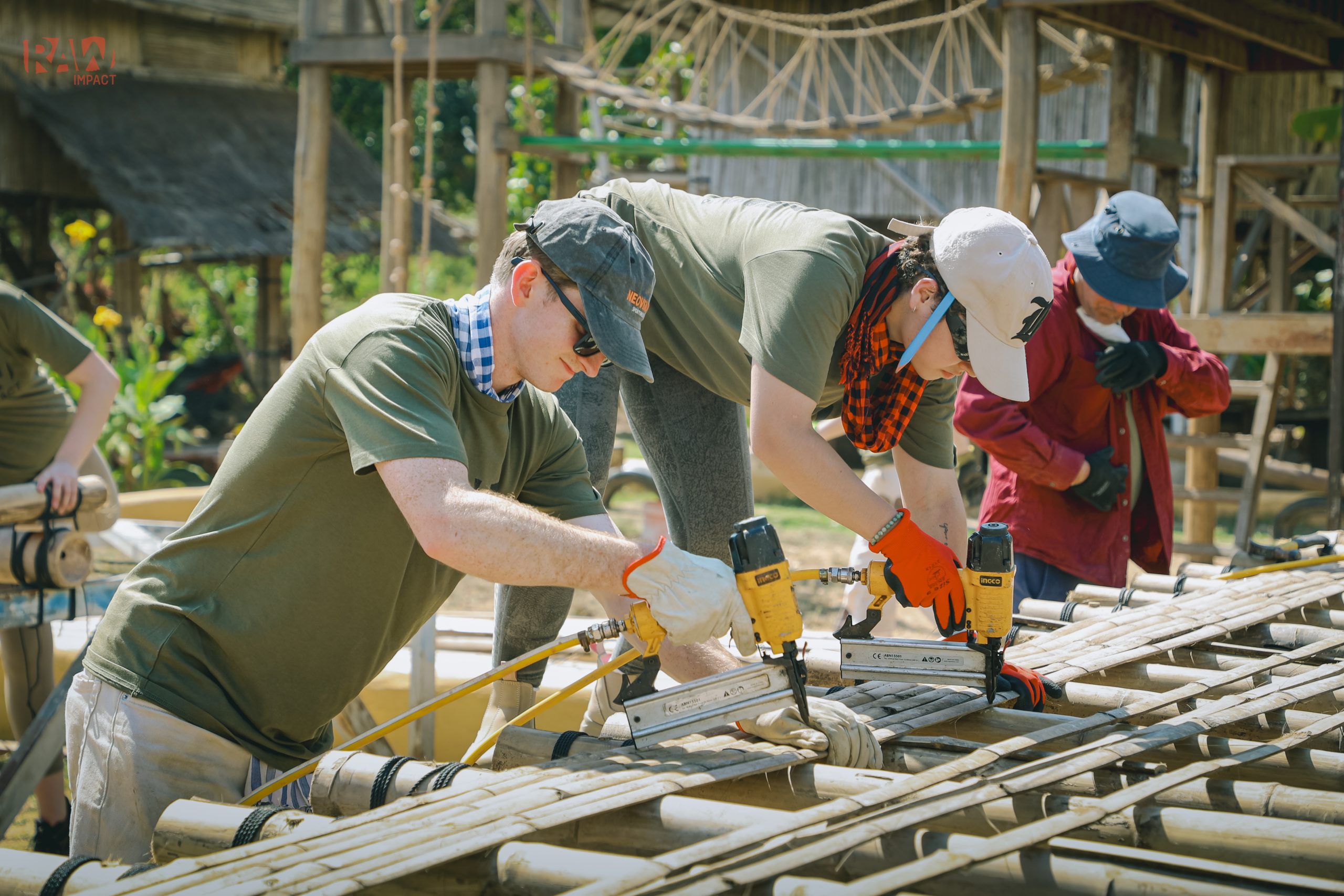
Team effort: Construction of the bamboo houses in full swing.
Transformative encounters
For many in the group, one of the most unexpected parts of the trip was not the activity, or even Cambodia itself, but the other members of the group who had joined the program from Australia. The group of 60 young Australians brought together a diverse range of backgrounds and experiences, many of whom had experienced deep hardship and a lack of opportunity themselves. Second year Stirling van As shared his reflections: “One of the greatest realisations I had on the trip was the difficult circumstances the other volunteers found themselves facing back in Australia, and despite this, their devotion to helping others. Many people on this trip came from disrupted households, had rough upbringings, had less access to the education that we receive as Paulines, and had truly heartbreaking stories. These were the people that were giving back.”
Antony Weiss also reflected on the unique and moving sense of partnership: “It became one of the most moving and genuinely transformative experiences I’ve had in years. People didn’t just ‘get along’, we actually became close. There was something quietly important about doing the work alongside Cambodian locals – it felt like a genuine partnership: showing up, listening, learning, and contributing what we could, while being received with enormous warmth.”
Hector Richards (left) hard at work.
Full character formation
St Paul’s aims to cultivate not only academic excellence in its students, but also full character formation – seeing each student leave the College as a better version of themselves than when they arrived. Outreach opportunities like this play an important role in seeing this aim come to fruition. Second year Lachlan Larsson shared his reflections: “The trip has really changed the way I view other people and the world I live in. We directly helped these families escape the desperate slums they lived in and built them real, tangible and productive homes. The trip was a breath of fresh air, literally and figuratively.”
For second year James Ford, the experience was equally as powerful: “Building houses made me appreciate all I take for granted. It was an unforgettable experience that changed the way I see the world.” Warden Ed Loane welcomed the trip, describing it as an example of the kind of outward-looking community St Paul’s College aims to be, and the values it aims to nurture in its students: “We want to be a community that is defined by the way we love and serve those around us, in word and deed. The character formed on a building site in Cambodia, alongside 60 strangers who become friends, is not so different from what we hope to build at St Paul’s College every year. I’m very proud of those who participated, and I would warmly encourage any Pauline who feels the pull of this kind of experience to talk to Antony and take the leap.”
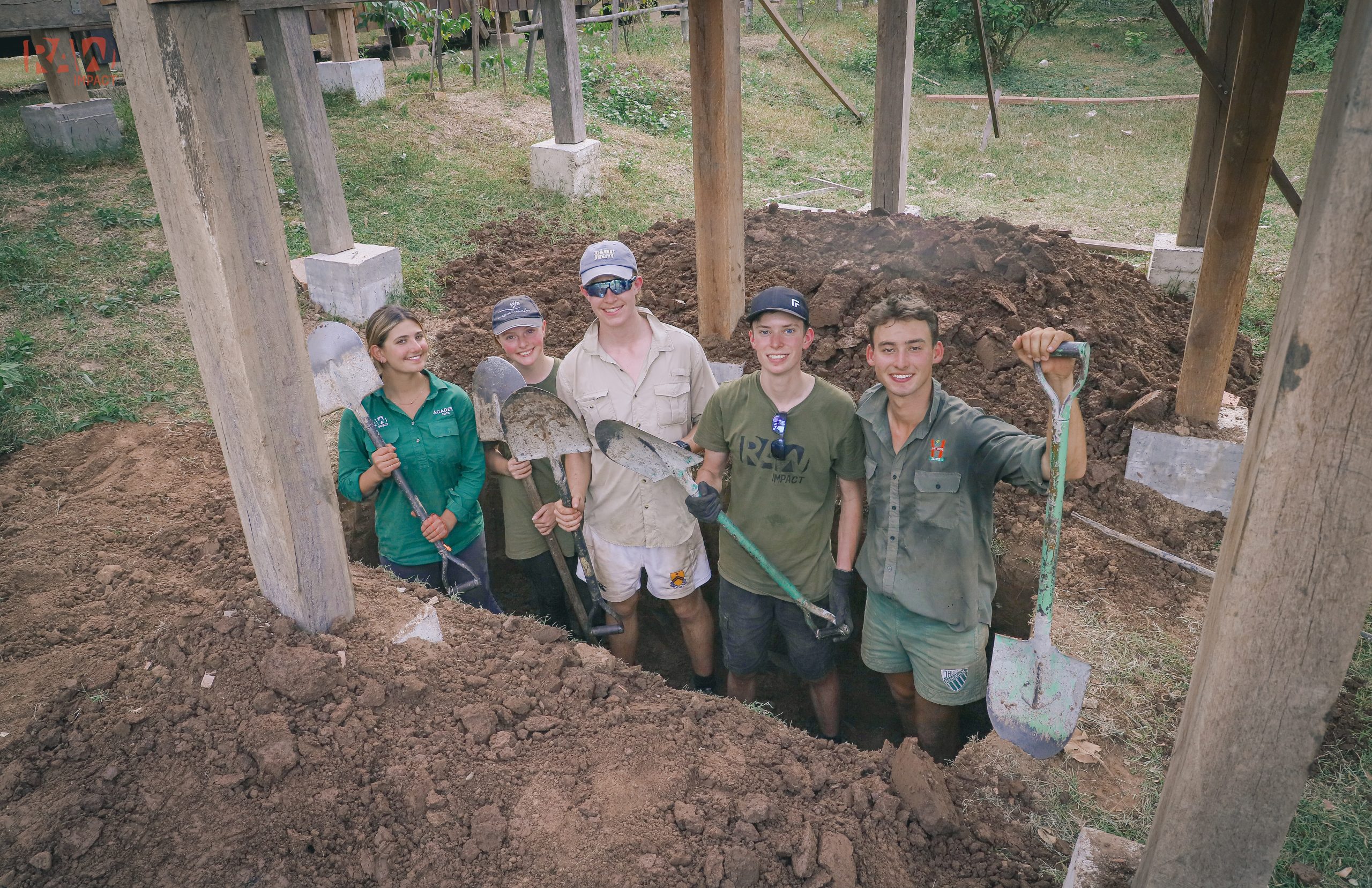
Lachlan Larsson, James Ford and Stirling van As deep in the trenches.
Lachlan Larsson and James Ford play with students at the local school built by last year’s Raw Impact cohort.
Looking ahead
RAW Impact’s next Cambodia trip runs from 20–29 June 2026, and the next Converge experience to Laos is planned for January 2027. Both opportunities are open to current students, recent graduates, and members of the wider St Paul’s College community.
For those curious to learn more, Antony Weiss would love to hear from you via email: chaplain@stpauls.edu.au. As he shares: “I’d be super encouraged to see more Paulines consider going and I will be doing my best to facilitate that.”