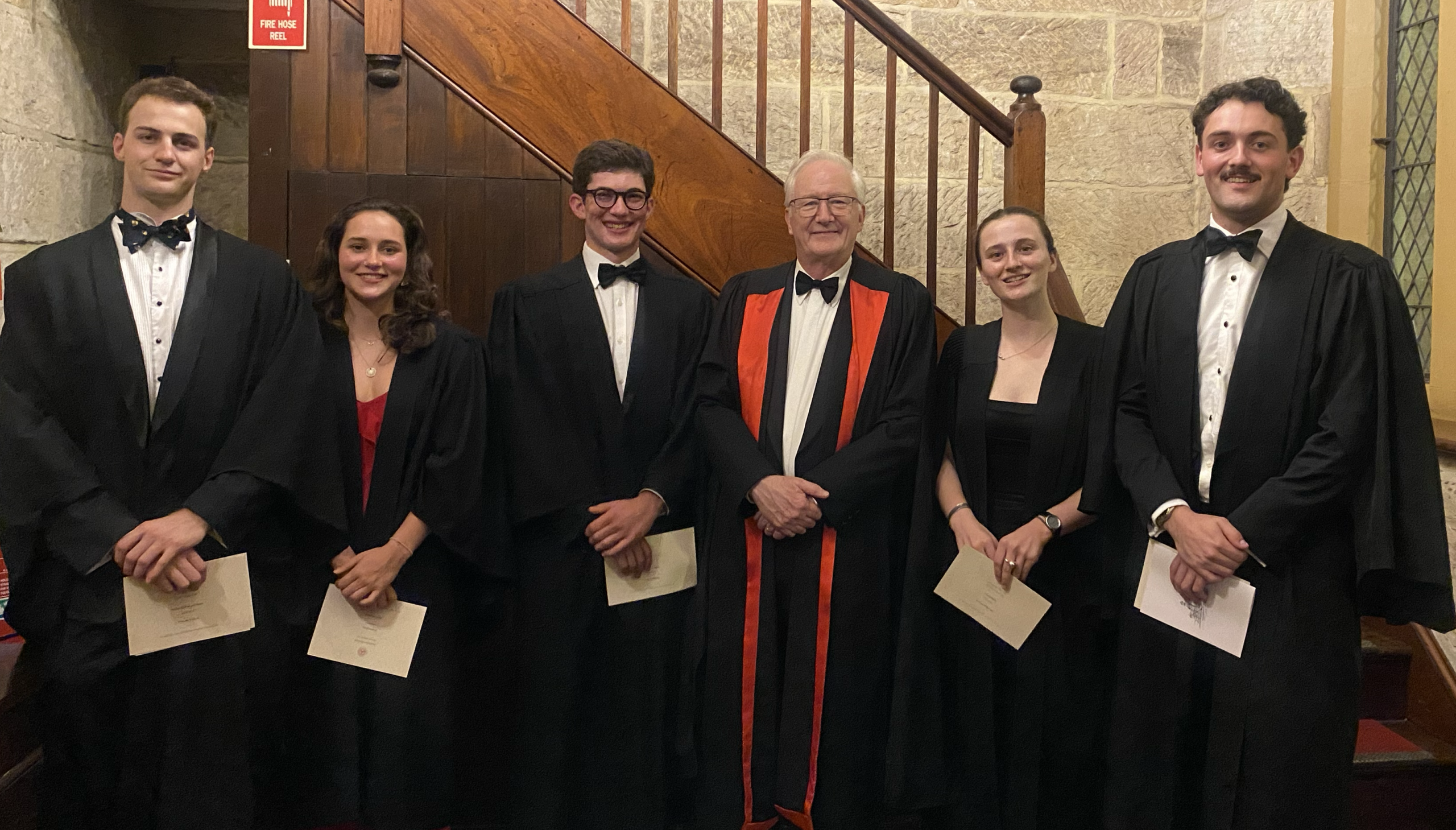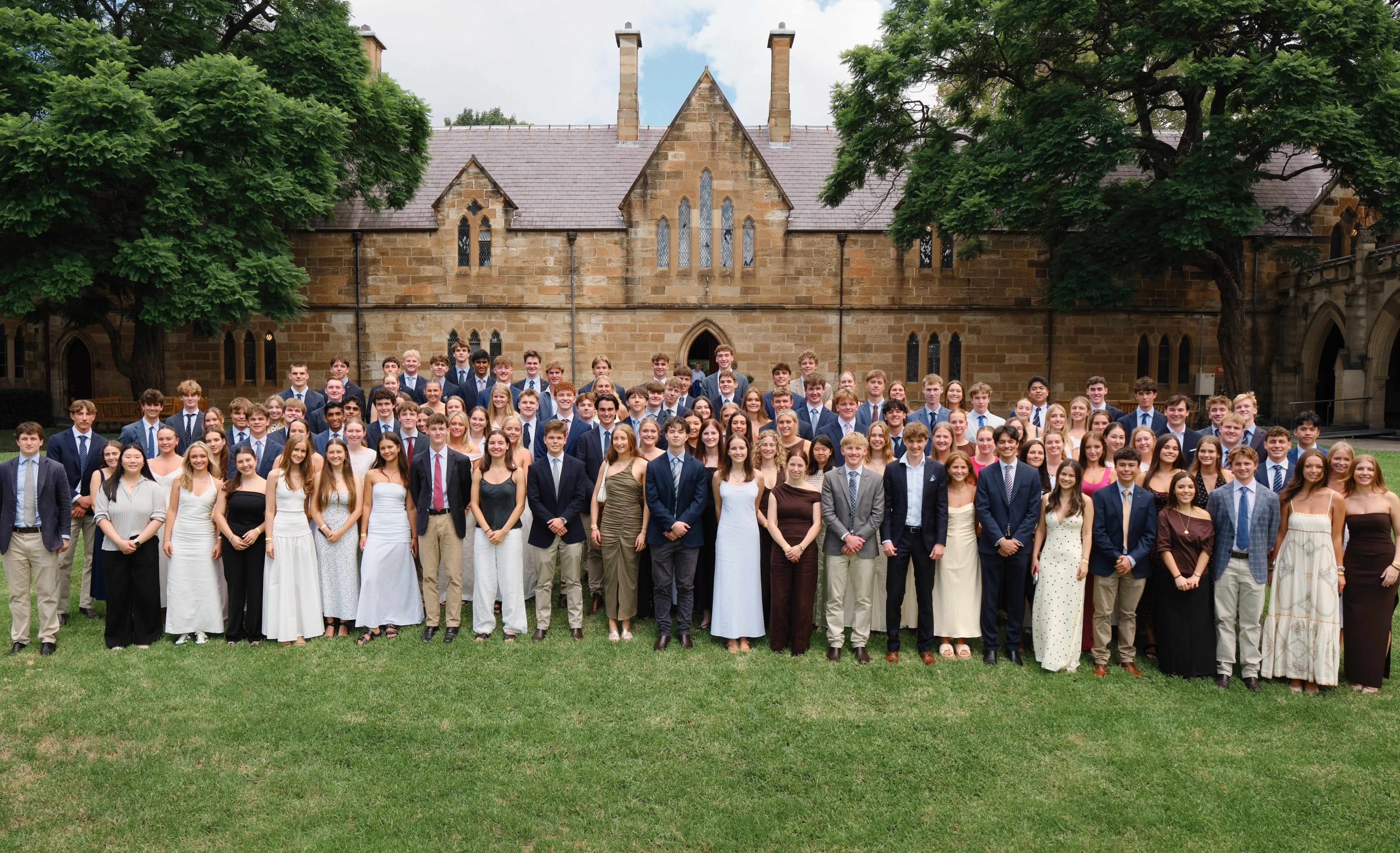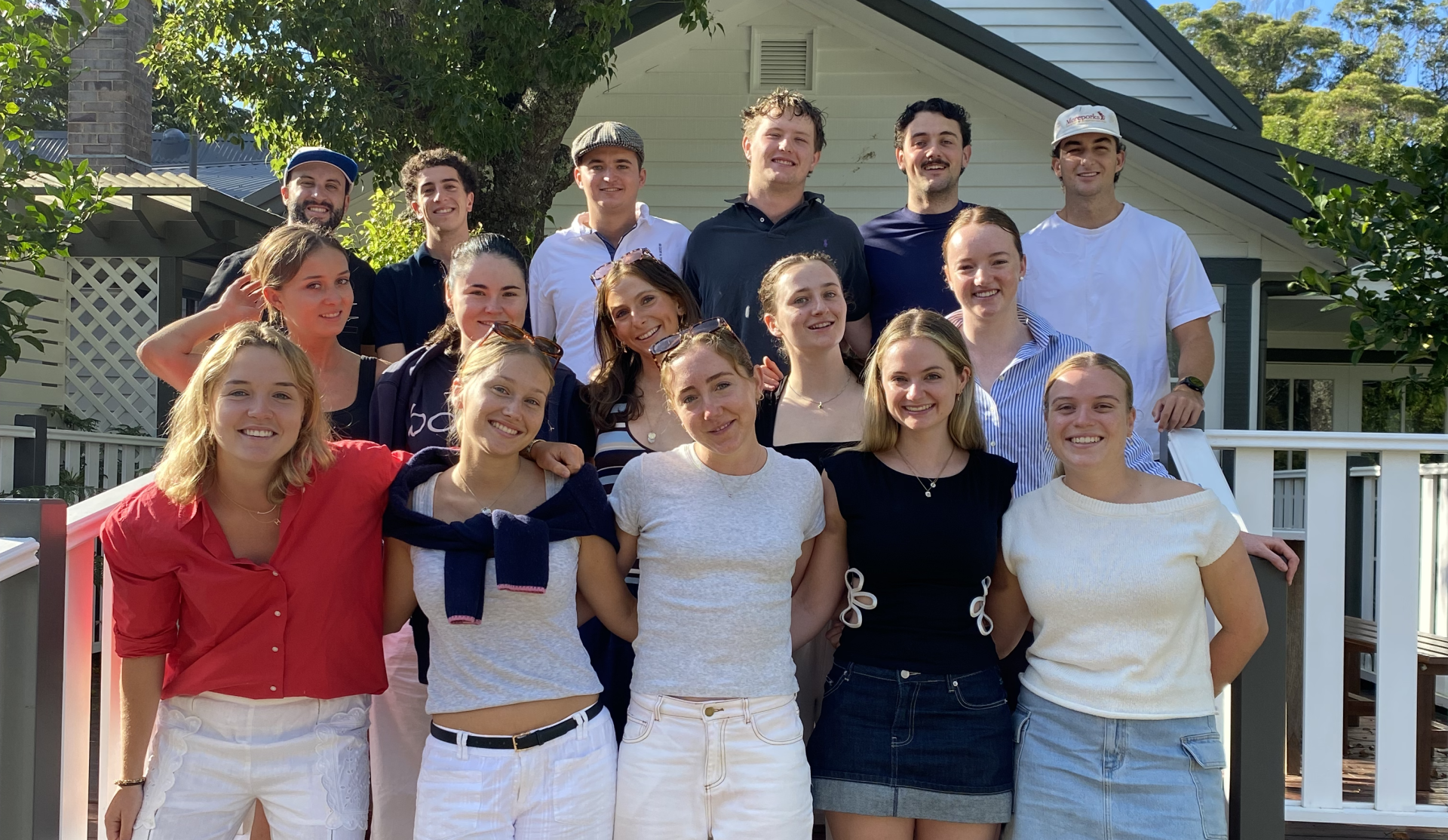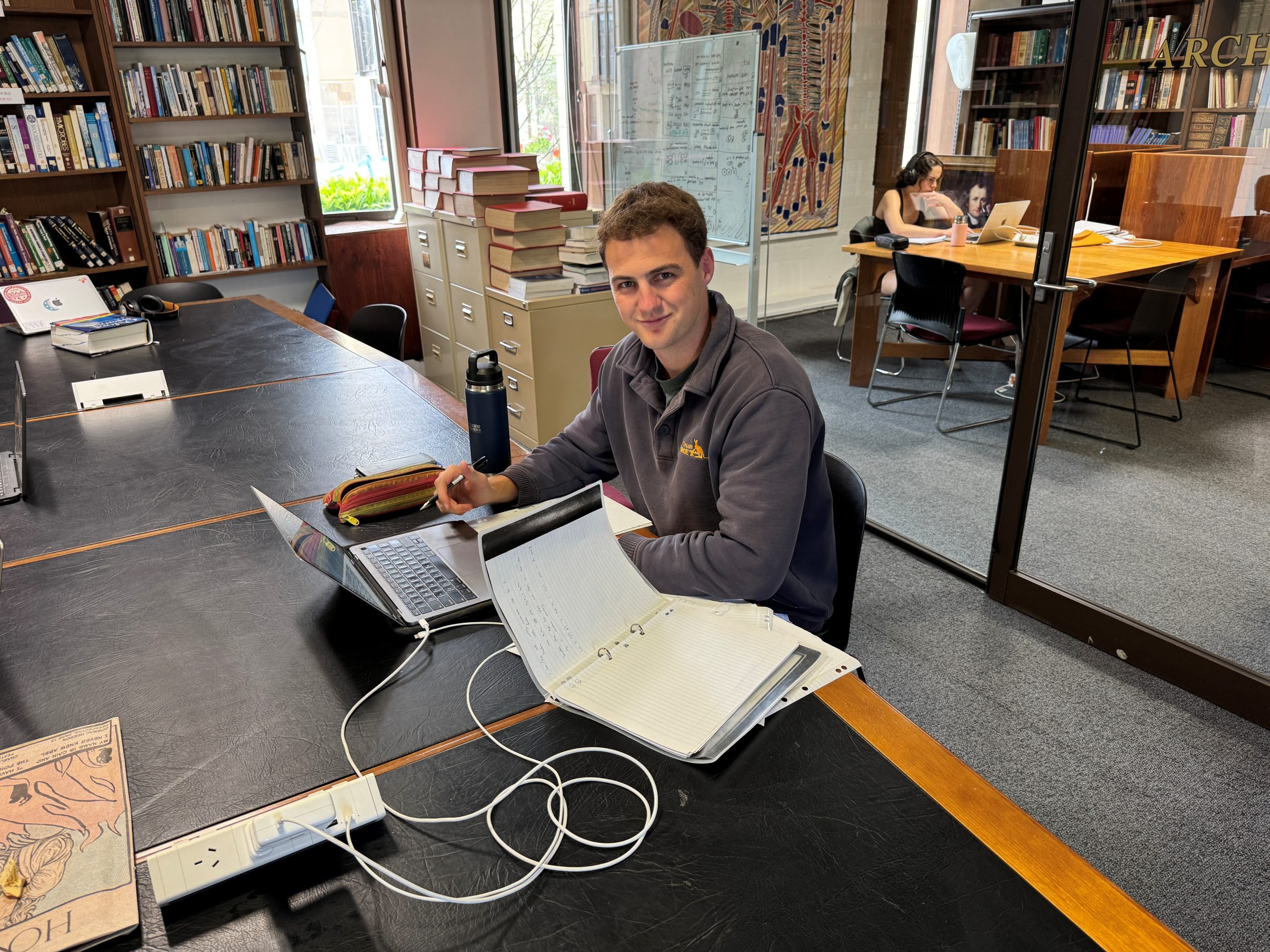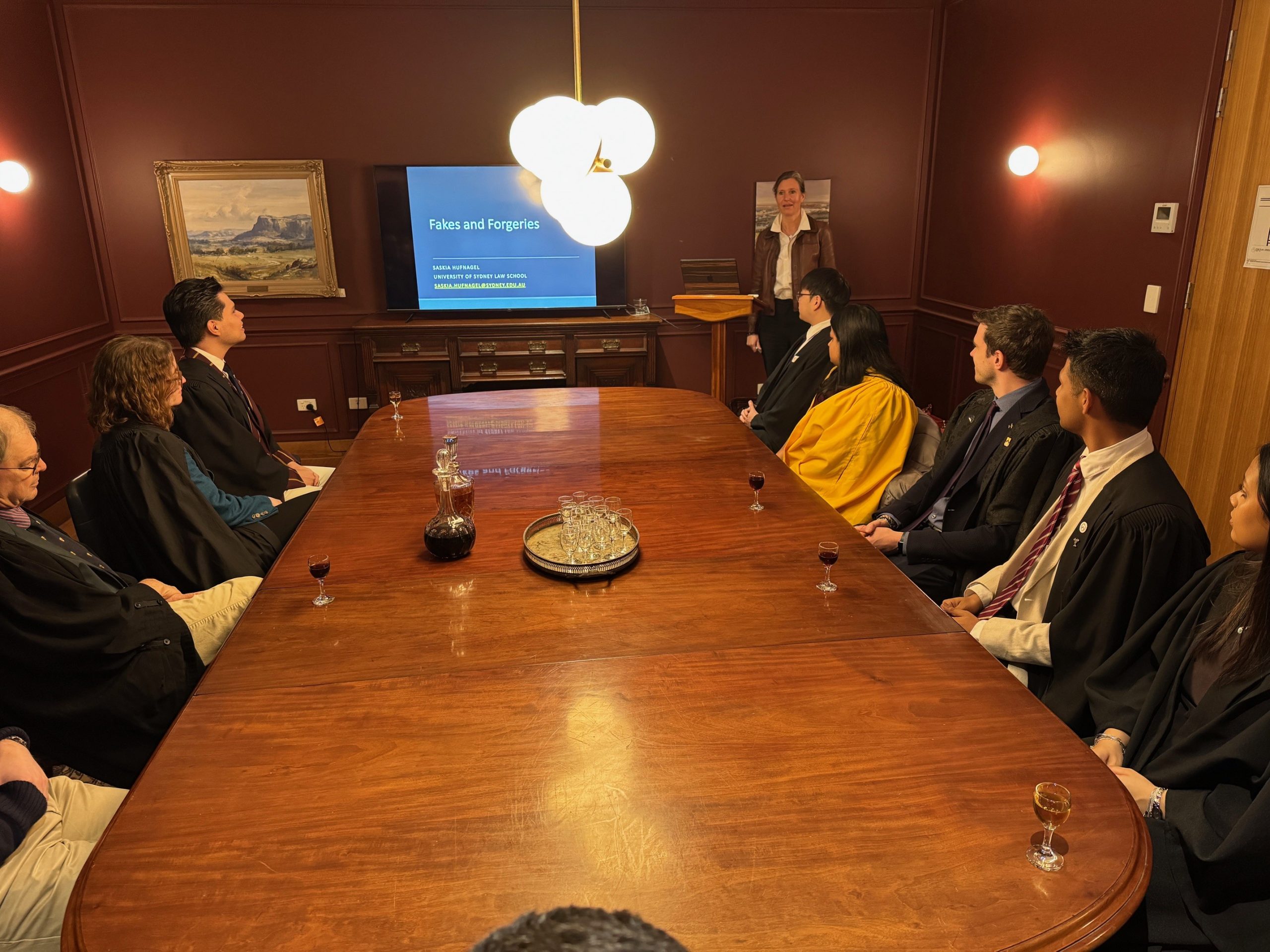

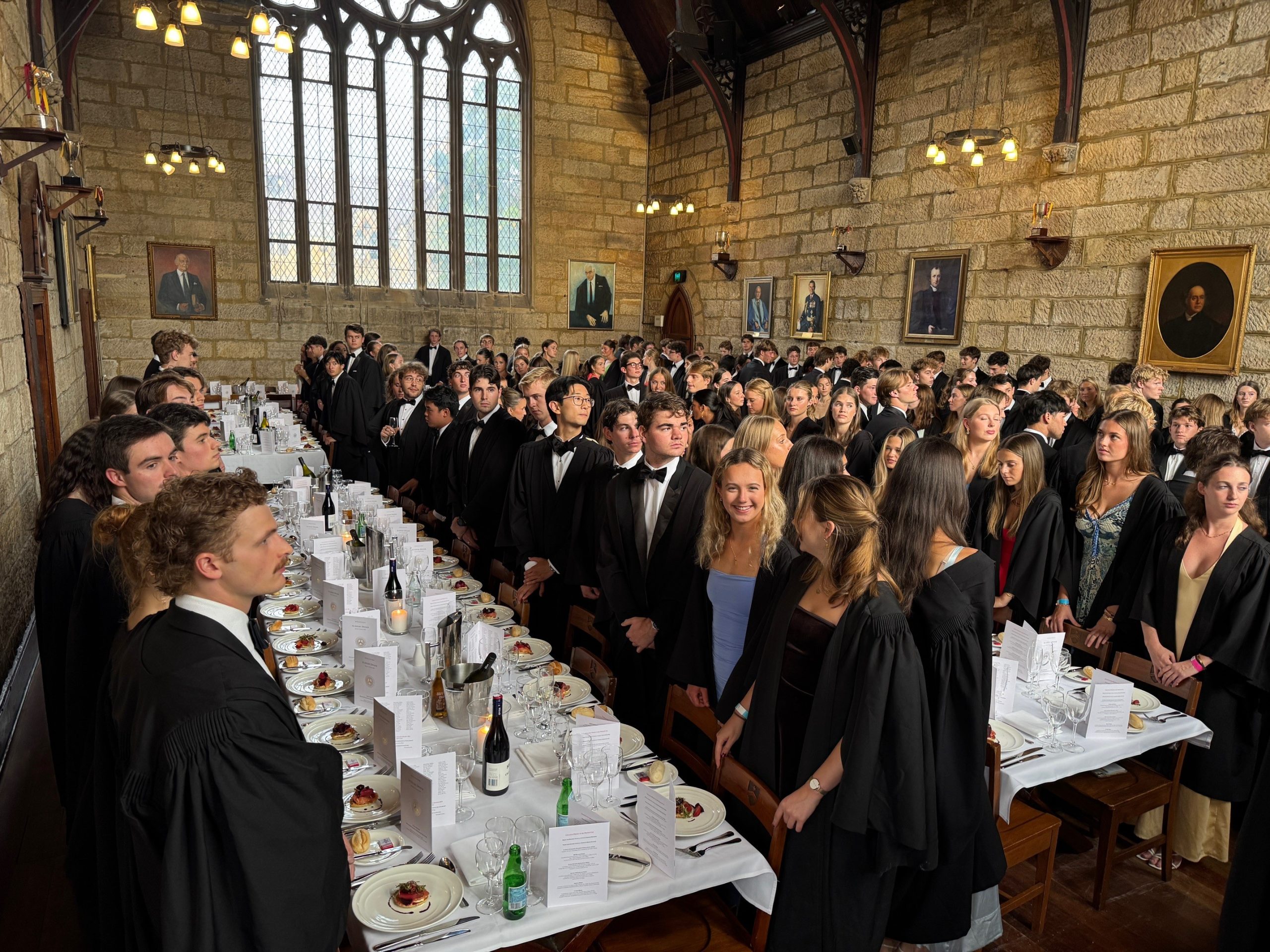


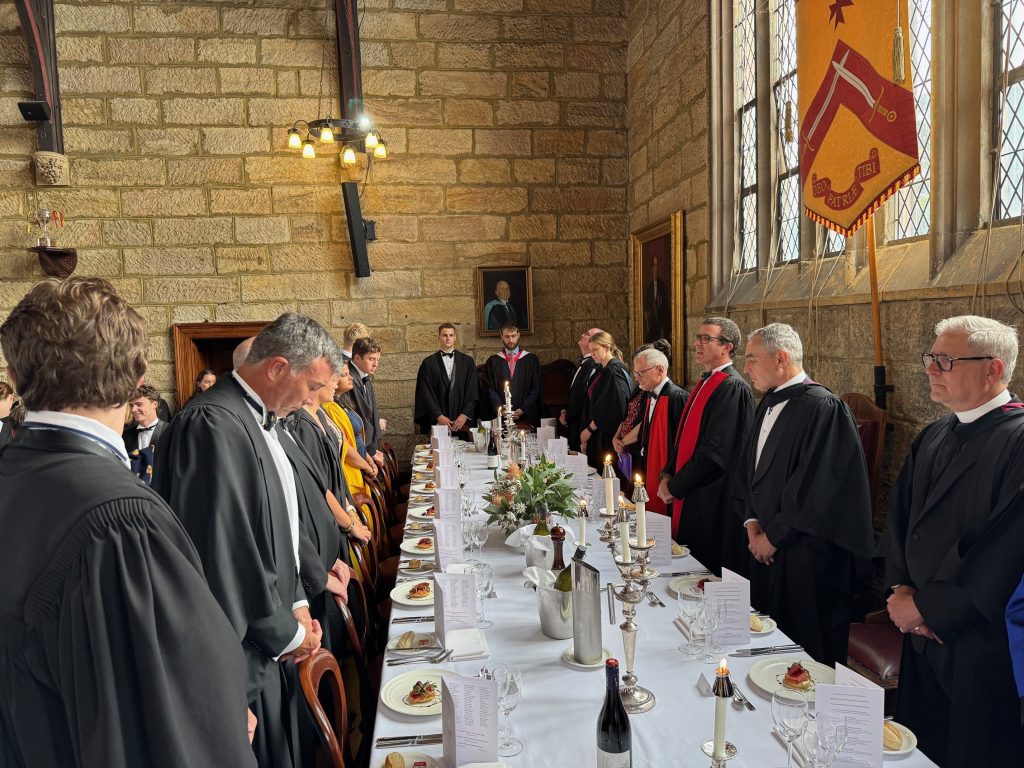
The annual tradition of the Academic Dinner to recognise the university achievements of our undergraduate students was held on Monday 10 March 2025. To celebrate the 2024 results, the best ever, old Pauline Professor Peter Anstey, gave the address and presented the College prizes for 2024. Peter discussed the real-life example of the philosophy of the separation of powers in the context of the fledgling Trump administration in the USA.
Professor Anstey (at College 1985) completed his BA in Philosophy in 1988, ThL in 1989 and PhD in 1997. We also learnt that he taught the Warden in Philosophy 1998 and continued to teach as Professor of Philosophy at The University of Sydney until this year specialising in European philosophy in the early modern period. He was appointed recently as the Commencing Director, Western Civilisation Program in the Faculty of Education and Art at the Australian Catholic University.
Michael Masi (guitar) [BE I] entertained the gathering with Angelina by Tommy Emmanuel (b.1955).
The College community congratulates all students who have worked so hard to achieve excellence in their academic work which is so beneficial to the individuals concerned and rewarding for the College.
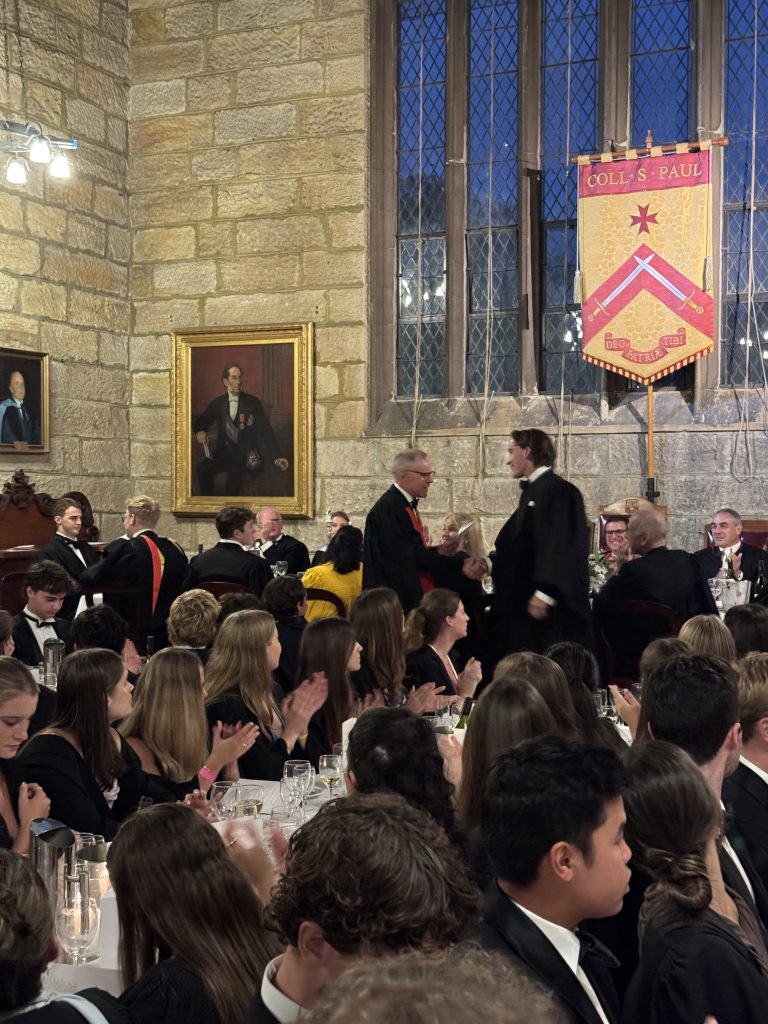
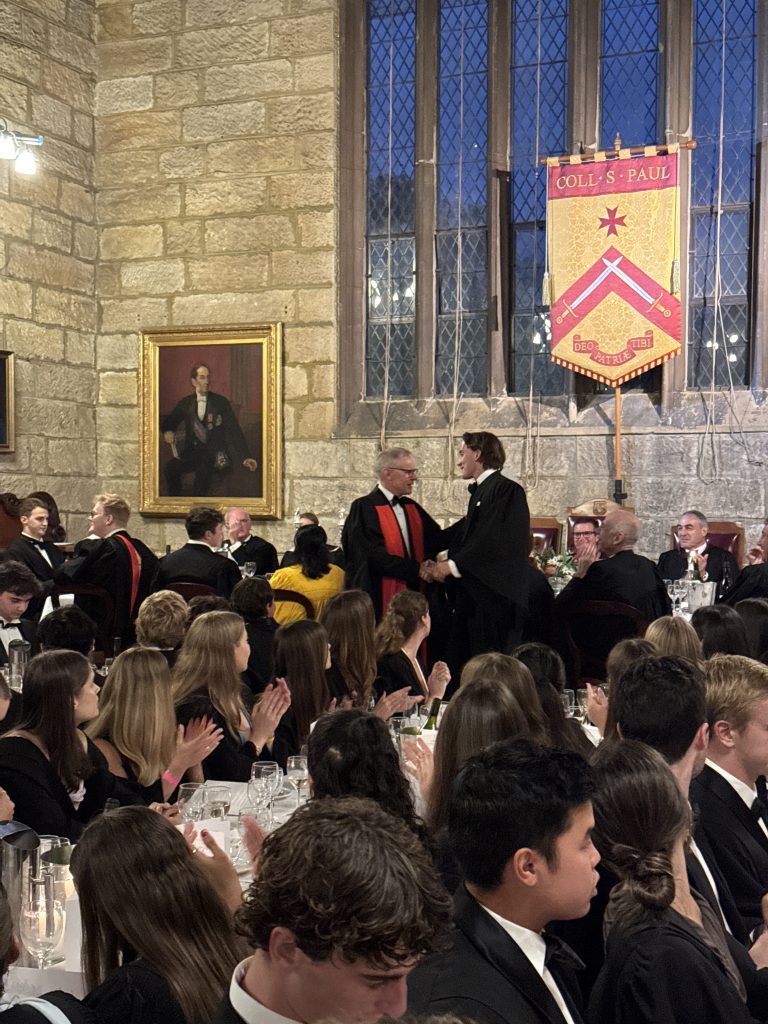
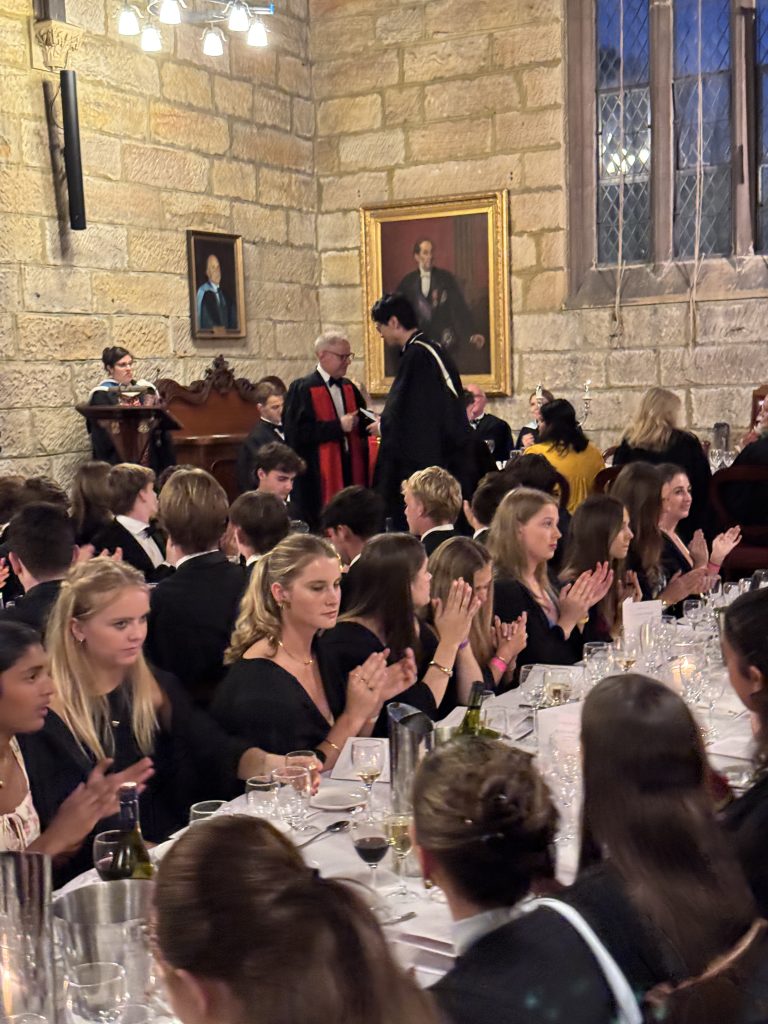
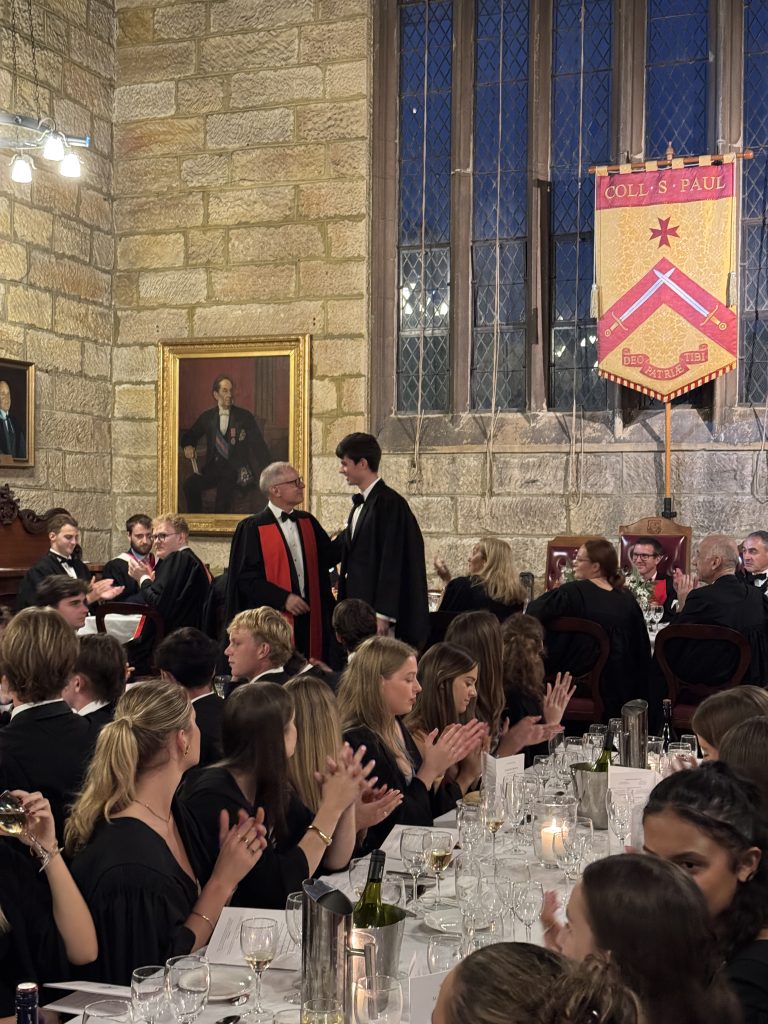
2024 College awards were presented by Professor Anstey for:
PRIZE FOR HIGHEST ANNUAL AVERAGE MARK (FRESHER):
PRIZE FOR HIGHEST ANNUAL AVERAGE MARK (SENIOR):
ST PAUL’S COLLEGE TEACHING EXCELLENCE AWARD awarded to the most outstanding Tutor nominated by their fellow students:
- Ben Varela
MCWILLIAM PRIZE (established through the generosity of Bruce McWilliam (College 1974-79, Fellow 2005-15 and Bursar) awarded for Law other than final year and for service to College:
- Jason Zhu He
JUDGE HUMFRY HENCHMAN PRIZE (in memory of Hereward John Humfry Henchman (College 1922-28, Fellow 1938-94, Chairman 1976-79), Acting Judge of the Supreme Court of NSW and Judge of all District Courts in NSW) awarded to a student in final year Law: n/a
SIR IAN MCFARLANE PRIZE (in memory of Ian McFarlane (College 1941-44), engineer, economist, philanthropist and major innovator in exploration for shale oil in Australia)
awarded for exceptional results in Economics and/or Commerce and for service to College:
- Ed Taylor
PORTUS PRIZE (in memory of Garnet Vere Portus (College 1903-04, Fellow 1918-34), the College’s first Rhodes Scholar) awarded for exceptional examination results in History, Economic History or Philosophy:
- Orlando Throsby
UTHER PRIZE (established by a bequest from Allan Hammill Uther (College 1888-90, Fellow 1901-51), principal founder of the University Sports Union and Fellow of the College) awarded for three years’ distinguished examination results and service to College:
- Austin Markwick
- Ed Taylor

Academic Achievements, The University of Sydney 2024
EXAMINATION RESULTS 2024 – HIGH DISTINCTION AVERAGE (85-100)
- Grace Anderson
- Andrew Brennan
- Kate Brenner
- Aidan Cheung
- William Defina
- Gabriel Desiderio
- Rebecca Galeano
- Julian Guesnon
- Sean Hamadi
- Matilda Hayward
- Liv Laverty
- Ben Lee
- Harry Ludwig
- Juliet Malcolm
- Austin Markwick
- Owen Marschner
- Grace Merrilees
- Isander Mesimeris
- Jack Parker
- Samuel Richards
- Christine Smith
- Ed Taylor
- Isabella Taylor
- Lucy Tucker
- Ben Varela
EXAMINATION RESULTS 2024 – DISTINCTION AVERAGE (75-84.99)
- Zoe Anderson
- Abigail Ballhausen
- Jack Beck
- Annica Bendall
- Scarlett Benias
- Heidi Best
- Charlie Bishop
- Ryan Bond
- Eric Bong
- Jack Bouvier
- Rex Bouvier
- Sophie Bradshaw
- Sakura Brennan
- Jackson Broad
- Rohan Cameron
- Eleanor Campbell
- Libby Carey
- Freya Carmody
- Joshua Chanmugam
- Thomas Chassat
- Luke Chopra
- Angus Clifford
- Robert Clinton
- Bryson Constable
- William Cox
- Sophie Davis
- Jack Dawson
- Charlotte Digges
- Charles Dight
- Tia Durovich
- Jack Earwaker
- James Edwards
- Louis Eglinton
- Aya-Lani Elias
- Oscar Everett
- Allegra Fleming
- Tom Forsythe
- Maddy Freeman
- Ella Graves
- Lachlan Green
- Chloe Gunning
- Josh Hall-Johnston
- Natalie Hee
- Phoebe Henry
- Jesse Henry
- Olivia Hills
- Charlotte Hocking
- Archie Hyles
- Samantha Janssen
- Arlo Johns-Hammond
- Annika Johnson
- Finn Johnson
- Matilda Johnson
- Mack Johnston
- Harry Joils
- Sophie Jones
- Hugh Jordan
- Helen Jordan
- Emma Juneja
- Dominic Kadmon
- James Kerr
- Harry Kirton
- Dan Kovacs
- Armand Larche
- Gillian Lawrance
- Matthew Leijer
- Christopher Lennox
- Joshua Lindon
- Ryan Lynch
- Rocco Marcolongo
- Velvet Martino-Zlojutro
- Sam Matruglio
- Luka Mattani
- Samuel Mccredie
- James Mccreery
- Hunter Mcgregor
- Fraser Mclaren
- Olivia McMillan
- Molly Mcphillips
- Ruben Mead
- Cameron Morris
- Grace Morrow
- Will Nicholas
- Milly O’Connell
- Sebastian O’Connell
- Lachlan Oldfield
- James Parker Kelly
- Alessandro Petagna
- Maximilian Philips
- Jennifer Pilarinos
- Thomas Ramsey
- Alex Ranson
- Dylan Reid
- Maisie Reid
- Francesca Richards
- Abbey Ridgewell
- William Rivlin
- Alex Robinson
- Elise Rosser
- Jack Sandelin
- James Saywell
- Gabe Scott
- Spencer Selikowitz
- Belle Sherlock
- Connor Sinn
- Victoria Spark
- Jack Sproats
- Georgia St John
- William Stafford
- Maya Stapleton
- Valentina Steele
- Toby Symons
- Joshua Taleb
- Olivia Thoma
- Hugh Thompson
- Zoe Thomson
- Orlando Throsby
- Charlotte Toll
- Elinor Trevelyan-Jones
- Katie Tyo
- Luka Vujanovic
- Tom Wait
- Matilda Walker
- Bligh Walter
- Gemma White
- Levi Williams
- Ella Winterbottom
- Adam Wong
- Lily Wood
- Sophie Wright
- Will Wright
- Andy Xie
- Bailey Yeates
- Jason Zhu He
VICE CHANCELLOR’S INTERNATIONAL SCHOLARSHIP
- Benjamin Scott-King
PJ JACK PRIZE FOR ARABIC LANGUAGE:
- Rocco Marcolongo
- Armand Larche
ACADEMIC MERIT PRIZE
- Austin Markwick Bella Taylor
- Elinor Trevelyan-Jones
- Isander Mesimeris
- Benjamin Varela
DEAN’S LIST OF EXCELLENCE
- Austin Markwick (Engineering)
- Bella Taylor (Science)
- Elinor Trevelyan-Jones (Law/Arts)
- Isander Mesimeris (Law)
- Jack Lockhart (Science)
- Kate Brenner (Engineering)
- Luka Mattani (Veterinary Science)
DENISON RESEARCH SCHOLARSHIP
- Owen Marschner
BETA GAMMA SIGMA INTERNATIONAL BUSINESS HONOURS SOCIETY ELECTION
- Jack Beck
ENGINEERING ACADEMIC EXCELLENCE SCHOLARSHIP
- Benjamin Varela
STUDENT MANAGED INVESTMENT FUND SCHOLARSHIP
- Tom Collins
THE GREGG HUMANITARIAN SCHOLARSHIP
- Myroslav Boroviak
Awards on entry to The University of Sydney 2025
DALYELL SCHOLARS (Awarded for applicants who demonstrate a guaranteed ATAR of 98+)
- Jessica Allen-Waters
- Zoe Beattie
- Rupert Begg
- Riadh Bowler
- Lola Cayzer
- Harry Chu
- Emily D’Souza
- Charlie Dale
- Charlotte Ellis
- Molly Espie
- Tom Fisher
- Tara Gold
- Rory Lambert
- Lachlan Larsson
- Jack Laurie
- Jessica Li
- Mischa Lim
- Abby Long
- Angus Malcolm
- Elliot McKay
- Matthew McKee
- Maxine McKellar
- Patrick McLeish
- Anna Morrison
- Audrey Newman
- Jack O’Brien
- Sarah Poolman
- Rachel Poon
- Will Powell
- Lily Richards
- Lucas Robertson
- Oliver Stafford
- Anneka Steele
- George Tait
- Harry Tanner
- Jasper Tuckwell
- Isabella Watson
- Jemima Williams
ERIC CONSTANCE SHAW LAW SCHOLARSHIP (awarded to students who are from a regional or remote area of Australia, are commencing a Bachelor of Laws or Juris Doctor and demonstrate leadership experience, communication skills, personal interests and community engagement)
- Ved Patel
WALTER REID MEMORIAL PRIZE (awarded to students in the Faculty of Arts and Social Sciences)
- Ved Patel
ENGINEERING UNDERGRADUATE MERIT SCHOLARSHIP (to encourage and support domestic students commencing an undergraduate degree in the Faculty of Engineering at the University of Sydney with a guaranteed ATAR of 96+)
- Oliver Stafford
ERIC CAMPBELL SCOTT SCHOLARSHIP (supports academically excellent students studying in the Business School)
- Jack Laurie
CHANCELLOR’S SCHOLARSHIP (awarded to applicants who have achieved an ATAR (or equivalent) of 99.90 or above)
- Jack Humphries
- Jessica Li
- Matthew McKee
- Rachel Poon
FACULTY OF ENGINEERIG WOMEN IN ENGINEERING EXCELLENCE SCHOLARSHIP (awarded to applicants for Engineering who have achieved ATAR of 98 and above)
- Jessica Li
SUSF ELITE ATHLETE SCHOLARSHIP
- Audrey Newman
- Milana Henderson
JUDGE RALPH J PERDRIAU FIRST NATIONS SCHOLARSHIP FOR BACHELOR OF LAWS (to support First Nations students undertaking a Bachelor of Law at the Sydney Law School)
- Harry Tanner