
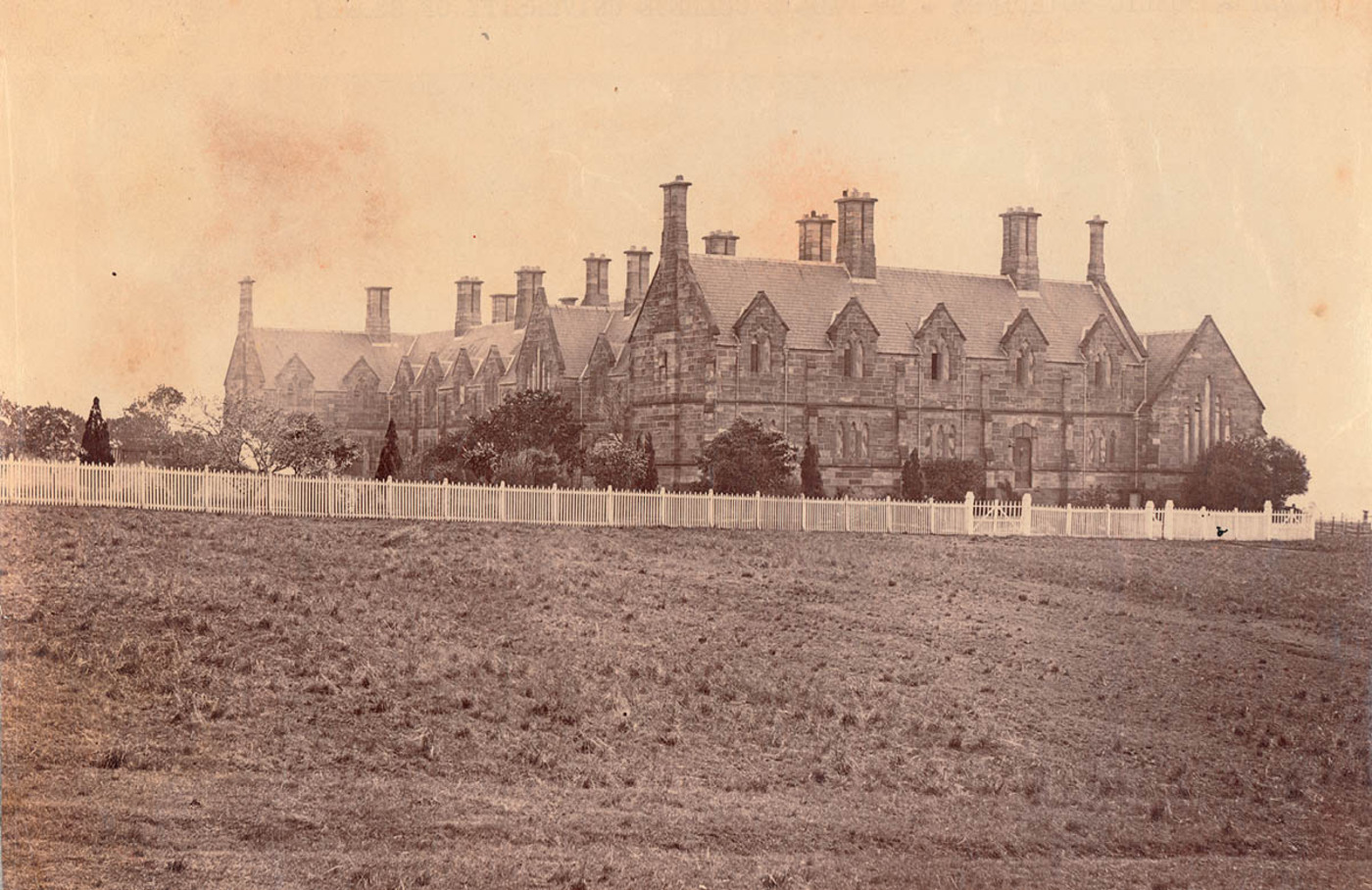


Photo above shows the College in c. 1877 from the east, largely as it was built in 1858.
“In an age of new scientific discovery, Paul’s was designed to offer all‑round learning to the whole student, asking him in return for dedication Deo Patriae Tibi, to God, community, and his own better self. In this sense it was more innovative than the University itself.”
—Atkinson, Hearts and Minds, p.2
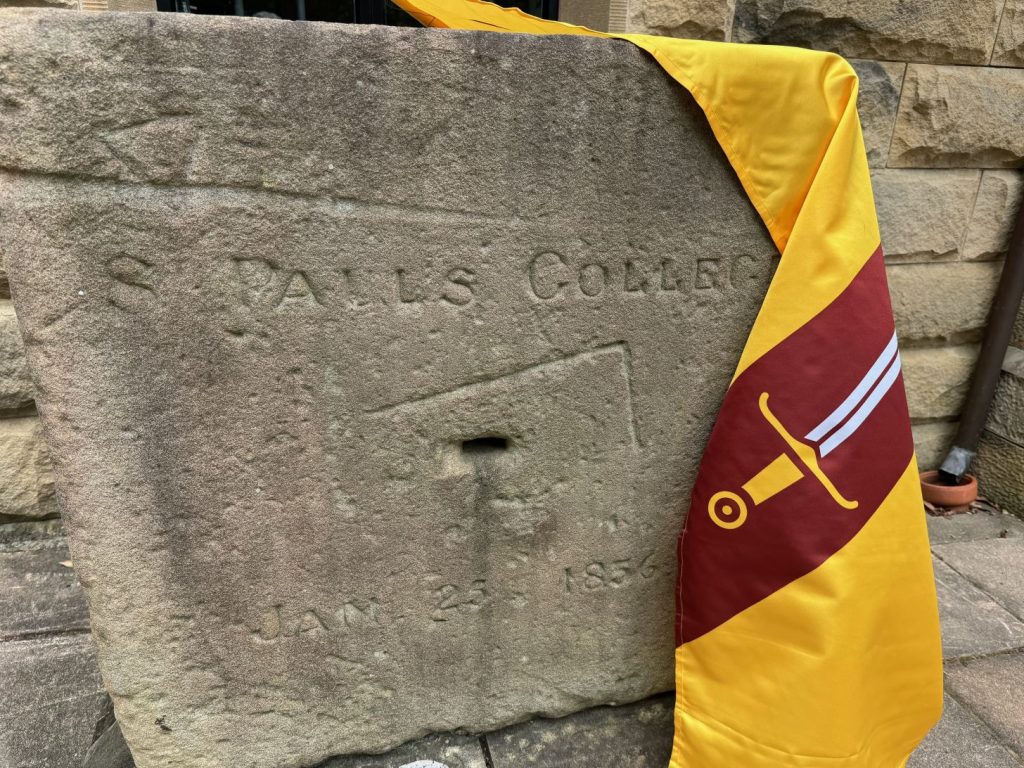
On 25 January 1856—the Feast Day of the Conversion of St Paul—Sir William Denison, Governor of New South Wales, “ordered the lowering of the foundation stone into a 15-feet-square ditch somewhere in the vicinity of the present day Denison Wing” (The Pauline 1981, p. 20). The ceremony took place on open ground along a ridge west of Orphan School Creek’s headwaters, at the site of Paul’s Oval today. As Atkinson notes, the 1850s were a time when “everyone was interested in education, especially moral education and the formation of conscience” (ibid p.9).
The Path to Establishment
The St Paul’s College Incorporation Bill received Royal Assent on 1 December 1854, with the condition that it would come into effect once £10,000 had been raised and a Warden and Fellows appointed:
- Fellows were first elected on 13 December 1855.
- On 15 January 1856, a proclamation by the Governor officially brought the College into existence.
- Building plans were then approved by the University Senate, and ten days later the foundation stone was laid in the presence of many of the Colony’s most prominent citizens.
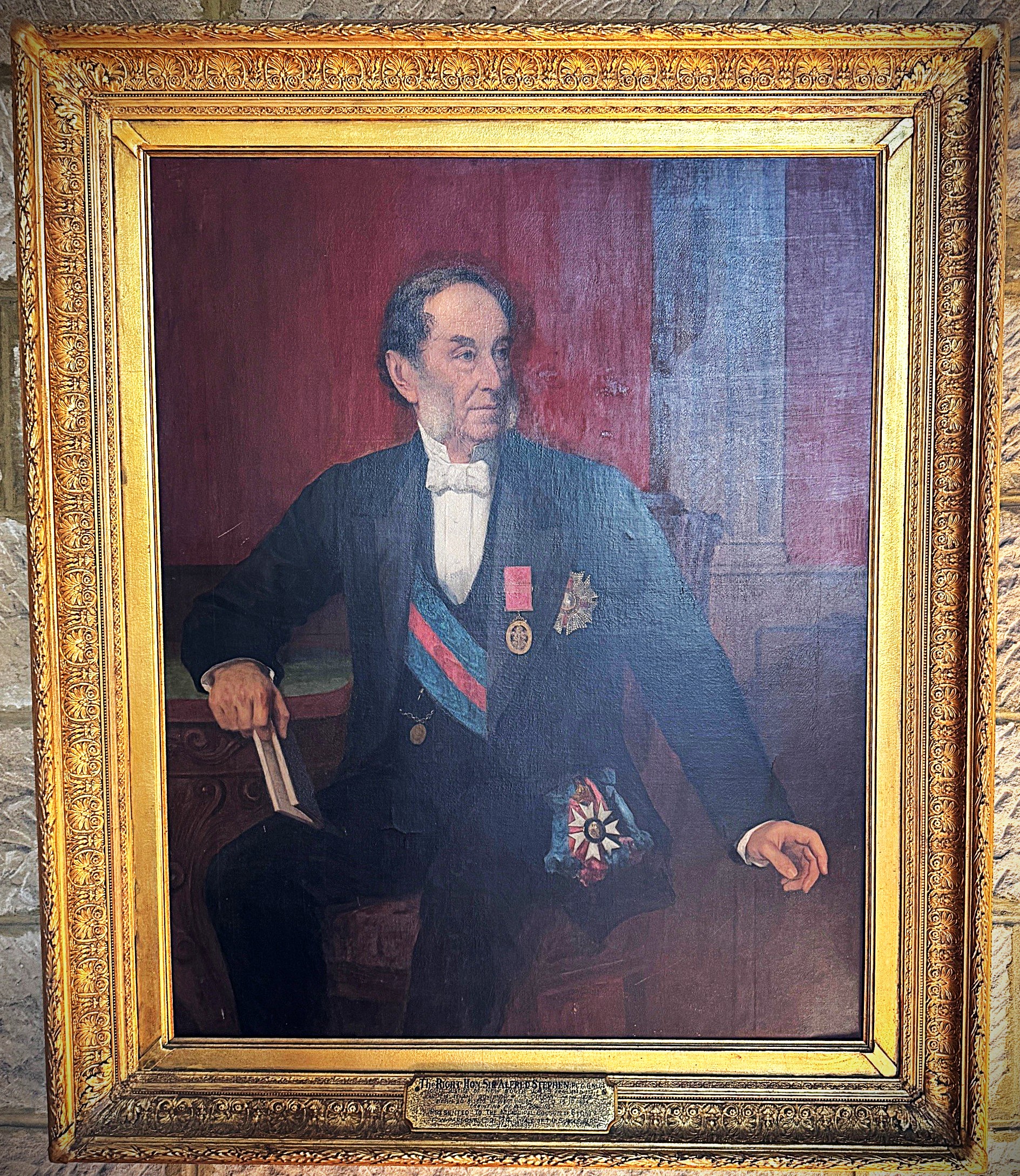
Left is the portrait of Sir Alfred Stephen GCMG CB PC, who was Chief Justice of NSW (1845-73) and founding chair and a Fellow of St Paul’s College 1856-70. Sir Alfred is regarded as the driving force behind the establishment of St Paul’s.
This portrait hangs in the dining hall on loan from the City of Sydney Collection. Artist: Robert Dowling, c. 1865
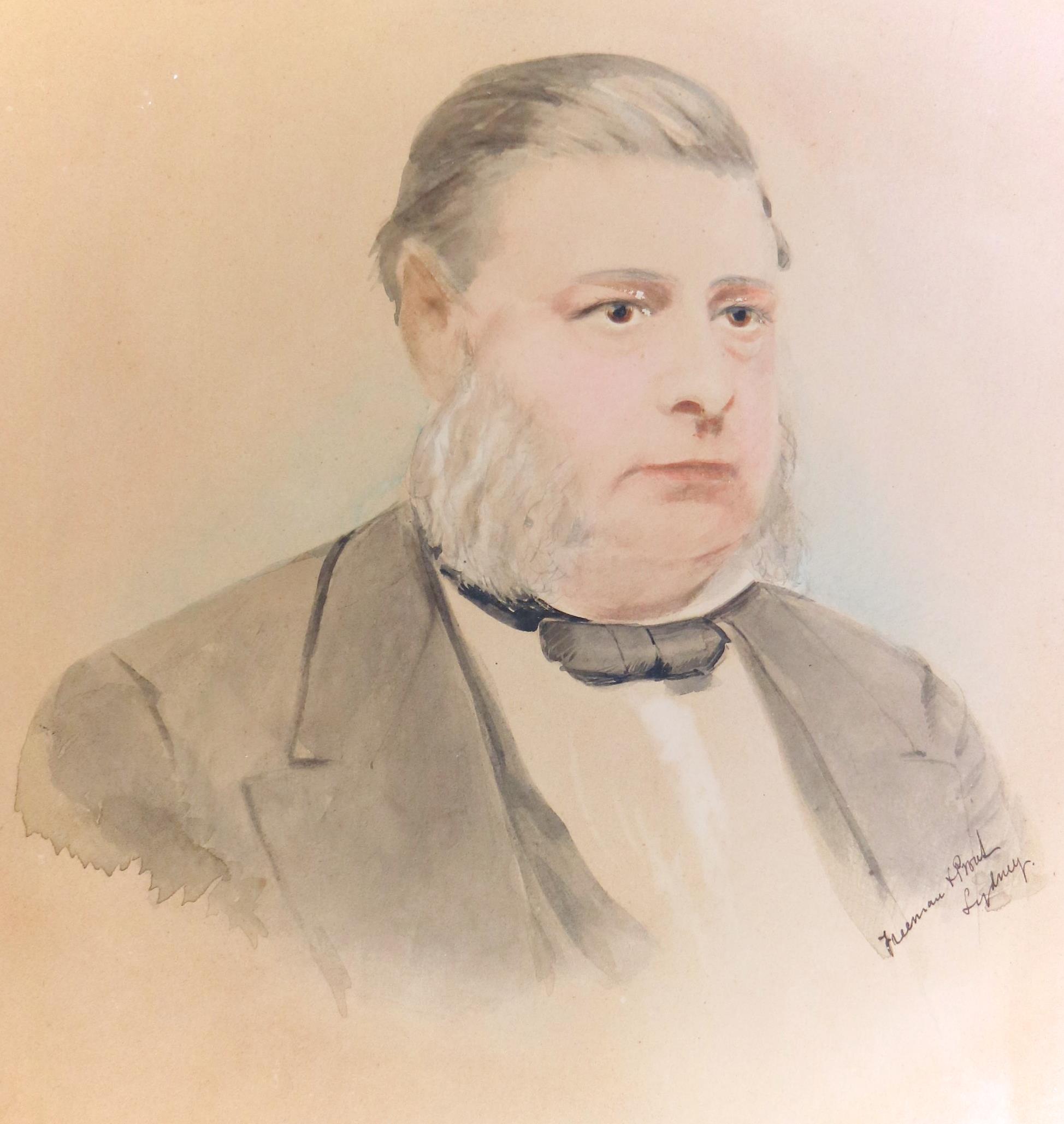
Robert Ebenezer Johnson was a joint secretary, with Sir Alfred, of the committee to draw up a plan for an Anglican college. Johnson was a solicitor and a member of the Legislative Council 1863-66.
The founding fellows were Sir Alfred Stephen (chair), Rev’d Canon Robert Allwood, William Branwhite Clarke, Robert Ebenezer Johnson, James Macarthur and Rev’d William Horatio Walsh.
Support for the funding of the College arrived from all over Sydney and throughout the Colony of New South Wales as well as from England, with total subscriptions reaching £12,367. That same year, Rev’d Henry Hudge Hose, a 28‑year‑old English clergyman and teacher, was selected as the first Warden—all requirements met by 15 January 1856.
Early Construction
Builder John Dinwall of Woolloomooloo oversaw the construction of:
- 36 student rooms
- Corridors
- The library
These being first occupied in 1858 a full two years before the University buildings were ready.
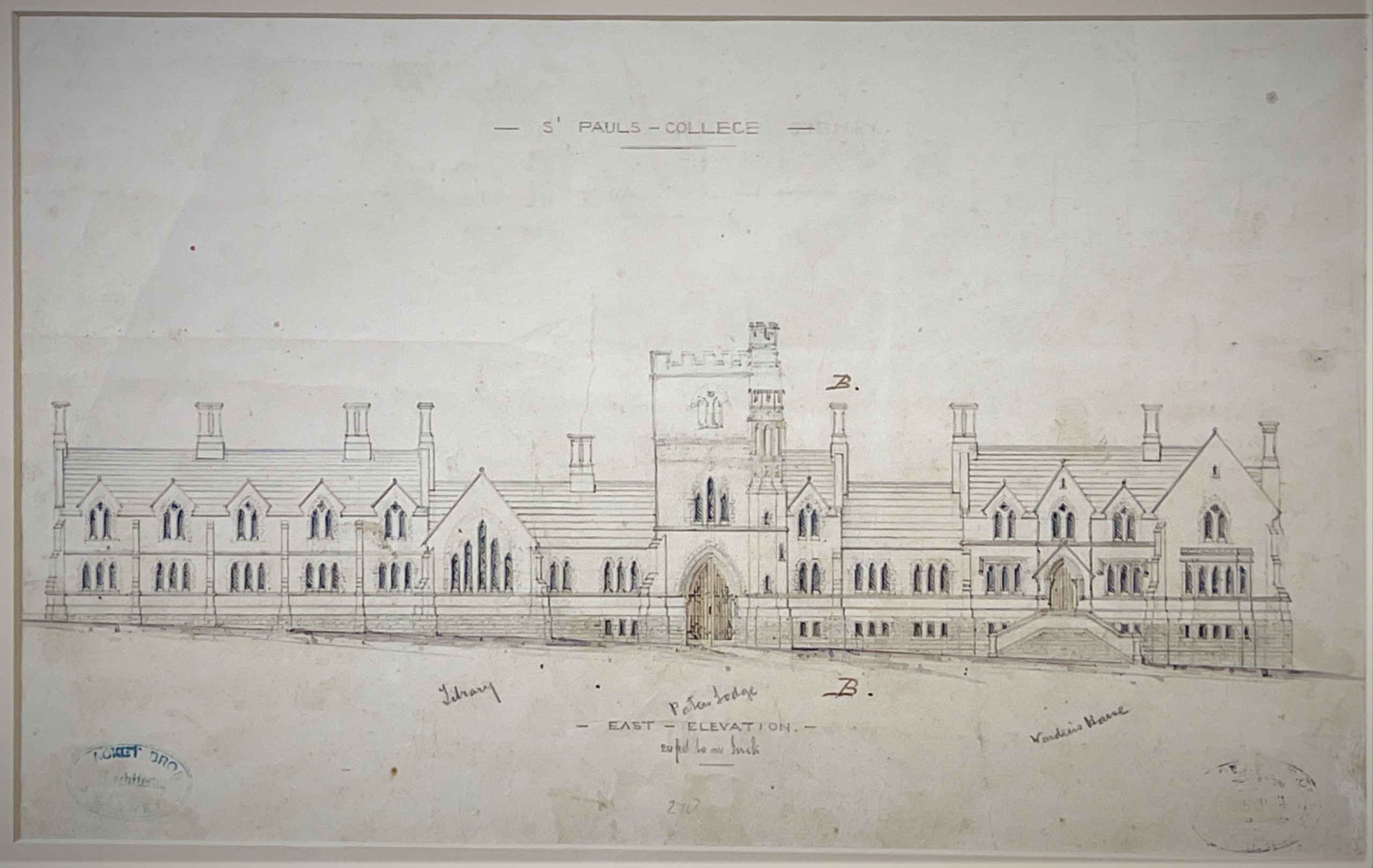
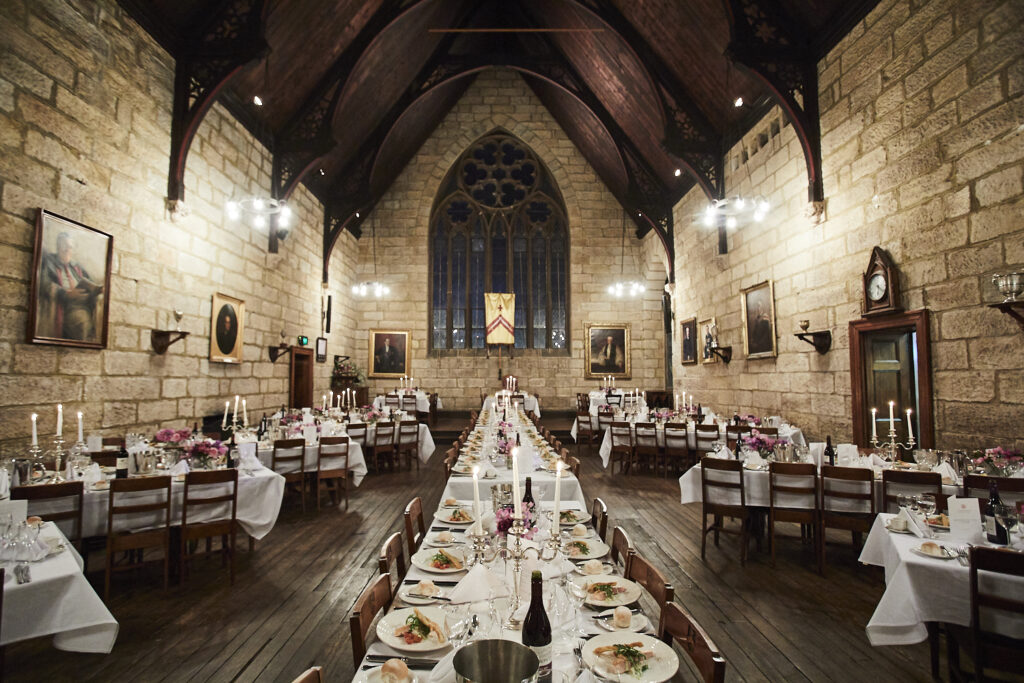
The College Hall followed soon after and was completed in 1859. Architect Edmund Blacket designed the College in the Early English style, while Warden Hose influenced the design of the Hall in a High Gothic style. The remainder of Blacket’s original vision was not realised; however, as student numbers increased, the first additions were constructed several decades later.
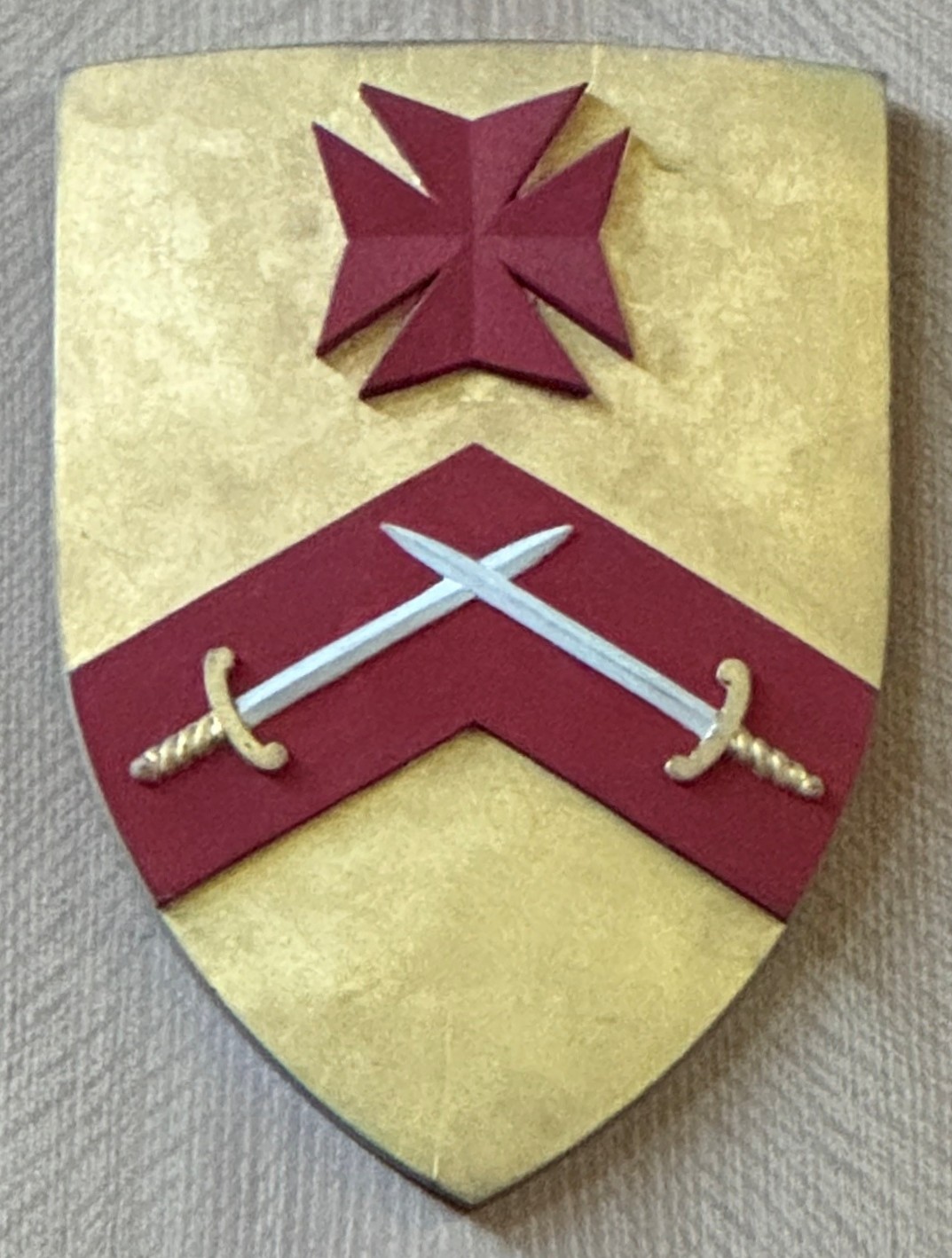
A Tribute to St Paul – a coat of arms created
Atkinson also records the Warden’s contribution to the College’s symbolism:
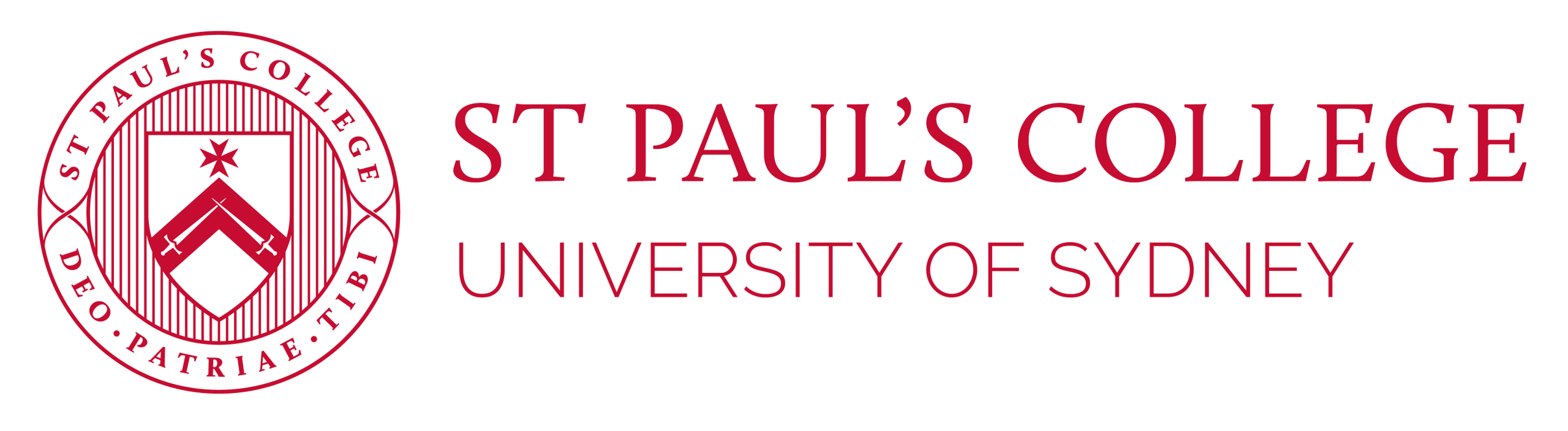
“The Warden devised a simple tribute to St Paul’s … starting with a chevron … he placed on it two swords in memory of the saint’s supposed decapitation and on its point the Maltese cross.”
—Atkinson, p.81
As we mark this 170th anniversary, the vision laid down in 1856 continues to flourish. The College is now home to a vibrant, multigenerational community of wonderful, studious men and women from Australia and all over the world who bring energy, curiosity, and purpose to their academic and residential life in Sydney. Their achievements—in scholarship, leadership, service, and the arts—stand as living proof that the foundations laid over a century and a half ago continue to support a thriving culture of excellence and character.
Sources:
- https://www.parliament.nsw.gov.au
- Alan Atkinson, Hearts and Minds, St Paul’s College, Sydney University, 1815-2016, 2017, ‘Part I: Foundation’.
- City of Sydney – portrait on loan to the College by Robert Dowling ‘Sir Alfred Stephen’ (oil on canvas) c. 1865, has hung in the Dining Hall since 1972.
- Mitchell Library – 1877 photo of the College.
- Richard Morgan, “The College 1856-1981”, The Pauline 1981, p.20 ff.
- St Paul’s College Archives – portrait of Robert Johnston by Freeman & Prout (studio), Sydney, (watercolour) c. 1867; and Blacket’s east elevation of St Paul’s College (pen and ink), c. 1853.